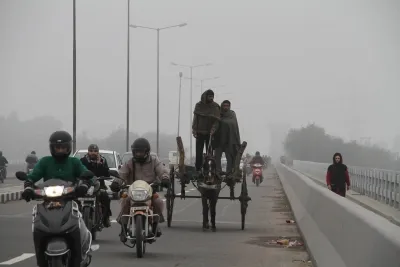
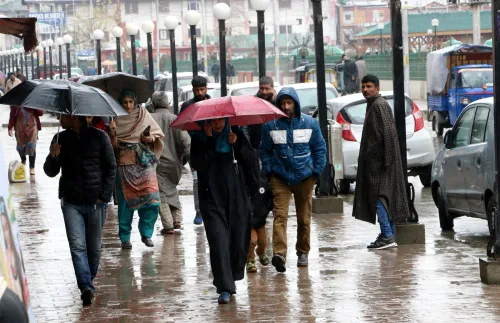
Kashmir windstorm, hailstorm damage houses and crops in Valley on June 16

Synopsis
A windstorm and hailstorm tore through the Kashmir Valley on 16 June, ripping roofs off houses in Sopore and piling further damage onto apple orchards, paddy nurseries, and vegetable fields already battered over the past week. With temperatures touching 37°C and Western Disturbances triggering sudden storms, Kashmir's climate is shifting in ways that threaten its horticulture-dependent economy.
Key Takeaways
A windstorm and hailstorm struck the Kashmir Valley on 16 June , blowing rooftops off houses in Sopore .
A hailstorm also hit the Nishar area on the outskirts of Srinagar .
Apple orchards in South Kashmir and North Kashmir , paddy nurseries, and vegetable crops have suffered extensive damage over the past week.
The MET Department warned of flash floods and mudslides in Kupwara , Baramulla , Bandipora , and parts of South Kashmir .
Boating and Shikara rides on all water bodies, including Dal Lake , have been suspended on advisory.
Recent temperatures in Srinagar have reached up to 37°C , with storm events driving daytime temperatures 4°C–7°C below seasonal averages.
A powerful windstorm and hailstorm battered large parts of the Kashmir Valley on Tuesday, 16 June, blowing the roofs off several houses in the Sopore area and inflicting widespread damage on agricultural land, including apple orchards, paddy nurseries, and vegetable fields. The Meteorological Department had issued an advance advisory warning of intense showers, thunderstorms, hail, and gusty winds across multiple districts.
What Happened on the Ground
High-speed winds, accompanied by rain and thunderstorms, swept through many parts of the Valley during the evening hours. In Sopore, rooftops were reportedly torn off by the force of the gusts. A hailstorm also struck the Nishar area on the outskirts of Srinagar, adding to the damage.
The local MET office had forecast spells of rain and thundershowers over Kupwara, Baramulla, Bandipora, Ganderbal, Budgam, the Sonamarg-Baltal axis, the Pahalgam corridor, parts of South Kashmir, and the Tral area, with the possibility of brief but intense downpours and lightning at isolated locations.
Agricultural Damage Across the Valley
Erratic weather has persisted across the Valley for over a week, with cumulative damage proving severe for the region's horticulture-dependent economy. Apple orchards in both the south and north of the Valley have reportedly suffered extensive losses from successive hailstorms. Paddy nurseries awaiting transplantation, as well as standing vegetable crops, have also been damaged during this period.
Cherry-growing belts — particularly in Baramulla, Ganderbal, and South Kashmir — have been among the hardest hit, with erratic hail and wind causing significant harm to horticulture yields that farmers depend on for seasonal income.
MET Advisory and Safety Warnings
The Meteorological Department issued a formal advisory urging residents to remain indoors during thunderstorms and lightning, and to stay clear of loose structures, electric poles and wires, and old trees. Tourists and locals have been advised to suspend all boating and Shikara rides on water bodies, including Dal Lake.
The advisory also flagged the risk of flash floods and mudslides in Kupwara, Baramulla, Bandipora, and select pockets of South Kashmir due to the possibility of intense hailstorms with heavy localised showers.
A Wider Climate Pattern at Work
The Kashmir Valley is experiencing what climate observers describe as highly volatile weather — marked by sharp, unpredictable swings between unseasonable heatwaves and sudden, intense storm events. Recent seasons have recorded temperatures reaching up to 37°C in Srinagar, driven by a combination of global warming, deforestation, and rapid urbanisation.
A warmer atmosphere retaining more moisture has created conditions for strong atmospheric instability, making sudden hailstorms and severe thunderstorms increasingly frequent across key agricultural belts. Recent Western Disturbances have also triggered sudden downpours and light snowfall at higher altitudes, with daytime temperatures plummeting 4°C to 7°C below seasonal averages in affected zones.
With the Valley's traditional temperate climate increasingly disrupted, authorities and farmers alike face mounting uncertainty heading into the peak summer agricultural season.
Point of View
Which underpins the livelihoods of hundreds of thousands of farming families, is bearing the compounded cost of warming temperatures, erratic Western Disturbances, and inadequate crop insurance coverage. The MET Department's warnings are timely, but advisories alone cannot offset the economic losses accumulating season after season. What is missing is a serious state-level conversation about climate adaptation: orchard protection infrastructure, faster insurance payouts, and land-use policies that account for the Valley's changing precipitation patterns.
NationPress
19 Sept 2026
Frequently Asked Questions
What damage did the windstorm and hailstorm cause in Kashmir on 16 June?
High-speed winds blew the roofs off several houses in the Sopore area, while a hailstorm struck the Nishar area near Srinagar. Across the Valley, apple orchards, paddy nurseries, and vegetable crops have suffered extensive damage from a week of erratic weather.
Which districts in Kashmir were put on alert by the MET Department?
The Meteorological Department issued warnings covering Kupwara, Baramulla, Bandipora, Ganderbal, Budgam, the Sonamarg-Baltal axis, the Pahalgam corridor, parts of South Kashmir, and the Tral area, flagging risks of thunderstorms, hail, lightning, and gusty winds.
Is there a risk of flash floods or mudslides in Kashmir?
Yes. The MET Department's advisory flagged the possibility of flash floods and mudslides in Kupwara, Baramulla, Bandipora, and select pockets of South Kashmir due to intense localised hailstorms and heavy showers.
Why is Kashmir experiencing such extreme weather?
Climate observers attribute the Valley's volatile weather to a combination of global warming, deforestation, and rapid urbanisation, which have raised temperatures to as high as 37°C in Srinagar. A warmer, more moisture-laden atmosphere creates strong atmospheric instability, making sudden hailstorms and thunderstorms more frequent and severe.
What precautions has the MET Department advised for residents and tourists?
The MET Department has advised people to stay indoors during thunderstorms and lightning, avoid loose structures, electric wires, poles, and old trees. Tourists and locals have also been asked to suspend all boating and Shikara rides on water bodies, including Dal Lake.