Operation Mule Hunt 2.0: Gujarat Police arrests 19 in ₹330 crore cyber fraud sweep
Synopsis
Gujarat Police's Cyber Centre of Excellence has arrested 19 people across three probes under Operation Mule Hunt 2.0, unravelling alleged fraud networks spanning 21 states and ₹330 crore. The sweep exposed a layered ecosystem of mule accounts, fake firms, APK-based account takeovers, and a repeat offender who allegedly ran operations from Dubai — underscoring how industrialised cyber fraud has become.
Key Takeaways
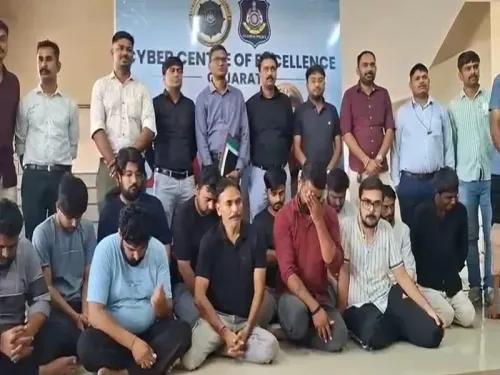
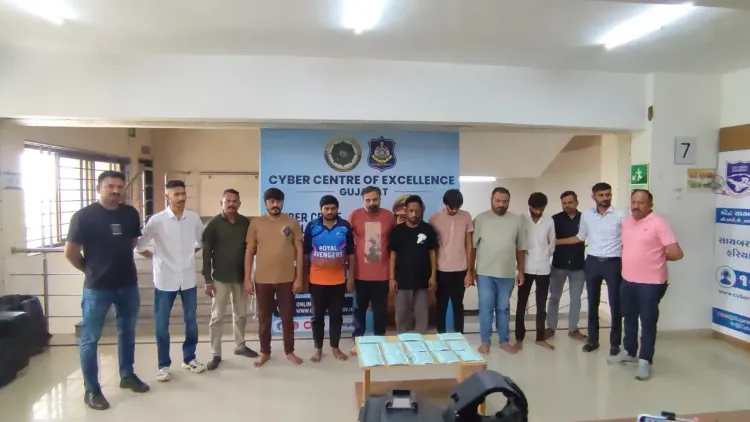
Gujarat Police CCoE arrested 19 people under Operation Mule Hunt 2.0 across three separate investigations announced on 11 July .
The alleged fraud networks are linked to more than ₹330 crore in cyber crimes spanning 21 states .
First investigation: mule account racket in Vadodara linked to ₹46 crore across 21 FIRs ; fake firm operator Sagar Amrutiya linked to ₹161 crore via 253 acknowledgement numbers .
Second investigation: interstate syndicate supplying corporate accounts with bulk transaction access; six arrested , including accused from Mumbai and Mehsana .
Third investigation: seven accused from Surat allegedly ran fake firms linked to ₹116 crore in fraud across 21 states ; 13 mobile phones seized.
Investigations are continuing and multiple accused remain absconding.
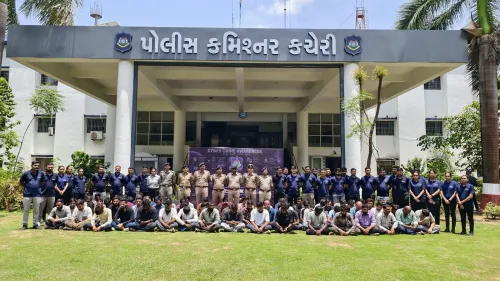
Gujarat Police's Cyber Centre of Excellence (CCoE) has arrested 19 people across three separate investigations under Operation Mule Hunt 2.0, dismantling alleged cyber fraud networks that used mule bank accounts, fake business entities, and corporate accounts to launder proceeds linked to more than ₹330 crore across multiple states. The arrests were announced on 11 July and span operations in Gandhinagar, Vadodara, Ahmedabad, and Surat.
First Investigation: Vadodara Mule Account Racket
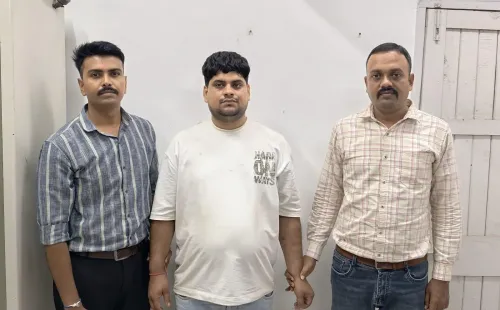
In the first probe, police made six fresh arrests across three FIRs, bringing the total number of accused in the case to eight. The four newly arrested individuals — Toufiq Ahmed Rathod, Aftab Saiyed, Hasnain alias Shadab Pathan, and Arkan Shaikh, all residents of Vadodara — allegedly collected mule bank accounts and circulated them through the network before forwarding them to other accused, including absconding suspects.
Verification on the National Cyber Crime Reporting Portal (NCCRP) linked the recovered accounts to 101 acknowledgement numbers and 21 FIRs across different states, with alleged cyber fraud exceeding ₹46 crore. Four mobile phones were seized.
A separate accused in the same investigation, Sagar Amrutiya of Vastral, Ahmedabad, was arrested for allegedly opening and collecting mule accounts through fake business entities and forwarding them to an absconding accused. Investigators allege that fake firms — including one named Chamunda Communication — were used to open current accounts linked to 253 acknowledgement numbers and alleged cybercrimes worth more than ₹161 crore. Officials noted that Amrutiya had previously been arrested four times in criminal cases, allegedly operated from Dubai, and was reportedly planning to revive his network in Ahmedabad.
A third accused in this investigation, Abhilash Mishra of Vadodara, was arrested for allegedly making more than 10 of his bank accounts available to co-accused. According to police, Mishra opened the accounts while pursuing an MBA at Parul University. The accounts were linked to 28 acknowledgement numbers and eight FIRs across states, with alleged fraud exceeding ₹7.40 crore. Two mobile phones were seized.
Second Investigation: Interstate Corporate Account Syndicate
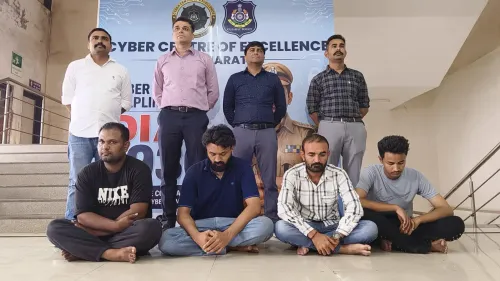
In the second probe, the CCoE arrested six alleged associates of an interstate syndicate accused of supplying corporate bank accounts with bulk transaction facilities. The accused — Ankurkumar Chaudhary of Mehsana district, Chetan Patel of Visnagar, Kirankumar Panchal, Suresh Rabari, and Rajkumar Rawal of Ahmedabad, and Akshaysinh Parmar of Mumbai — were reportedly arrested mid-operation, before any funds could allegedly be transferred.
Investigators allege that the first three accused procured corporate accounts and supplied them to a syndicate, while Rabari and Rawal verified accounts using APK files and login screen recordings. Parmar allegedly acted as an intermediary. Checks on the 1930 Portal and Samanvay Portal found 22 acknowledgement numbers linked to the recovered accounts, including six from Gujarat, with complaints involving approximately ₹1.5 crore. Two of the linked cases registered in Maharashtra involved alleged digital arrest fraud. Seven mobile phones were seized.
According to police, the group allegedly persuaded account holders to hand over Aadhaar and PAN details, cheque book images, ATM card photographs, and internet banking credentials in exchange for commissions, before installing APK files to facilitate remote access.
Third Investigation: Surat-Based Fake Firm Network Linked to ₹116 Crore
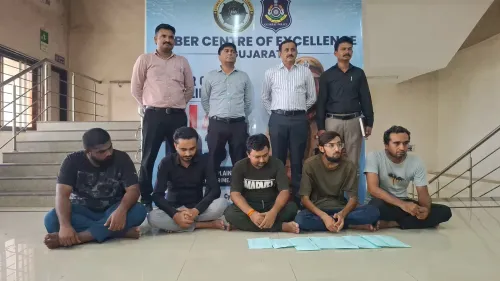
The third investigation led to the arrest of seven accused from Surat — Rakesh Pokal, Gautam Savani, Jaydeep alias Jayesh Savani, Mayur Tejani, Akshay Kathiriya, Mayur Savani, and Henil Narola — for allegedly creating fake firms and opening more than 18 bank accounts to supply cyber fraud operations.
Investigators allege that three partners ran the network from offices in Mota Varachha and Jahangirpura in Surat. Fake firms — including Pokaarchtex (OPC) Private Limited, Genram (OPC) Private Limited, and TRAN CHHAR TECH (OPC) Private Limited — were created to open accounts across multiple banks. Account kits and SIM cards were allegedly supplied to associates who received fraud proceeds before transferring or withdrawing funds for commissions.
Portal verification found 146 acknowledgement numbers nationwide, including 14 from Gujarat, linked to alleged fraud exceeding ₹116 crore across 21 states. Alleged offences include investment fraud, UPI-related fraud, deposit fraud, and trading fraud. Investigators noted that Gautam Savani had previously been arrested under Sections 307 and 302 of the Indian Penal Code. Thirteen mobile phones were seized.
What Comes Next
The CCoE has confirmed that investigations across all three cases are continuing. The scale of the network — spanning 21 states and more than ₹330 crore in alleged fraud — signals that Operation Mule Hunt 2.0 is far from over, with several accused still absconding. Further arrests are expected as investigators trace the financial trail upstream.
Point of View
Verifiers, intermediaries, and withdrawers. The presence of a repeat offender allegedly operating from Dubai, and MBA students opening accounts for commissions, points to recruitment pipelines that law enforcement has yet to fully disrupt. The ₹330 crore figure covers only what portal verification has surfaced; the actual proceeds are likely higher. Until banks tighten current-account KYC and the Centre mandates real-time mule-account flagging, operations like these will keep regenerating faster than police can arrest their way through them.
NationPress
10 Oct 2026
Frequently Asked Questions
What is Operation Mule Hunt 2.0?
Operation Mule Hunt 2.0 is a Gujarat Police Cyber Centre of Excellence (CCoE) operation targeting cyber fraud networks that use mule bank accounts and fake business entities to launder fraud proceeds. The latest sweep resulted in 19 arrests across three investigations linked to alleged fraud exceeding ₹330 crore across multiple states.
How much money is linked to the cyber fraud networks busted in this operation?
Investigators allege that the three networks are collectively linked to more than ₹330 crore in cyber fraud across 21 states. This figure is based on portal verification of acknowledgement numbers on the 1930 Portal, Samanvay Portal, and the National Cyber Crime Reporting Portal.
Who are the key accused arrested under Operation Mule Hunt 2.0?
The 19 arrested include Toufiq Ahmed Rathod, Aftab Saiyed, Hasnain alias Shadab Pathan, and Arkan Shaikh from Vadodara; Sagar Amrutiya from Ahmedabad; Abhilash Mishra from Vadodara; Ankurkumar Chaudhary, Chetan Patel, Kirankumar Panchal, Suresh Rabari, Rajkumar Rawal, and Akshaysinh Parmar from the interstate syndicate; and Rakesh Pokal, Gautam Savani, Jaydeep alias Jayesh Savani, Mayur Tejani, Akshay Kathiriya, Mayur Savani, and Henil Narola from Surat.
What methods did the accused allegedly use to commit cyber fraud?
Investigators allege the networks used mule bank accounts, fake firms to open current accounts, APK files to gain remote access to accounts, and commission-based recruitment of account holders. Accused persuaded individuals to hand over Aadhaar, PAN, cheque book, and internet banking credentials in exchange for payments.
Are investigations complete or are more arrests expected?
The CCoE has confirmed that investigations in all three cases are ongoing. Several accused remain absconding, and further arrests are expected as investigators trace the financial trail across states.