ISI's ₹500 spy network: How cheap operatives evade India's radar

Synopsis
Pakistan's ISI is reportedly recruiting Indian youth for as little as ₹500 to monitor military train movements — a near-invisible grassroots spy network that Indian agencies say is harder to crack than high-profile espionage rings. Post-Operation Sindoor, the ISI has layered this cheap workforce alongside CCTV installers and white-collar honey-trap agents in a multi-tier intelligence push against India.
Key Takeaways
The ISI is recruiting Indian youth for ₹500 to ₹1,000 to monitor Indian Army troop and logistics movements at railway stations.
Operatives use cheap phones with no GPS or recording capability and discard SIM cards after each assignment, making them nearly untraceable.
A mid-tier network installs solar-powered CCTV cameras at sensitive locations for ₹10,000–₹15,000 per installation.
A white-collar tier paid ₹50,000–₹75,000 targets India's defence, science, and technology sectors and runs honey-trap operations.
Indian agencies have already busted several networks but warn the low-cost grassroots layer remains the hardest to fully detect and dismantle.
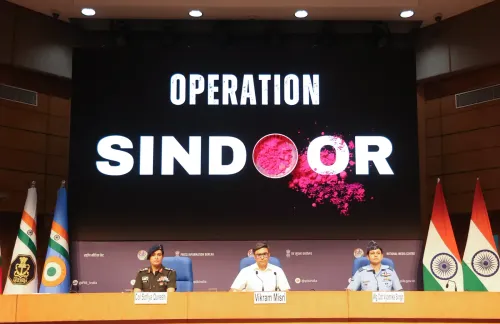
The ISI's intensified espionage push follows Operation Sindoor , which targeted Pakistan's terror infrastructure in response to the Pahalgam attack .
Pakistan's Inter-Services Intelligence (ISI) has intensified its espionage operations inside India following Operation Sindoor, deploying a multi-tiered spy network that recruits youth for as little as ₹500 to monitor sensitive military movements, according to intelligence officials. The low-cost operatives, largely invisible to conventional surveillance, have emerged as a strategic concern for Indian security agencies in the weeks since the operation was carried out to avenge the Pahalgam attack.
The ₹500 Operative: Who They Are and What They Do
At the base of the ISI's layered espionage structure sits a network of young, largely unemployed individuals paid between ₹500 and ₹1,000 per assignment. According to an Intelligence Bureau official, these recruits are identified at railway stations — often youths who loiter without purpose — and tasked with monitoring the movement of Indian Army troops and military logistics.
The Indian Army relies heavily on the railway network for troop mobilisation, operating dedicated Military Special Trains to move personnel, tanks, artillery, and heavy logistics across the country during both peacetime and conflict. A recruit's job is straightforward: note the timings, direction, and destination of such trains and relay that information to a handler. No specialised training is required.
Notably, these operatives use cheap mobile phones with no GPS or recording capabilities, making them extremely difficult to track. Once an assignment is complete, SIM cards are discarded and replaced, severing any digital trail. Officials say this combination of low cost, minimal training, and disposable communication tools makes the network exceptionally hard to detect and dismantle.
How the Network Expands — and Why It Is Hard to Crack
The recruitment model is deliberately decentralised, according to officials. Handlers inside India are instructed to identify only a small number of initial recruits. Those recruits then draw in additional operatives from their own social circles, creating an organic, self-replicating chain. For the young men involved, officials say, the motivation is purely financial — the modest payments are sufficient to secure compliance.
This peer-referral structure limits exposure at every node. No single operative knows more than a fragment of the broader network, making it resilient against targeted arrests. The ISI's investment, officials note, is negligible: recruitment costs are minimal and training is virtually non-existent.
Higher Tiers: CCTV Installations and White-Collar Agents
The ₹500 layer is only the foundation. Indian agencies have also busted a network that installs solar-powered CCTV cameras at sensitive locations. Operatives in this tier are paid between ₹10,000 and ₹15,000 per installation, according to officials.
At the top of the hierarchy sits a white-collar network whose members are reportedly paid between ₹50,000 and ₹75,000. These agents are tasked with gathering high-value intelligence on India's defence, science, and technology sectors. This tier is also reportedly used to run honey-trap operations targeting sensitive personnel.
The ISI's Motive After Operation Sindoor
Officials say the ISI is attempting to rebuild its intelligence picture of India after what they describe as an embarrassment inflicted by Operation Sindoor, which dealt a significant blow to Pakistan's terror infrastructure. The spy agency is reportedly desperate to gather actionable intelligence that could be used to plan strikes on Indian military installations and strategic locations, according to officials.
Indian agencies have already dismantled several such networks, including a CCTV spying operation and a network of social media influencers. Security officials warn, however, that the low-cost, high-volume grassroots tier remains the most difficult to fully neutralise — and potentially the most consequential given its reach.
Point of View
Training non-existent, and each node ignorant of the larger network, the ISI has built a system that is structurally resistant to the takedowns that work against conventional spy rings. Indian agencies are well-equipped to detect white-collar agents and CCTV installations; the grassroots tier exploits the gap between counter-intelligence capacity and sheer volume. The deeper concern is that railway logistics — a backbone of military mobilisation — is being monitored by people who would never appear on any watchlist. That is a tactical intelligence gap that no amount of high-profile network busting will close.
NationPress
3 Oct 2026
Frequently Asked Questions
What is the ISI's ₹500 espionage network in India?
It is a low-cost spy network run by Pakistan's Inter-Services Intelligence that recruits young Indians, often loitering near railway stations, and pays them ₹500 to ₹1,000 to monitor Indian Army troop and logistics movements. The operatives require no specialised training and use disposable SIM cards to avoid detection.
Why is this network so difficult for Indian agencies to detect?
The operatives use cheap phones with no GPS or recording capabilities and discard SIM cards after each assignment, leaving almost no digital trail. The decentralised, peer-referral recruitment model means no single operative knows the full network, making it resilient against targeted arrests.
How does the ISI's spy network connect to Operation Sindoor?
Operation Sindoor targeted Pakistan's terror infrastructure in retaliation for the Pahalgam attack. According to intelligence officials, the ISI has since intensified its espionage efforts inside India, reportedly seeking to rebuild its intelligence picture and gather information for potential strikes on Indian military and strategic locations.
What are the different tiers of the ISI's espionage network?
The network operates in at least three layers: a grassroots tier paid ₹500–₹1,000 to monitor railway movements; a mid-tier that installs solar-powered CCTV cameras at sensitive locations for ₹10,000–₹15,000 per installation; and a white-collar tier paid ₹50,000–₹75,000 to gather high-value defence and technology intelligence and run honey-trap operations.
What has India done to counter these ISI spy networks?
Indian agencies have already dismantled several networks, including a CCTV spying operation and a network of social media influencers. However, officials warn that the low-cost grassroots tier — due to its volume and near-zero digital footprint — remains the most difficult layer to fully neutralise.