Operation Sindoor Aftermath: ISI Shifts from Ideology to Financial Recruitment

Synopsis
In the wake of Operation Sindoor, Pakistan's ISI faces a significant challenge with recruitment, shifting from ideological motivations to financial incentives. Discover how this shift affects terror networks and the broader implications for national security.
Key Takeaways
Recruitment has declined by 30-40% due to Operation Sindoor.
The ISI is now prioritizing financial incentives over ideology.
Recruitment is targeting youth from all backgrounds.
The strategy is aimed at building a comprehensive support network.
Intelligence agencies are on high alert for potential threats.
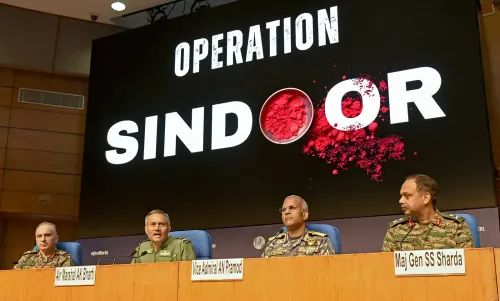
New Delhi, March 18 (NationPress) Following Operation Sindoor, Pakistan's primary challenge has become recruitment. Before this operation by the Indian military, recruitment into organizations like Jaish-e-Mohammad and Lashkar-e-Tayiba was rampant. An intelligence report indicates that these recruitments have decreased by approximately 30 to 40 percent. This has prompted the ISI to revise its tactics, shifting its focus from ideology to financial incentives.
This approach is consistent across various groups, including Islamic factions like Jaish-e-Mohammad, Lashkar-e-Tayiba, and even the Khalistan militant organizations, as stated by an official.
The ISI has realized that ideology alone no longer serves as a strong motivator. The adverse effects of Operation Sindoor on the morale of these terror organizations have drastically reduced recruitment activities.
Nevertheless, the ISI has managed to attract some youth by incentivizing them with money. Remarkably, the agency is willing to recruit individuals regardless of their religion, faith, or social background.
The ISI has been actively seeking out young recruits, offering substantial financial rewards. The amount can range from Rs 10,000 to Rs 200,000, depending on the assigned role.
An official from the Intelligence Bureau noted that the financial lure has proven effective to a certain degree for the ISI.
The primary targets are students and individuals in financial distress. Interestingly, investigations have revealed that the ISI is also appealing to those aspiring for a lavish lifestyle.
This recruitment strategy is gaining traction among those seeking to enhance their living conditions rather than those in urgent need of money.
This diversity helps these modules evade scrutiny, the official added.
Initially, the ISI employed this money-over-ideology strategy for Khalistan networks, recognizing that the movement lacked sufficient momentum.
The ISI is attempting to exploit the widespread drug issue in Punjab, reaching out to youth and offering them large sums to fund their drug purchases.
Intelligence agencies warn that this recruitment initiative is likely to expand further. The target demographic is vast, as the ISI is recruiting individuals from all backgrounds to support espionage activities and provide logistical assistance to terrorist organizations.
There is heightened concern in border regions, where Pakistani elements are endeavoring to gather extensive intelligence on troop movements and military installations.
In major urban centers, the focus of recruitment is aimed at enlisting youth to offer logistical support for terror groups. These individuals are compensated for documenting government facilities, judicial buildings, police stations, and transport hubs.
Another official remarked that, overall, the ISI is not currently pursuing an immediate attack.
Instead, it is patiently working to construct a pan-India network while accumulating as much intelligence as possible.
Currently, Pakistan is preoccupied with its conflicts involving the Afghan Taliban, Tehreek-e-Taliban Pakistan (TTP), and the Balochistan Liberation Army (BLA).
The Pakistan Army is receiving support from terrorist factions such as Islamic State Khorasan Province (ISKP), Jaish-e-Mohammad, and Lashkar-e-Tayiba.
The recruitment strategy adopted by the ISI is poised to not only rejuvenate the agency but also strengthen all associated terrorist groups.
The ISI is optimistic that by the time these factions regain strength, it will have amassed a wealth of information and a substantial number of recruits within India.
Intelligence agencies have advised law enforcement to monitor social media influencers closely.
Indian authorities recently dismantled a significant spy network, which included influencers with extensive followings.
Officials from the Intelligence Bureau suggest that the ISI will likely target these influencers again to sway the narrative against India.
Point of View
The content highlights a critical evolution in Pakistan's recruitment strategies for terror organizations, emphasizing the shift from ideology to financial incentives. This shift raises significant concerns about national security and the potential for increased recruitment from diverse backgrounds.
NationPress
24 Sept 2026
Frequently Asked Questions
What is Operation Sindoor?
Operation Sindoor refers to a military initiative by India aimed at dismantling terror infrastructure in Pakistan and its immediate effects on recruitment for terror groups.
How has the ISI changed its recruitment strategy?
The ISI has shifted its focus from ideological motivations to financial incentives, offering significant sums of money to attract recruits.
What groups are affected by this recruitment strategy?
The recruitment strategy impacts various groups, including Jaish-e-Mohammad, Lashkar-e-Tayiba, and Khalistan terror organizations.
Why is the ISI recruiting individuals from diverse backgrounds?
The ISI aims to create modules that are less likely to attract attention by including individuals from various faiths and backgrounds.
What are the implications for national security?
The shift in recruitment strategy could lead to an increase in logistical support for terror groups and pose significant challenges for national security.