India retail inflation at 3.93% in May, stays below RBI's 4% target
Synopsis
India's retail inflation held below the RBI's 4% target in May at 3.93%, but the uptick from April's 3.48% and a revised FY27 forecast of 5.1% signal that the era of record-low prices may be drawing to a close — with crude oil, El Niño, and West Asia tensions all pointing in the same direction.
Key Takeaways
India's retail inflation stood at 3.93 per cent in May 2025 , below the RBI's medium-term target of 4 per cent .
Inflation edged up from 3.48 per cent in April 2025 , suggesting emerging price pressures.
The CPI basket has been rebased to 2024 ; year-on-year comparisons with pre-2025 data are not valid.
The RBI revised its FY27 inflation forecast to 5.1 per cent , up from 4.6 per cent , citing El Niño and global energy risks.
The repo rate was held at 5.25 per cent on 5 June , with the MPC voting unanimously for status quo.
India's GDP grew 7.8 per cent in Q4 and 7.7 per cent for full FY26 , providing macroeconomic cushion.
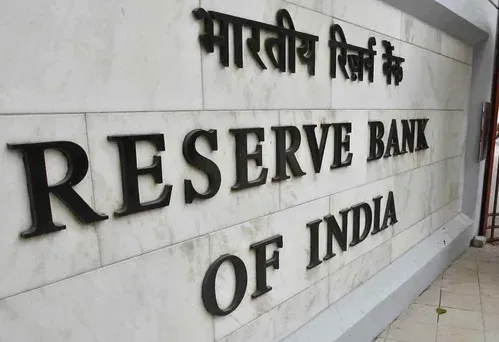
India's retail inflation eased to 3.93 per cent in May 2025, holding below the Reserve Bank of India's (RBI) medium-term target of 4 per cent, according to provisional data released by the Ministry of Statistics and Programme Implementation (MoSPI) on 12 June. The reading marks the second consecutive month that headline inflation has stayed under the central bank's benchmark.
Month-on-Month Movement
The May figure is a modest uptick from the 3.48 per cent recorded in April 2025, signalling that price pressures are beginning to re-emerge after a historically benign start to the year. Notably, the current data cannot be directly compared with the same period last year, as MoSPI rebased the Consumer Price Index (CPI) basket to 2024 as the new base year. The revised series was introduced in January 2025, drawing on consumption patterns captured in the 2023-24 Household Consumption Expenditure Survey.
What Is Driving Price Pressures
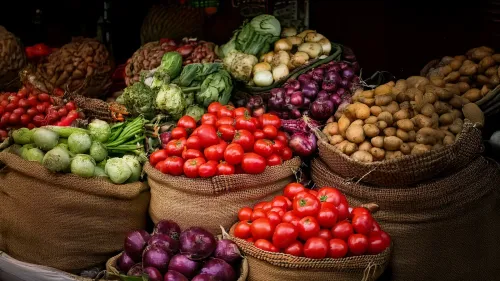
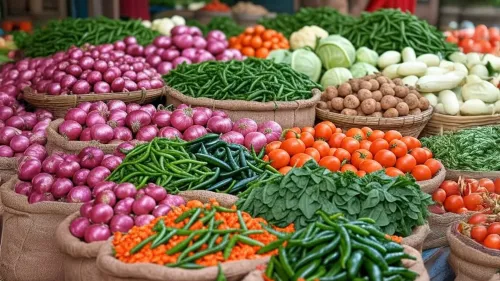
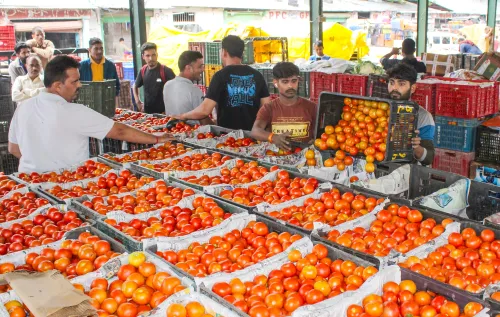
Economists have flagged elevated crude oil prices and ongoing geopolitical tensions in West Asia as key contributors to imported inflation risks. The conflict in the region has also unsettled currency markets and raised concerns about stagflation feeding into the domestic economy. Food prices — which carry significant weight in the CPI basket — remain a pivotal variable; since June 2024, food inflation had stayed in negative territory, helping push overall retail inflation to historic lows. In October 2024, headline CPI had touched a record low of 0.25 per cent, supported by food inflation of minus 5.02 per cent.
RBI's Revised Inflation Outlook
In its June 2025 monetary policy review, the RBI revised its inflation forecast for FY27 upward to 5.1 per cent from an earlier projection of 4.6 per cent, citing risks from a potentially below-normal monsoon linked to El Niño conditions and higher global energy prices. The central bank kept the benchmark repo rate unchanged at 5.25 per cent on 5 June, with the six-member Monetary Policy Committee (MPC) voting unanimously to hold rates and retain a neutral policy stance.
Economic Resilience in Context
Despite these headwinds, India's broader economy has remained resilient. GDP expanded 7.8 per cent in the fourth quarter and 7.7 per cent for the full FY26, providing the RBI room to maintain its cautious, data-dependent approach. The central bank's unanimous vote for status quo reflects a balancing act — acknowledging upside inflation risks without prematurely tightening monetary conditions that could dampen growth momentum.
What to Watch Next
With the monsoon season now underway, the trajectory of food prices over the coming months will be critical in determining whether inflation remains anchored below 4 per cent or drifts toward the RBI's revised FY27 forecast of 5.1 per cent. Markets and policymakers will closely track incoming crude oil benchmarks and the India Meteorological Department's monsoon updates as the next key data points.
Point of View
But the direction of travel is what matters — and it is upward. The central bank's own revised FY27 forecast of 5.1% is a quiet admission that the low-inflation window of late 2024 was driven by an anomalous food price correction, not structural disinflation. With El Niño threatening the monsoon and West Asia tensions keeping crude elevated, the RBI's neutral stance is increasingly a holding position rather than a confident signal. The rebased CPI series adds a layer of opacity that makes it harder to benchmark current readings against historical norms — a methodological shift that policymakers and markets have not yet fully priced in.
NationPress
19 Sept 2026
Frequently Asked Questions
What is India's retail inflation rate for May 2025?
India's retail inflation stood at 3.93 per cent in May 2025, according to provisional data released by MoSPI on 12 June. This is below the RBI's medium-term target of 4 per cent but higher than the 3.48 per cent recorded in April 2025.
Why can't May 2025 inflation be compared with May 2024?
MoSPI rebased the CPI basket to 2024 as the new base year, with the revised series introduced in January 2025 based on the 2023-24 Household Consumption Expenditure Survey. This methodological change makes direct year-on-year comparisons with the old series unreliable.
What is the RBI's inflation forecast for FY27?
The RBI revised its FY27 inflation forecast upward to 5.1 per cent from an earlier 4.6 per cent in its June 2025 monetary policy review. The revision was driven by risks from a potentially below-normal monsoon linked to El Niño and higher global energy prices.
Did the RBI change the repo rate in June 2025?
No. The RBI kept the benchmark repo rate unchanged at 5.25 per cent on 5 June 2025. The six-member Monetary Policy Committee voted unanimously to hold rates and maintain a neutral policy stance.
What factors could push India's inflation higher in the coming months?
Elevated crude oil prices, geopolitical tensions in West Asia, and the risk of a below-normal monsoon due to El Niño are the primary upside risks. Food prices, which carry significant weight in the CPI basket, will be a key variable to watch as the monsoon season progresses.