India's retail inflation at 3.93% in May, below RBI target: Economists

Synopsis
India's May inflation print of 3.93% keeps it just under the RBI's 4% target — but the calm may be temporary. With fuel price hikes feeding through, monsoon uncertainty looming, and one analyst already forecasting a 50 bps rate hike in FY27, the window of comfort is narrower than the headline number suggests.
Key Takeaways
India's retail inflation rose to 3.93 per cent in May 2025 , up from 3.48 per cent in April, but still below the RBI's 4 per cent medium-term target.
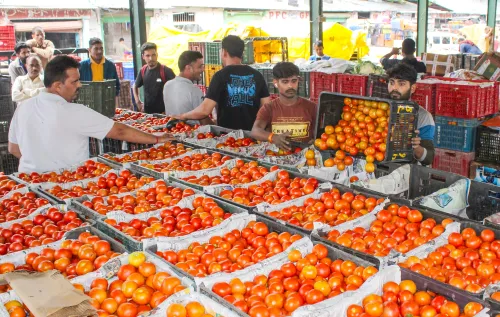
Food categories — vegetables, edible oils, cereals, pulses, and milk — drove the uptick, worsened by heatwave conditions, according to DBS Bank's Radhika Rao .
Staggered fuel price hikes since mid-May , along with higher CNG and commercial LPG prices, are expected to exert further inflationary pressure in coming months.
Elara Capital's Garima Kapoor projects inflation averaging 5.2–5.3 per cent in FY27 and forecasts the RBI hiking rates by 50 basis points in H2 FY27 .
The West Asia conflict , monsoon progress, and downstream cost pass-through remain key risks to the inflation outlook.
India's retail inflation stood at 3.93 per cent in May 2025, remaining below the Reserve Bank of India's (RBI) medium-term target of 4 per cent, according to provisional data released by the Ministry of Statistics and Programme Implementation. Economists say the reading, while slightly elevated from April's 3.48 per cent, keeps inflation less of an immediate policy concern — even as West Asia conflict risks and domestic weather pressures remain on the radar.
What the Numbers Show
The marginal uptick from April reflects a broader build-up in price pressures across food categories. Radhika Rao, Senior Economist and Executive Director at DBS Bank, noted that food segments — particularly perishables such as vegetables, edible oils, cereals, pulses, and milk — contributed to the rise, compounded by heatwave conditions across parts of the country.
Fuel costs added another layer of pressure. 'Concurrently pump fuel prices were increased in a staggered fashion since mid-May, besides higher CNG and commercial LPG (this month), imparting first and second derivative impact through the coming months,' Rao said.
RBI's Stance and Policymaker Watch
The May print is broadly consistent with the central bank's view that current inflation readings remain manageable. However, the RBI is not standing down. 'Policymakers continue to closely monitor upcoming inflation prints as higher input costs gradually filter through from downstream industries to consumers, weather-related risks unfold, and the progress of the monsoon season becomes clearer,' Rao added.
This comes amid a broader global uncertainty triggered by the West Asia conflict, which has kept commodity and energy price trajectories unpredictable. India's inflation trajectory in the second half of the financial year will depend significantly on how these external risks resolve.
Analyst Outlook: Rate Hike on the Horizon
Garima Kapoor, Deputy Head of Research and Economist at Elara Capital, noted that the May CPI came in slightly below the market expectation of 4 per cent, despite the pass-through of elevated fuel and food prices. 'With recent measures announced by the RBI and the government amid the likely expected resolution of the West Asian crisis, the macroeconomic backdrop has turned less adverse,' Kapoor said.
Kapoor projected inflation averaging 5.2–5.3 per cent in FY27, and forecast the RBI hiking rates by 50 basis points in the second half of FY27. That outlook marks a significant shift from the current accommodative posture, signalling that price pressures — while contained now — could force the central bank's hand later in the year.
What to Watch Next
The trajectory of the southwest monsoon, fuel price adjustments, and the resolution — or escalation — of the West Asia conflict will be the three key variables shaping India's inflation path in the months ahead. Analysts broadly agree that the current reading offers breathing room, but the window could narrow quickly if any of these risks materialise simultaneously.
Point of View
But it would be a mistake to read it as stability. Fuel price hikes are still feeding through the supply chain, the monsoon is unproven, and the West Asia conflict has not resolved. The more telling signal is Elara Capital's forecast of a 50 bps hike in H2 FY27 — that suggests the market sees today's benign reading as a lagging indicator, not a leading one. The RBI's data-dependent posture is prudent, but the next two or three monthly prints will matter far more than May's.
NationPress
26 Oct 2026
Frequently Asked Questions
What is India's retail inflation rate for May 2025?
India's retail inflation stood at 3.93 per cent in May 2025, according to provisional data from the Ministry of Statistics and Programme Implementation. This is slightly higher than April's 3.48 per cent but remains below the RBI's medium-term target of 4 per cent.
Why did India's inflation rise in May 2025?
The increase was driven by higher prices in food categories including vegetables, edible oils, cereals, pulses, and milk, partly due to heatwave conditions. Staggered fuel price hikes since mid-May, along with higher CNG and commercial LPG prices, also contributed to upward pressure.
Will the RBI raise interest rates due to inflation?
Not immediately. Economists say the current reading is manageable and consistent with the RBI's own assessment. However, Elara Capital's Garima Kapoor has forecast a 50 basis point rate hike in H2 FY27, citing an expected rise in inflation to 5.2–5.3 per cent that year.
How does the West Asia conflict affect India's inflation?
The ongoing West Asia conflict adds uncertainty to global commodity and energy prices, which can feed into India's import costs and fuel prices. Economists are closely watching the situation as a potential upside risk to the inflation trajectory in coming months.
What factors will shape India's inflation outlook in the coming months?
The three key variables are the progress of the southwest monsoon season, further fuel price adjustments, and the resolution or escalation of the West Asia conflict. Analysts warn that if these risks materialise simultaneously, the current breathing room could narrow quickly.