India inflation to average 5.6% in FY27, RBI seen hiking rates by 50 bps
Synopsis
HSBC Global Investment Research sees India's inflation averaging 5.6% in FY27 — well above the RBI's 4% target — driven by energy costs, heatwaves, and El Niño food shocks. The bank forecasts only two modest rate hikes totalling 50 bps, betting the RBI will treat much of the spike as temporary. That call hinges on oil at $95 and a Hormuz deal materialising by mid-June.
Key Takeaways
HSBC Global Investment Research forecasts India's headline inflation to average 5.6 per cent in FY2027 .
The RBI is projected to hike the repo rate by a total of 50 basis points — across Q3 CY2026 and Q4 CY2026 — taking it to 5.75 per cent .
May CPI inflation rose to 3.9 per cent YoY , up from 3.5 per cent in April.
Non-food goods inflation stands at 5.1 per cent YoY , far outpacing services inflation at 2.1 per cent YoY .
Heatwaves pushed vegetable prices higher; HSBC flags rising temperatures as a growing structural risk to food inflation.
The rate-hike forecast assumes oil at $95 per barrel and a gradual reopening of the Strait of Hormuz by mid-June .
India's headline consumer price index (CPI) inflation is projected to average 5.6 per cent in fiscal year 2027, with the Reserve Bank of India (RBI) likely to respond with a shallow rate-hiking cycle capped at 50 basis points, according to a report by HSBC Global Investment Research released on Monday, 15 June. The forecast reflects mounting pressure from energy costs and weather-driven food price shocks.
Rate Hike Outlook
The HSBC report projects two rate hikes — one each in Q3 CY2026 and Q4 CY2026 — that would lift the repo rate from its current level to 5.75 per cent. The research firm stopped short of forecasting a steeper tightening cycle. 'We are not forecasting a bigger rate hike than 50 bps for now because we believe the RBI will look through part of the inflation increase as temporary,' the report stated. The rate-hike scenario is contingent on oil prices averaging $95 per barrel in FY27, with a deal enabling a gradual reopening of the Strait of Hormuz around mid-June.
Current Inflation Readings
May CPI inflation climbed to 3.9 per cent year-on-year, up from 3.5 per cent in April, with sequential momentum accelerating to 0.5 per cent month-on-month. Non-food goods inflation is running considerably hotter at 5.1 per cent YoY, compared with services inflation at 2.1 per cent YoY — a divergence that points to supply-side rather than demand-side pressure as the dominant driver.
Food Prices and Climate Pressure
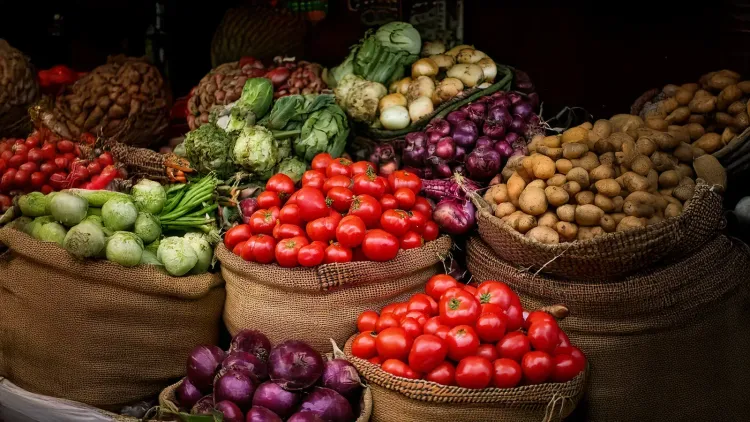
Food inflation quickened its pace in May, with sequential momentum rising to 0.6 per cent month-on-month from 0.3 per cent in April. Severe heatwaves across several parts of India pushed vegetable prices sharply higher, particularly for tomatoes, chillies, and cabbage. Prices of fruits, edible oils, and spices also registered notable sequential gains. The HSBC report flagged a structural concern: rising average temperatures driven by global warming are increasingly crossing critical thresholds, mattering more for food inflation than even monsoon patterns — especially in El Niño years.
Longer-Term Trajectory
HSBC had previously forecast that CPI inflation would asymptote towards 4 per cent by March 2028, suggesting the FY27 spike is viewed as a temporary deviation rather than a permanent reset. The central bank's own inflation target band sits at 4 per cent with a tolerance range of ±2 per cent. Whether the RBI treats the current overshoot as transitory or structural will be the key policy question in the quarters ahead.
Point of View
But it rests on two assumptions that could easily unravel: oil staying near $95 and a Hormuz resolution by mid-June. If either slips, the inflation trajectory steepens and the RBI's room to 'look through' temporary shocks narrows fast. More structurally, the report's climate angle deserves attention — if rising temperatures are now a more reliable predictor of food inflation than monsoon behaviour, India's monetary policy framework may need to price in a permanently higher food-price floor. That is a conversation the RBI has not yet had publicly.
NationPress
24 Sept 2026
Frequently Asked Questions
What is HSBC's inflation forecast for India in FY2027?
HSBC Global Investment Research projects India's headline CPI inflation to average 5.6 per cent in fiscal year 2027, driven by energy price pressures and food shocks linked to El Niño and heatwaves. The firm had earlier forecast inflation converging towards 4 per cent by March 2028.
How much is the RBI expected to raise interest rates?
The RBI is forecast to hike the repo rate by a total of 50 basis points across two moves — one in Q3 CY2026 and one in Q4 CY2026 — taking the rate to 5.75 per cent. HSBC does not expect a larger hiking cycle, as it believes the RBI will treat much of the inflation increase as temporary.
What drove India's May 2026 CPI inflation higher?
May CPI inflation rose to 3.9 per cent year-on-year from 3.5 per cent in April, with sequential momentum at 0.5 per cent month-on-month. Food prices accelerated due to heatwaves pushing up vegetable costs — particularly tomatoes, chillies, and cabbage — while fruits, edible oils, and spices also saw notable price rises.
What assumptions underpin the RBI rate-hike forecast?
The forecast assumes oil prices will average $95 per barrel in FY27 and that a deal will enable a gradual reopening of the Strait of Hormuz around mid-June. A significant deviation in either factor could alter the inflation and rate outlook materially.
Why is climate change relevant to India's inflation outlook?
The HSBC report flagged that rising average temperatures from global warming are increasingly crossing critical thresholds and are now a stronger driver of food inflation than even monsoon patterns, particularly in El Niño years. This introduces a structural upside risk to food prices that traditional monsoon-based models may underestimate.