Has RBI Increased India's GDP Growth Forecast to 7.3%?
Synopsis
Discover how the RBI has revised India's GDP growth forecast to 7.3% for 2025-26. This article delves into the factors driving this optimistic outlook, including robust agricultural performance, favorable monetary conditions, and ongoing reforms that are shaping the economic landscape.
Key Takeaways
RBI raised GDP growth forecast to 7.3% for 2025-26 .
Strong agricultural performance and low inflation are significant contributors.
GST reforms continue to positively impact economic activity.
Corporate and bank balance sheets are in good health.
External uncertainties pose risks, but trade negotiations offer potential benefits.
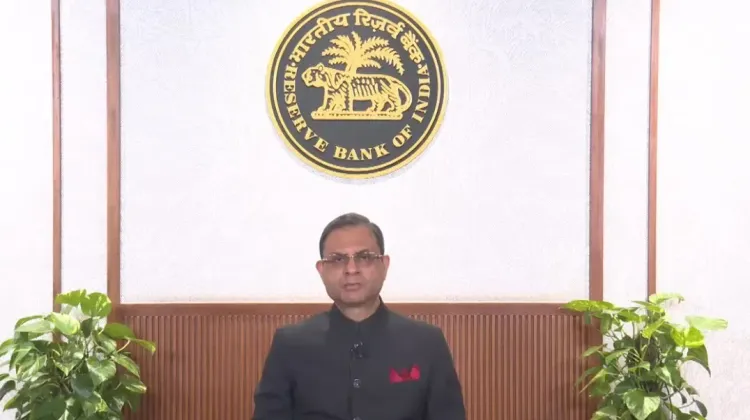
Mumbai, Dec 5 (NationPress) The Reserve Bank of India (RBI) announced on Friday that it has elevated its GDP growth projection for the Indian economy to a strong 7.3 percent for the fiscal year 2025-26, up from the previous estimate of 6.8 percent. This revision stems from a positive outlook bolstered by robust agricultural performance, ongoing GST rate reductions, low inflation rates, and solid financial health among both corporations and banks.
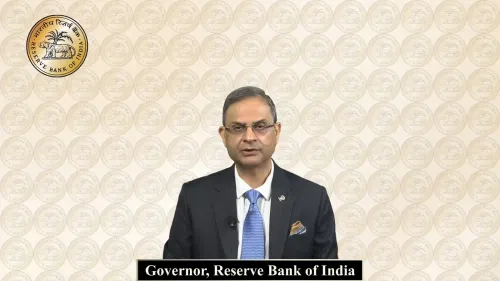
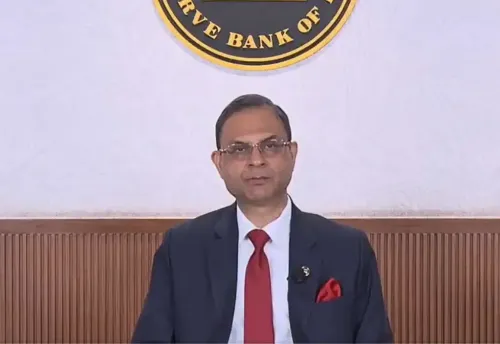
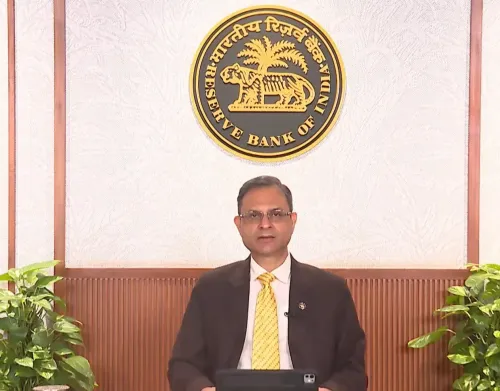
During a press briefing following the monetary policy committee meeting, RBI Governor Sanjay Malhotra remarked that the economic growth spurt to 8.2 percent in the second quarter of the current fiscal year, alongside a significant drop in inflation to 1.7 percent, has created an exceptional “Goldilocks period” for the Indian economy.
“Looking forward, domestic factors such as strong agricultural prospects, the sustained impact of GST reforms, low inflation, and healthy financial statements of companies and financial institutions, along with favorable monetary and financial conditions, are expected to continue fostering economic activity. Ongoing reform efforts will further promote growth,” explained Malhotra.
He also highlighted that while service exports are anticipated to remain robust, merchandise exports could face some challenges. Ongoing external uncertainties continue to present risks to the outlook, although the swift conclusion of various trade and investment negotiations offers potential advantages.
“Considering all these factors, the real GDP growth for 2025-26 is now projected at 7.3 percent, with Q3 at 7.0 percent and Q4 at 6.5 percent. For Q1:2026-27, a growth of 6.7 percent is projected, followed by 6.8 percent in Q2. The risks are evenly balanced,” stated the RBI Governor.
Malhotra noted that the nation’s real GDP achieved a six-quarter high growth of 8.2 percent in Q2:2025-26, driven by resilient domestic demand amidst global trade and economic uncertainties. On the supply side, real gross value added (GVA) grew by 8.1 percent, supported by strong industrial and services performance. Economic activities in the first half of the fiscal year benefited from income tax and goods and services tax (GST) reforms, lower crude oil prices, accelerated government capital spending, and supportive monetary conditions underpinned by low inflation.
He further indicated that high-frequency indicators suggest that domestic economic activity is holding steady in Q3, although some early signs of weakness have emerged in a few leading indicators. GST reforms and festival-related expenditures have bolstered domestic demand during October-November. Rural demand remains strong while urban demand is gradually improving. Investment activities are robust, with private investments gaining momentum, supported by an increase in non-food bank credit and high capacity utilization.
On the supply front, agricultural growth is enhanced by strong kharif crop yields, better reservoir levels, and improved sowing of rabi crops. Manufacturing activities are on the rise, and the services sector continues to progress steadily, he added.
Point of View
I view the RBI's adjustment of the GDP growth forecast as a significant indicator of economic resilience in India. This optimistic outlook, underpinned by strong agricultural prospects and effective reforms, highlights the government's commitment to fostering a stable economic environment. It is essential for stakeholders to stay informed and prepared for the evolving landscape.
NationPress
14 Oct 2026
Frequently Asked Questions
What is the new GDP growth forecast by RBI for 2025-26?
The new GDP growth forecast by RBI for 2025-26 is 7.3 percent .
What factors contributed to the increase in GDP forecast?
The increase in GDP forecast is attributed to strong agricultural prospects, ongoing GST rate cuts, low inflation, and healthy balance sheets of corporations and banks.
Who is the RBI Governor that announced the new forecast?
The RBI Governor who announced the new forecast is Sanjay Malhotra .
What was the previous GDP growth forecast before the revision?
The previous GDP growth forecast was 6.8 percent .
What is the projected GDP growth for Q3 and Q4 of 2025-26?
The projected GDP growth for Q3 of 2025-26 is 7.0 percent and for Q4 is 6.5 percent .