Has RBI Increased the Growth Forecast for Q1 and Q2 of 2026-27?
Synopsis
The Reserve Bank of India has revised its GDP growth predictions for the initial two quarters of 2026-27, forecasting a rise to 6.9% and 7.0%. Factors driving this positive outlook include a robust services sector, favorable trade deals, and strong domestic demand. However, geopolitical tensions and global market volatility pose potential risks.
Key Takeaways
RBI forecasts GDP growth at 6.9% and 7.0% for Q1 and Q2 of 2026-27.
Robust domestic demand is anticipated to drive private sector investments.
The services sector and GST rationalization are crucial for growth.
Geopolitical tensions pose risks to economic stability.
Estimated real GDP growth for 2025-26 is 7.4% .
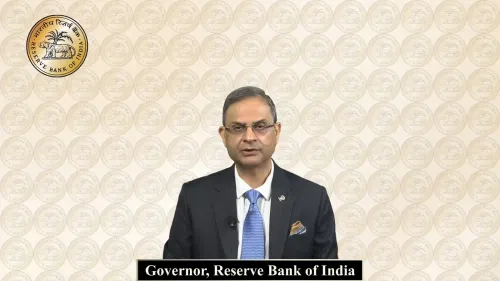
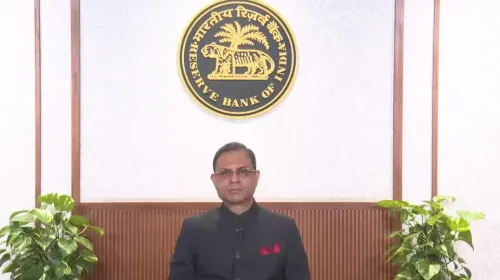
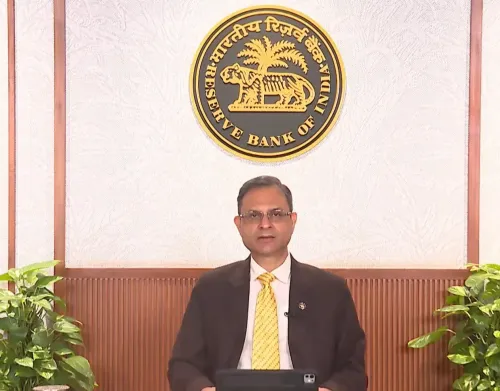
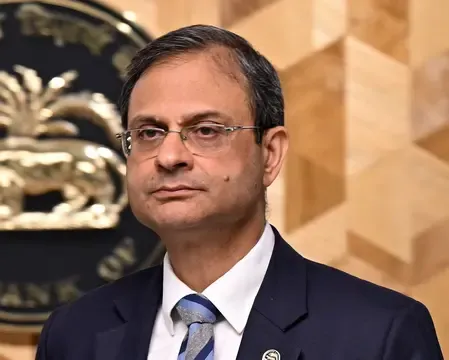
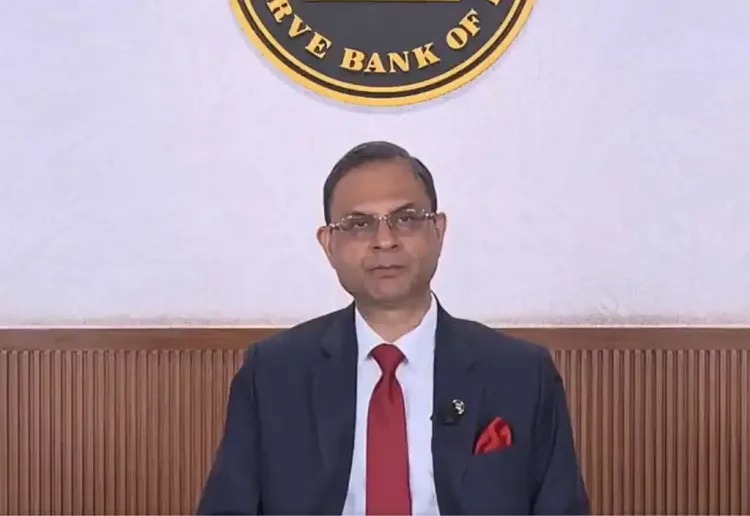
Mumbai, Feb 6 (NationPress) The Reserve Bank of India has elevated its real GDP growth expectations for Q1 and Q2 of 2026-27, projecting figures of 6.9% and 7.0% respectively, as announced by RBI Governor Sanjay Malhotra on Friday.
Detailing the reasoning behind this adjustment, Malhotra indicated that the sustained vitality in the services sector, the rationalization of GST, favorable rabi harvest prospects, a loosening in monetary policy, and a favorable inflation climate are all expected to bolster private consumption. Investment activities are anticipated to continue their upward trajectory, supported by high capacity utilization, favorable financial conditions, healthy balance sheets of financial institutions and corporations, strong credit growth, and the government's persistent focus on capital expenditures.
Additionally, robust domestic demand is anticipated to draw in new investments from the private sector. While services exports are expected to remain strong, merchandise exports will benefit from a potential trade agreement with the US, according to the RBI Governor.
Malhotra also noted that the significant comprehensive trade agreement with the European Union, along with trade arrangements with New Zealand and Oman, should aid in diversifying exports and fortifying the external sector. However, challenges from geopolitical tensions, an unpredictable global trade environment, fluctuations in global financial markets, and international commodity prices persist as downside risks.
He further stated that the real gross domestic product (GDP), according to the First Advance Estimates (FAE), is projected to grow by 7.4% (year-on-year) in 2025-26. Private consumption and fixed investment have made considerable contributions to overall growth. However, net external demand has continued to be a drag, with imports surpassing exports. On the supply side, real GVA growth of 7.3% is driven by a thriving services sector, a resilient agricultural sector, and a resurgence in manufacturing activities.
On the external front, he highlighted that the global economy exhibited notable resilience in 2025, bolstered by trade front-loading, a milder-than-expected impact of tariffs, broad fiscal stimulus, and accommodative monetary policies.
He remarked that inflation is on a gradual decline; however, it remains above target in several advanced economies. US yields are experiencing an upward trend amidst diminishing expectations of immediate rate cuts, supported by solid economic data. Equity markets, underpinned by sustained investment in technology stocks, have advanced, although fiscal strains, geopolitical uncertainties, and monetary policy divergences continue to induce volatility in financial markets.
Point of View
I believe that the RBI's optimistic growth forecast reflects a resilient economy responding well to various domestic and global factors. However, we must remain cautious about the potential risks that geopolitical tensions and market volatility pose, ensuring we navigate these challenges with a balanced perspective.
NationPress
6 Oct 2026
Frequently Asked Questions
What are the new GDP growth projections by RBI?
The RBI has raised its GDP growth projections for Q1 and Q2 of 2026-27 to 6.9% and 7.0%, respectively.
What factors support the GDP growth forecast?
Factors include sustained buoyancy in the services sector, GST rationalization, healthy rabi prospects, monetary easing, and a benign inflation environment.
How is domestic demand expected to influence investments?
Robust domestic demand is likely to attract fresh investments from the private sector.
What external risks could impact growth?
Geopolitical tensions, an uncertain global trade environment, volatility in financial markets, and international commodity prices are potential downside risks.
What was the GDP growth estimate for 2025-26?
The real GDP is estimated to grow at 7.4% (y-o-y) in 2025-26 according to the First Advance Estimates.