Is Pakistan's Economy Stuck in a Cycle of Bailouts and Strategic Support?
Synopsis
Pakistan's economic landscape is marked by persistent reliance on external support rather than genuine reforms. Despite temporary improvements, the country’s underlying debt issues remain unresolved. Discover the challenges facing the nation and the implications of its strategic alliances in this insightful report.
Key Takeaways
Pakistan's economy is heavily dependent on external support.
Debt repayments consume a large portion of government revenue.
Inflation has reached alarming levels.
Most creditors have agreed to roll over debt, delaying the crisis.
Structural reforms are critical for long-term stability.
New Delhi, Jan 26 (NationPress) The economy of Pakistan continues to rely on external support rather than implementing meaningful reforms, as policymakers depend on foreign borrowing and strategic partnerships to avert ongoing financial crises, a recent report reveals.
For many years, Pakistan has encountered repeated economic difficulties, consistently rescued by foreign lenders, the International Monetary Fund (IMF), or allied nations, as per an analysis by Sakariya Kareem.
Rather than cultivating a competitive, export-led economy, the country has leaned on extending its debt and obtaining bailouts.
This trend has led to what experts term “survival without reform,” where the economy remains afloat but fails to achieve substantial improvement, according to a report by Asian Lite.
A significant challenge is the currency policy of Pakistan. The government continues to artificially bolster the rupee to maintain lower import costs, particularly for fuel and essential goods.
This strategy necessitates borrowing foreign currency instead of generating it through exports. Consequently, the economy stays weak and unproductive.
Interest obligations on public debt now consume nearly two-thirds of government revenues, leaving scant resources for education, healthcare, or infrastructure.
Whenever oil prices increase or foreign aid diminishes, foreign exchange reserves decline sharply, pushing the economy back into turmoil.
The severity of the situation became evident in mid-2023, when Pakistan's foreign exchange reserves fell below $4 billion, barely sufficient to cover two weeks of imports.
The country required about $30 billion in financing that year while facing annual debt repayments of $15–20 billion for the next five years.
Inflation soared to 38%, and concerns of default heightened. By late 2024, however, the scenario seemed to improve.
Reserves increased to approximately $14.5 billion, inflation dropped to just over 4%, and economic pressures temporarily eased.
This stability, however, was not a result of reform. Most of Pakistan’s creditors consented to extend debt repayments, postponing the crisis rather than solving it.
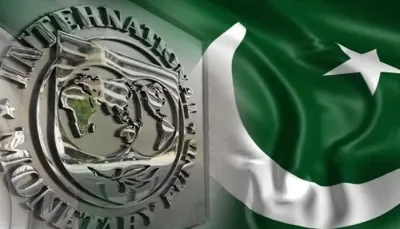
Global oil prices also decreased, lowering the import costs. Additionally, Pakistan secured its 24th IMF bailout in September 2024.
While these measures provided temporary relief, the underlying debt challenge persists, as noted in the report.
Point of View
It is imperative to recognize that while Pakistan navigates through its economic challenges, the reliance on foreign aid highlights a pressing need for genuine reforms. The nation’s ability to sustain itself depends on moving beyond bailouts and fostering a robust, self-reliant economy.
NationPress
23 Sept 2026
Frequently Asked Questions
What is the current economic situation in Pakistan?
Pakistan's economy is currently struggling, heavily reliant on external support and facing high inflation and significant debt repayments.
How much does Pakistan owe in debt repayments?
Pakistan faces annual debt repayments of $15–20 billion for the next five years.
What role does the IMF play in Pakistan's economy?
The IMF has provided Pakistan with multiple bailouts, including its 24th bailout in September 2024, to help stabilize the economy.
What are the major challenges for Pakistan's economy?
Key challenges include high inflation, reliance on foreign debt, and the need for structural reforms.
How does currency policy affect Pakistan's economy?
Pakistan's government artificially supports the rupee, which keeps imports cheap but requires borrowing rather than earning through exports.