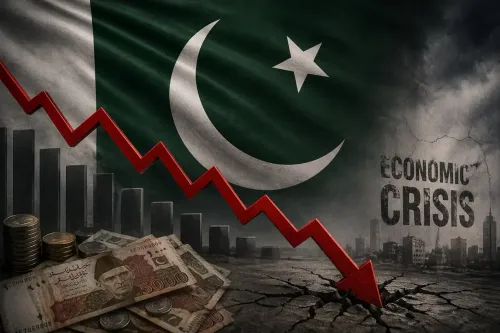
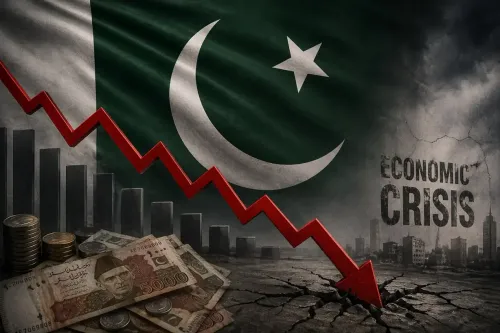
Is Pakistan Facing a Rs 1 Trillion Revenue Loss Due to Widespread Tax Evasion?

Synopsis
Pakistan's economy is suffering a critical blow with annual tax evasion losses reaching Rs 1 trillion. This alarming situation affects vital sectors and erodes public trust. Can the government take decisive action to curb this rampant issue? Discover the underlying factors contributing to this crisis and the potential solutions in our in-depth analysis.
Key Takeaways
Tax evasion in Pakistan leads to a staggering annual revenue loss of Rs 1 trillion.
The real estate sector and illicit tobacco trade are major contributors to this loss.
Political will is essential to enforce measures against tax evasion effectively.
Public trust is eroded when rules are enforced unevenly.
Comprehensive solutions are needed to address systemic issues enabling tax evasion.
New Delhi, Jan 27 (NationPress) Tax evasion within the real estate sector is draining approximately Rs 500 billion from Pakistan's national treasury each year. The illicit tobacco industry is responsible for an additional Rs 310 billion, while various consumer goods sectors operate outside the official economy, culminating in an annual revenue deficit for the government of an astonishing Rs 1 trillion, as reported by the Pakistani media.
A piece in the Karachi-based Business Recorder emphasizes that the scale of tax evasion and smuggling is facilitated by the official protection and collusion of regulatory bodies. Without such support, the shadow economy could diminish quickly, even with modest enforcement efforts.
The report highlights the Federal Board of Revenue's (FBR) Rs 545 billion shortfall in the first half of the current fiscal year, which reflects this dire situation. This issue is not solely attributed to sluggish economic activity or a depleted tax base but also stems from a system where a significant portion of value generation is intentionally kept outside the tax framework. Instead of dismantling the structures that allow for evasion, the state continues to rely on a limited group of compliant taxpayers to bridge the gap.
"This approach has become routine and is profoundly damaging. Registered businesses, salaried individuals, and formally documented companies bear an unfair share of the tax burden. Increased effective tax rates on this demographic dissuade investment, distort incentives, and drive marginal entities back into informality. Ultimately, the system punishes compliance while rewarding avoidance, perpetuating the very issues that policymakers claim to address," the article lamented.
A study conducted by the research agency Ipsos illustrates the deep-rooted dysfunction within various sectors. Real estate operates with chronic undervaluation, weak enforcement, and selective scrutiny. The illicit tobacco trade thrives despite clearly defined distribution networks and identifiable enforcement points. Similar patterns are found in tyres, lubricants, pharmaceuticals, and tea.
Repeated discussions have taken place regarding targeted enforcement, proper documentation, credible valuation mechanisms, and the comprehensive implementation of track-and-trace systems to tackle tax evasion. However, the missing element remains political will. Addressing the undocumented economy means confronting influential actors with resources and access. It also necessitates shielding enforcement agencies from political meddling, a challenge previous governments have consistently failed to meet.
"Instead, enforcement remains inconsistent. Crackdowns are announced, then softened. Technology is introduced, only to be undermined. Regulatory agencies are expected to operate without protection or consistency. Over time, the message becomes clear: compliance is optional for the powerful and mandatory for everyone else," the article noted.
The macroeconomic consequences of this failure are grave. Revenue shortfalls limit development expenditures, increase reliance on borrowing, and undermine fiscal credibility. Moreover, they exacerbate inflationary pressures as governments resort to indirect taxation. Most critically, they erode public trust. When citizens perceive that rules are applied unequally, voluntary compliance diminishes, transforming taxation from a contractual obligation into a coercive measure. This has characterized Pakistan's tax narrative for far too long, the article emphasized.
Point of View
It is imperative to acknowledge that while the situation is dire, it is crucial for the government to address the systemic issues enabling tax evasion. A comprehensive strategy focused on accountability and enforcement is essential for rebuilding public trust and ensuring a fair taxation system that benefits all citizens.
NationPress
19 Sept 2026
Frequently Asked Questions
What is the estimated revenue loss due to tax evasion in Pakistan?
The estimated revenue loss due to tax evasion in Pakistan is approximately Rs 1 trillion annually.
What sectors are primarily contributing to tax evasion?
The real estate sector, illicit tobacco trade, and various consumer goods industries are the primary contributors to tax evasion.
What measures can be taken to combat tax evasion?
Measures such as targeted enforcement, proper documentation, credible valuation mechanisms, and the full implementation of track-and-trace systems are essential to combat tax evasion.
How does tax evasion impact Pakistan's economy?
Tax evasion leads to revenue shortfalls, which constrain development spending, increase reliance on borrowing, and weaken fiscal credibility, ultimately harming the economy.
Why is political will important in addressing tax evasion?
Political will is crucial because tackling the undocumented economy means confronting influential actors and ensuring enforcement agencies are protected from political interference.