Air India AI171 crash report: Pilots' body FIP seeks role in independent review

Synopsis
The Federation of Indian Pilots is pushing for a seat at the table as India's aviation accident bureau finalises its report on the June 2025 Air India AI171 disaster. FIP's specific concern — a four-second gap between a fuel interruption and Ram Air Turbine activation — suggests the technical picture may be more contested than the preliminary report implies, with the final report due by October 2026.
Key Takeaways
The Federation of Indian Pilots (FIP) has written to Civil Aviation Minister Ram Mohan Naidu seeking formal representation in any independent review of the Air India AI171 crash investigation report.
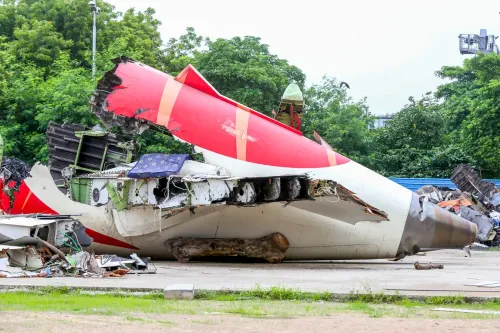
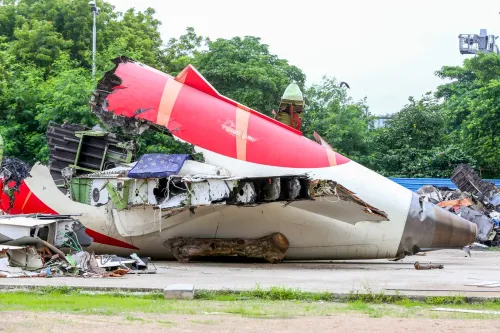
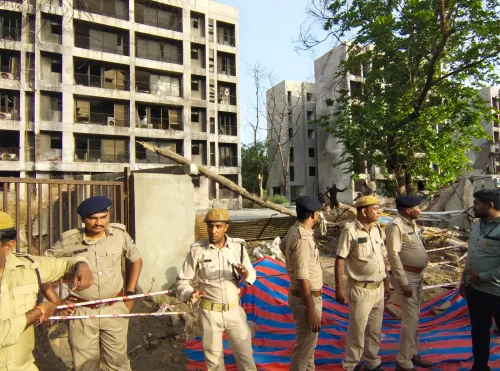
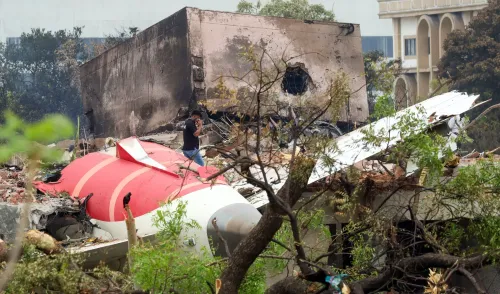
The Aircraft Accident Investigation Bureau (AAIB) is finalising its probe into the 12 June 2025 crash of a Boeing 787-8 on the Ahmedabad–London Gatwick route.
The AAIB had informed the Supreme Court in July that the final report would be ready by October 2026 .
FIP has flagged a key technical concern: a fuel-system interruption recorded at 08:08:42 UTC and Ram Air Turbine (RAT) activation approximately four seconds later.
The investigation is governed by India's accident investigation rules and the ICAO Annex 13 framework.
The Federation of Indian Pilots (FIP) has formally urged the Civil Aviation Ministry to include professional pilots in any independent review of the draft final investigation report into the Air India flight AI171 crash, contending that critical technical discrepancies identified during the probe must be independently examined before findings are finalised. The request was conveyed in a letter addressed to Civil Aviation Minister Ram Mohan Naidu.
What FIP Has Asked For
In its letter, the pilots' federation stated it had 'reliably learnt' that the government or ministry had either directed or was considering requiring the draft report to undergo scrutiny by an independent committee before it is circulated or finalised. FIP has requested that it be formally nominated as an independent technical stakeholder in that process, representing the views and expertise of the professional pilot community.
'FIP requests that, if such an independent review mechanism has been directed or is being constituted, FIP should be formally nominated and represented in that process as an independent technical stakeholder representing the professional pilot community,' the body said in its letter.
Background: The AI171 Crash Investigation
The request comes as the Aircraft Accident Investigation Bureau (AAIB) moves toward concluding its investigation into the 12 June 2025 crash of Air India flight AI171, a Boeing 787-8 operating from Ahmedabad to London Gatwick. The bureau had informed the Supreme Court in July that the final investigation report was expected by October 2026. The probe is being conducted under India's aircraft accident investigation rules and the International Civil Aviation Organization's (ICAO) Annex 13 framework.
The Ram Air Turbine: A Key Technical Concern
A central area of contention highlighted by FIP concerns the aircraft's Ram Air Turbine (RAT) — an emergency system designed to generate power following a major loss of the aircraft's primary power supply. According to the pilots' federation, the AAIB's preliminary report recorded a fuel-system interruption at approximately 08:08:42 UTC, with hydraulic power generated by the RAT approximately four seconds later. FIP argues that these specific technical details warrant independent expert scrutiny before conclusions are formalised.
Why This Matters
The AI171 crash is one of the most consequential civil aviation disasters in India's recent history, and the AAIB's final report will have far-reaching implications — for regulatory oversight, airline safety protocols, Boeing's 787-8 certification standing in India, and potential legal proceedings. The inclusion of professional pilots in any review panel would represent an unusual but arguably warranted step, given the technical complexity of the RAT-related discrepancies flagged. This comes amid broader global scrutiny of Boeing aircraft safety and India's expanding role as a major aviation market. Notably, Annex 13 protocols do permit accredited representation from affected stakeholder groups, lending procedural legitimacy to FIP's request even if the final decision rests with the ministry.
What Happens Next
The Civil Aviation Ministry has not publicly confirmed whether an independent review committee has been constituted or whether FIP's representation will be accepted. With the AAIB's final report due by October 2026, a decision on the review structure is expected imminently. Any delay in constituting the committee risks compressing the timeline further ahead of the Supreme Court's deadline.
Point of View
Even though Annex 13 permits it. If the discrepancies FIP has identified are substantive, excluding the pilot community from the review process risks producing a report that is contested the moment it is published — which would serve nobody, least of all the families of victims and the broader cause of aviation safety reform.
NationPress
26 Sept 2026
Frequently Asked Questions
What is the Air India AI171 crash?
Air India flight AI171 was a Boeing 787-8 that crashed on 12 June 2025 while operating from Ahmedabad to London Gatwick. It is one of the most significant civil aviation disasters in India's recent history, and the Aircraft Accident Investigation Bureau (AAIB) is finalising its investigation report, expected by October 2026.
Why is the Federation of Indian Pilots seeking a role in the review?
FIP says it has learnt that the government is considering or has already directed an independent examination of the AAIB's draft final report. The body wants to be formally represented in that process as a technical stakeholder, arguing that professional pilots have the expertise to assess key discrepancies flagged in the investigation.
What is the Ram Air Turbine (RAT) concern flagged by FIP?
The Ram Air Turbine is an emergency power system that activates after a major loss of aircraft power. FIP says the AAIB's preliminary report records a fuel-system interruption at 08:08:42 UTC and RAT activation about four seconds later — a sequence the pilots' body believes warrants independent expert scrutiny before the final report is concluded.
When is the final AAIB report on the AI171 crash expected?
The AAIB informed the Supreme Court in July that the final investigation report would be ready by October 2026. The probe is being conducted under India's aircraft accident investigation rules and the ICAO Annex 13 framework.
Has the Civil Aviation Ministry responded to FIP's request?
As of 26 September 2026, the Civil Aviation Ministry has not publicly confirmed whether an independent review committee has been constituted or whether FIP will be granted formal representation in the review process.