Rajasthan DA Hike: 12.46 Lakh Employees & Pensioners Get 2% Relief
Synopsis
Rajasthan CM Bhajan Lal Sharma's government has approved a 2% Dearness Allowance hike — raising DA from 58% to 60% under the 7th Pay Commission — benefiting 7.02 lakh employees and 5.44 lakh pensioners from January 2026, at an annual cost of Rs 1,156 crore to the state exchequer.
Key Takeaways
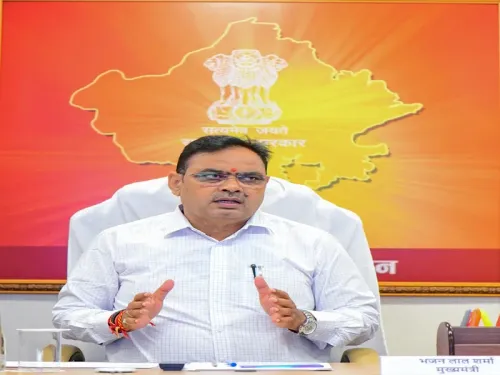
Rajasthan government has approved a 2% Dearness Allowance hike on the directive of CM Bhajan Lal Sharma .
DA under the 7th Pay Commission rises from 58% to 60% , effective January 1, 2026 .
A total of 12.46 lakh beneficiaries — 7.02 lakh employees and 5.44 lakh pensioners — will gain from the revision.
Revised DA will be paid in cash with the May 2026 salary (June payout) ; arrears for Jan–Apr 2026 will go to GPF accounts .
The hike will cost the Rajasthan exchequer approximately Rs 1,156 crore annually .
The move follows the Union Cabinet's identical 2% DA hike for central employees, benefiting over 1.17 crore people at a cost of Rs 6,791 crore per year.
The Rajasthan state government has approved a 2 per cent hike in Dearness Allowance (DA) and Dearness Relief (DR) for its employees and pensioners, acting on directives from Chief Minister Bhajan Lal Sharma. The revision raises the DA under the 7th Pay Commission from 58 per cent to 60 per cent, effective from January 1, 2026. A total of approximately 12.46 lakh beneficiaries — comprising 7.02 lakh employees and 5.44 lakh pensioners — will gain from this decision across the state.
Who Benefits and When
The enhanced Dearness Allowance will be disbursed in cash to state employees along with their May 2026 salary, payable in June 2026. Employees of Panchayat Samitis and Zila Parishads are also covered under this enhancement, ensuring the benefit reaches grassroots-level government workers.
Pensioners will receive the revised Dearness Relief in cash starting January 1, 2026, providing immediate financial relief without any deferral.
Arrears accumulated for the period from January 1 to April 30, 2026, will be credited directly to employees' General Provident Fund (GPF) accounts, rather than paid as cash — a standard fiscal practice to manage immediate liquidity pressure on the state treasury.
Financial Impact on State Exchequer
The 2 per cent DA hike is estimated to place an additional annual burden of approximately Rs 1,156 crore on the Rajasthan state exchequer. Despite this significant fiscal outgo, the government has chosen to prioritise employee welfare amid rising inflation and increasing household expenditure pressures.
The decision aligns with the broader national trend. Earlier, the Union Cabinet also approved a 2 per cent DA increase — raising central government DA from 58 per cent to 60 per cent — at an estimated annual cost of Rs 6,791 crore to the central government. That revision is set to benefit approximately 49.19 lakh central government employees and 68.72 lakh central pensioners, totalling over 1.17 crore beneficiaries at the national level.
Context: Why This DA Revision Matters
Dearness Allowance revisions are typically linked to the All India Consumer Price Index (AICPI) and are intended to offset the erosion of purchasing power caused by inflation. The move from 58% to 60% DA under the 7th Central Pay Commission framework reflects the government's acknowledgment that inflation has continued to exert pressure on salaried households.
Notably, this revision comes as India's retail inflation has shown volatility in recent months, with food prices and fuel costs remaining key concerns for fixed-income earners. For state government employees — many of whom are in lower and middle pay brackets — even a 2 per cent increase in DA can meaningfully supplement monthly take-home pay.
The Bhajan Lal Sharma-led BJP government in Rajasthan, which assumed power in December 2023, has been keen to signal pro-employee governance ahead of future electoral cycles. Welfare announcements of this nature serve a dual purpose: addressing genuine cost-of-living concerns while consolidating the loyalty of a large, organised voter base of government employees and retirees.
Broader Implications and What Comes Next
With the 7th Pay Commission cycle maturing and discussions around the 8th Pay Commission already gaining momentum at the central level, state governments are under increasing pressure to keep their compensation structures competitive. Rajasthan's timely DA revision signals that the state is tracking central government benchmarks closely.
Analysts note that the GPF route for arrear crediting — rather than direct cash payment — is a fiscally prudent move that cushions the immediate impact on the state's revenue expenditure. However, employee unions have historically preferred cash disbursement of arrears, and this aspect may invite pushback from worker organisations.
Going forward, the next DA revision will depend on AICPI data for the subsequent quarters. If inflation trends persist, another revision could be due by mid-2026, potentially pushing DA closer to 62–64 per cent. Rajasthan's approximately 12.46 lakh beneficiaries will be watching closely for the next announcement.
Point of View
It effectively defers cash in hand for employees who may need it most. More broadly, the fact that both the Centre and states are synchronising DA hikes at 2 per cent signals a tacit acknowledgment that inflation has structurally outpaced earlier projections — a fact that deserves louder policy debate than the applause these announcements typically receive.
NationPress
20 Sept 2026
Frequently Asked Questions
What is the new Dearness Allowance rate for Rajasthan government employees in 2026?
The new Dearness Allowance for Rajasthan government employees is 60 per cent under the 7th Pay Commission, increased from the earlier 58 per cent. This revised rate is effective from January 1, 2026.
How many employees and pensioners will benefit from Rajasthan's DA hike?
Approximately 12.46 lakh people will benefit — including 7.02 lakh state government employees and 5.44 lakh pensioners. Employees of Panchayat Samitis and Zila Parishads are also included.
When will Rajasthan employees receive the revised DA in their salary?
State employees will receive the revised Dearness Allowance in cash with their May 2026 salary, which will be paid in June 2026. Arrears from January 1 to April 30, 2026, will be credited to their GPF accounts.
What is the financial cost of the Rajasthan DA hike to the state government?
The 2 per cent DA hike will impose an additional annual burden of approximately Rs 1,156 crore on the Rajasthan state exchequer. Despite this, the government has prioritised employee and pensioner welfare.
Is Rajasthan's DA hike linked to the central government's DA revision?
Yes, Rajasthan's hike mirrors the Union Cabinet's decision to raise DA from 58 per cent to 60 per cent for central government employees. The central revision benefits over 1.17 crore people at an annual cost of Rs 6,791 crore.