RBI swap facility lifts forex reserves past $750 billion, shields rupee

Synopsis
India's forex reserves have likely crossed $750 billion after the RBI's swap windows pulled in a record $136.3 billion — 92% through FCNR(B) deposits alone. The rupee has already responded, breaking below 95 against the dollar. The real question now is whether the RBI can absorb the resulting INR liquidity glut before it distorts overnight rates.
Key Takeaways
RBI swap windows mobilised a cumulative $136.3 billion through end-August , exceeding market estimates.
Foreign exchange reserves are likely above $750 billion , giving the central bank significant capacity to defend the rupee.
Nearly 92% of inflows — approximately $126 billion — came via FCNR(B) deposits .
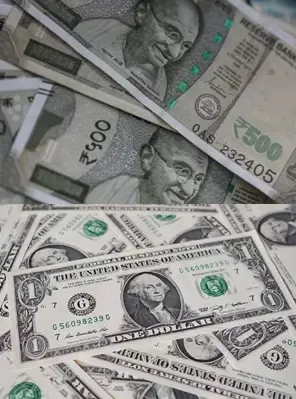
USD/INR tested below the 95 handle, trading into mid-94 on strong RBI dollar sales.
INR liquidity hit a four-year high in August, depressing overnight rates, according to DBS Bank .
Traders see an immediate trading band of ₹94.10–₹95.50 ; a break below ₹94.10 could target ₹93.50 .
The Reserve Bank of India's special swap windows have collectively mobilised a cumulative $136.3 billion through end-August, surpassing market expectations by a wide margin and likely pushing India's foreign exchange reserves beyond $750 billion, according to a report released on Thursday, 3 September. The surge gives the central bank substantial firepower to defend the Indian rupee against external pressures.
Scale of the Inflows
Of the total inflows, nearly 92 per cent — or approximately $126 billion — arrived through FCNR(B) deposits, with the remaining portion channelled via offshore borrowing facilities. The scale of mobilisation has exceeded what most market participants had pencilled in, underscoring the effectiveness of the RBI's swap architecture in attracting foreign currency into the domestic system.
Impact on the Rupee and Intervention Bias
The surge has already altered the RBI's intervention posture. The USD/INR pair corrected sharply, testing below the 95 handle and trading into the mid-94 range, driven by strong dollar sales by the central bank alongside broader dollar weakness. Traders are now eyeing an immediate band of ₹94.10–₹95.50, with a decisive break below ₹94.10 potentially opening the path toward ₹93.50.
Liquidity Implications
Radhika Rao, Senior Economist and Executive Director at DBS Bank, noted that the swap-linked inflows will add to an already abundant rupee liquidity backdrop. 'Given the swap arrangement, these inflows will add to an already abundant INR liquidity backdrop, which was at a four-year high this month, depressing overnight rates,' she said. Organic counter-balancing factors — including tax-related outflows, seasonal currency leakage, a current account deficit of around 1.1 per cent of GDP, portfolio outflows, and maturity of forward books — are expected to partially offset the liquidity surge, though the DBS report cautioned that concerted steps remain necessary to drain excess liquidity.
Managing Bunched Deposit Maturities
The DBS report flagged the risk posed by bunched-up deposit maturities in the three- and five-year tenor buckets. It suggested that a portion of the existing reserve stock could be earmarked against these liabilities to prevent a sharp spike in dollar demand when deposits mature. 'A portion of the existing reserve stock could be earmarked against these liabilities, helping to mitigate concerns that deposit maturities or debt repayments could trigger a sharp increase in dollar demand and exert pressure on the FX market down the line,' the report stated.
Broader Market Context
Market participants expect the RBI to continue rebuilding reserves and curtailing rupee depreciation. The rupee is additionally supported by broader Asian currency strength and a retreat in the dollar index, partly led by a rally in the Japanese yen. This confluence of domestic policy action and external tailwinds has positioned the rupee more defensively than at any point in recent months. How long the external tailwinds persist will be a key variable for the RBI's reserve-management strategy going forward.
Point of View
But the more consequential story is the liquidity overhang it creates. Flooding the system with rupees while trying to defend the currency is a policy contradiction the RBI will need to resolve quickly — likely through open market operations or CRR adjustments. The bunched FCNR(B) maturities in three- and five-year buckets are a time-delayed pressure point that markets are not yet fully pricing. If the dollar index reverses and Asian currency tailwinds fade, the RBI's intervention toolkit will be tested in both directions simultaneously.
NationPress
3 Sept 2026
Frequently Asked Questions
What did the RBI's swap facility achieve by end-August?
The RBI's special swap windows mobilised a cumulative $136.3 billion by end-August, surpassing market estimates by a wide margin and likely pushing India's total foreign exchange reserves beyond $750 billion. The bulk of the inflows — around 92% — came through FCNR(B) deposits.
How has the rupee responded to the RBI's swap-driven reserve build-up?
The USD/INR pair corrected sharply, breaking below the 95 handle and trading into the mid-94 range, supported by strong RBI dollar sales and broader dollar weakness. Traders currently see an immediate band of ₹94.10–₹95.50, with a break below ₹94.10 potentially opening the way to ₹93.50.
What is the liquidity risk from the RBI swap inflows?
Because the swap inflows add rupees to the domestic system, INR liquidity hit a four-year high in August, which has depressed overnight rates. DBS Bank's Radhika Rao has flagged that concerted steps are needed to drain the potential surplus before it distorts short-term money markets.
Why are bunched deposit maturities a concern?
A large share of the FCNR(B) deposits are concentrated in three- and five-year maturity buckets. When these mature, they could trigger a sharp surge in dollar demand and pressure the FX market. The DBS Bank report recommends earmarking a portion of reserves specifically against these liabilities to cushion the impact.
What external factors are supporting the rupee alongside RBI action?
The rupee is also benefiting from broader Asian currency strength and a retreat in the dollar index, partly driven by a rally in the Japanese yen. These external tailwinds have complemented the RBI's domestic intervention, reinforcing the currency's recent appreciation.