Has Indian Railways Achieved a New Freight Milestone with Record Train Interchanges on DFC?
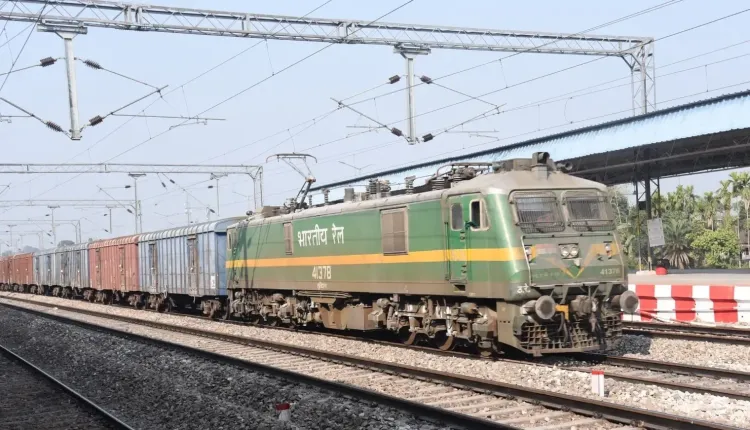
Synopsis
Indian Railways has made significant strides in freight transport, achieving unprecedented train interchanges on the Dedicated Freight Corridor. This transformation is set to revolutionize logistics and enhance passenger services while supporting economic growth.
Key Takeaways
892 freight train interchanges recorded in one day.
Dedicated Freight Corridor enhances speed and efficiency.
Positive impact on passenger services through reduced congestion.
Modern technology plays a crucial role in operations.
Economic benefits from reduced logistics costs.
New Delhi, Jan 14 (NationPress) The Indian Railways is undergoing a swift transformation in freight logistics, establishing new standards in speed, efficiency, and reliability through its Dedicated Freight Corridor network, as announced by the Ministry of Railways on Wednesday.
This advanced freight system facilitates quicker and cost-effective movement of goods, alleviating the load on traditional railway lines used for passenger trains.
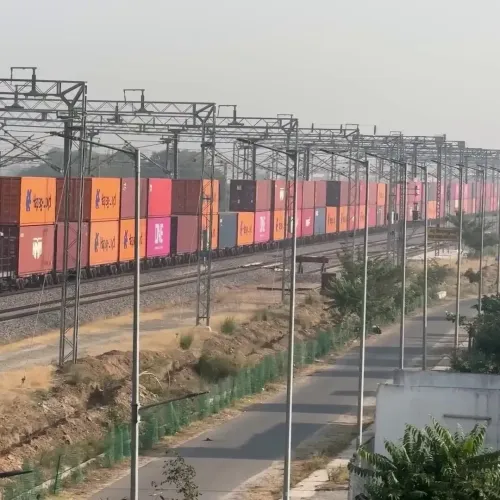
In a significant accomplishment, the Dedicated Freight Corridor Corporation of India Limited (DFCCIL) achieved the highest-ever freight train interchanges on its network.
On Sunday, January 5, 2026, a remarkable total of 892 interchange trains were managed in a single day between the Dedicated Freight Corridor and five zones of Indian Railways, as reported by the ministry.
This feat surpassed the previous record of 865 trains, which was set just a day earlier on January 4.
The Dedicated Freight Corridor is engineered to transport heavy and long freight trains at elevated speeds, utilizing cutting-edge infrastructure and modern operational systems.
The record-breaking achievement underscores the increasing capacity of the DFC network and its capability to manage high-density freight traffic efficiently and safely.
As per the ministry, effective planning, enhanced traffic management, and seamless coordination between stations were crucial in reaching this landmark.
This surge in operational efficiency also positively impacts passenger services. With a greater volume of freight being redirected to the DFC network, congestion on conventional railway lines has diminished, allowing passenger trains to operate more punctually and enhancing the daily travel experience for commuters.
Industries are reaping the benefits from the accelerated movement of goods, which in turn supports economic growth and reduces overall logistics expenses.
The robust performance was bolstered by modern technology, including real-time traffic monitoring, automated signaling systems, digital control rooms, and sophisticated train scheduling tools.
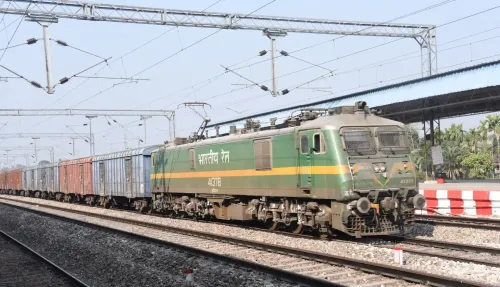
High-powered locomotives capable of hauling longer and heavier trains ensured greater average speeds, while coordinated efforts by loco pilots, assistant loco pilots, and train managers maintained safety and discipline throughout operations.
Efficient yard management and strengthened feeder routes further minimized delays, enabling freight trains to enter and exit the network swiftly.
Centralized monitoring by control centers ensured smooth coordination across different zones and stations, even in heavily loaded sections of the corridor.
Point of View
It is paramount to acknowledge the significant advancements made by Indian Railways in freight transportation. This achievement is not just a milestone; it reflects a commitment to improving logistics efficiency, which ultimately benefits the economy and daily commuters across the nation.
NationPress
20 Sept 2026
Frequently Asked Questions
What is the Dedicated Freight Corridor?
The Dedicated Freight Corridor is a specialized railway network designed to facilitate the movement of freight trains more efficiently and at higher speeds, reducing congestion on conventional passenger lines.
How many train interchanges were recorded?
On January 5, 2026, a total of 892 freight train interchanges were recorded, surpassing the previous day's record of 865.
What technologies support this achievement?
The success is supported by technologies such as real-time traffic monitoring, automated signaling systems, and advanced train scheduling tools.
How does this achievement impact passenger services?
With more freight being directed to the DFC, congestion on conventional railway lines has decreased, allowing passenger trains to run more on time.
What are the economic implications of this transformation?
Faster movement of goods reduces logistics costs and supports overall economic growth, benefiting various industries.