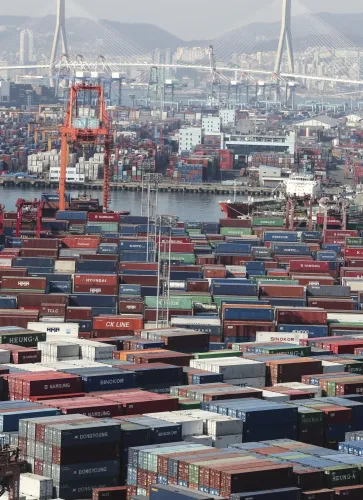
South Korea exports hit 2nd-highest ever in July, chips cross $41 billion
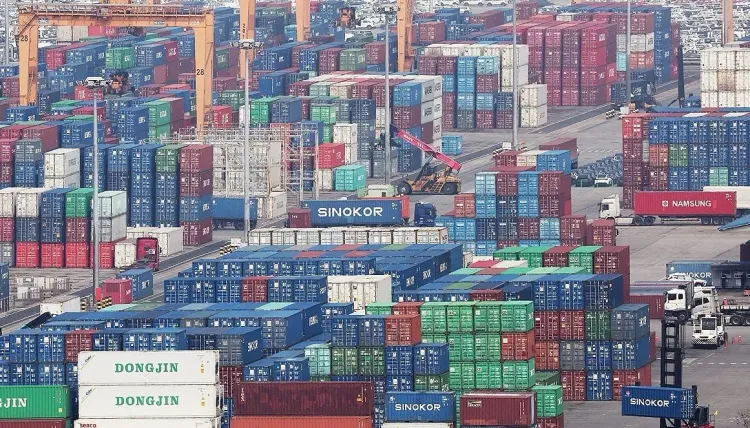
Synopsis
South Korea's July export tally of $98.89 billion — the second-highest ever — was almost entirely a chip story. Semiconductor shipments crossed $41 billion for the second straight month, up 179 percent, as AI data centres worldwide kept DRAM and NAND demand — and prices — elevated. The numbers suggest the global AI infrastructure boom is now a structural export engine for Seoul, not a one-quarter blip.
Key Takeaways
South Korea's July exports reached $98.89 billion — the second-highest monthly total on record , up nearly 63 percent year-on-year.
Semiconductor exports surged 179 percent to $41 billion , crossing the $40 billion mark for two consecutive months .
A trade surplus of $30.32 billion was recorded, with imports rising 26.5 percent to $68.56 billion .
19 of 20 major export categories posted gains; only home appliances declined, down 4.1 percent .
Exports to China nearly doubled to $21.68 billion ; exports to the US surged 68.7 percent to $17.4 billion .
Industry Minister Kim Jung-kwan cited successful export portfolio diversification alongside the chip boom.
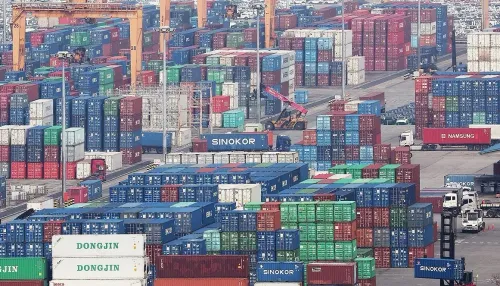
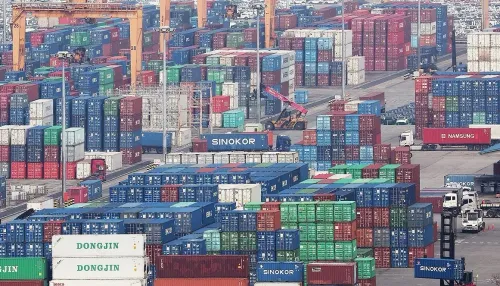
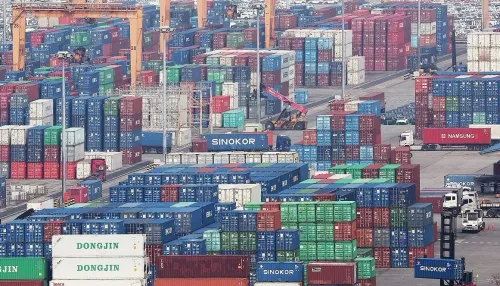
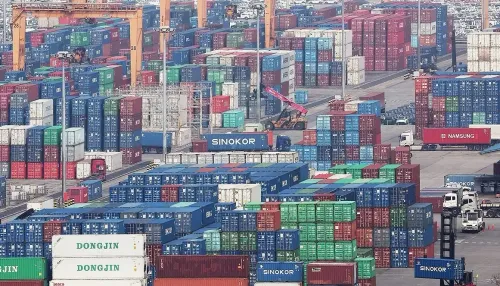
South Korea's monthly exports surged to their second-highest level on record in July, climbing nearly 63 percent year-on-year to $98.89 billion, according to data released by the Ministry of Trade, Industry and Resources on 1 August. The figure fell just short of the all-time high of $102.2 billion set in June, underscoring the sustained momentum in global demand for South Korean goods — led overwhelmingly by memory chips.
Semiconductor Exports Drive the Record Run
Exports of semiconductors — the backbone of Asia's fourth-largest economy — shot up 179 percent year-on-year to $41 billion, marking the second consecutive month above the $40 billion threshold. The surge was powered by robust global demand for memory products used in artificial intelligence (AI) data centres, alongside rising prices for both DRAM and NAND chips.
'The popularisation of AI technology, with the industry entering the era of agentic AI, continued to drive demand for memory chips used in servers,' the industry ministry said in a statement. 'Prices for both DRAM and NAND also continued to rise.'
Notably, South Korea's total exports excluding semiconductors still rose a solid 26 percent year-on-year in July, demonstrating broadening export strength beyond the chip sector.
Key Export Categories: Gains Across the Board
Of the country's 20 major export categories, 19 posted gains, according to Industry Minister Kim Jung-kwan. Automobiles rose 7 percent to $6.2 billion, driven by strong global appetite for hybrid and eco-friendly models. Petroleum products jumped 34.1 percent to $5.68 billion, with higher oil prices — partly reflecting Middle East supply uncertainties — inflating export values even as shipment volumes dipped. Petrochemical exports gained 10.3 percent to $4.18 billion.
Mobile devices were another standout, with outbound shipments rising 51 percent to $1.81 billion, as premium smartphones including the Galaxy S26 lineup maintained solid sales despite elevated chip-driven production costs. The sole decliner among the top 20 categories was home appliances, which shed 4.1 percent to $600 million, weighed down by sluggish demand from the United States following a slowdown in the US housing market.
Destination Markets: China, US, and Southeast Asia Lead
By destination, exports to China nearly doubled to $21.68 billion, buoyed by strong chip, nonferrous metal, and petroleum shipments. Exports to the United States surged 68.7 percent to $17.4 billion, propelled by AI data centre investment from major US technology companies. Southeast Asian markets absorbed $18.8 billion worth of South Korean goods — up 73.7 percent — on the back of strong semiconductor, display, and shipbuilding exports. Exports to the European Union climbed 55.7 percent to $9.38 billion.
Trade Surplus and Import Picture
Imports rose 26.5 percent year-on-year to $68.56 billion in July, resulting in a trade surplus of $30.32 billion. The widening surplus reflects both the strength of outbound shipments and the comparatively moderate pace of import growth, offering a positive signal for South Korea's current account position.
'Amid the strong performance of semiconductors, 19 of the country's 20 major export categories posted gains,' Minister Kim Jung-kwan said, adding that South Korea has 'successfully diversified its export portfolio.' With AI infrastructure investment showing no signs of slowing, analysts expect chip-led export momentum to persist through the second half of the year.
Point of View
And July's read is unambiguous: the buildout is accelerating. Two consecutive months above $41 billion in chip exports — driven by DRAM and NAND demand from AI data centres — is not a spike, it is a structural shift. What mainstream coverage underplays is the risk concentration this creates: Seoul's trade health is now disproportionately tied to a single technology cycle and a handful of US hyperscaler capex budgets. The home-appliance decline, though modest, is a quiet signal that consumer-facing demand remains soft, and any deceleration in US tech investment could expose how thin the diversification story actually is beneath the semiconductor headline.
NationPress
15 Sept 2026
Frequently Asked Questions
How much did South Korea's exports grow in July?
South Korea's exports rose nearly 63 percent year-on-year to $98.89 billion in July, making it the second-highest monthly export total on record. The all-time high of $102.2 billion was set in June.
Why did South Korea's semiconductor exports surge so sharply?
Semiconductor exports jumped 179 percent to $41 billion, driven by strong global demand for memory chips — particularly DRAM and NAND — used in AI data centre servers. Rising chip prices also contributed to the value increase.
Which countries imported the most from South Korea in July?
China was the top destination with nearly doubled exports of $21.68 billion, followed by Southeast Asia at $18.8 billion and the United States at $17.4 billion. EU imports from South Korea also rose 55.7 percent to $9.38 billion.
What was South Korea's trade surplus in July?
South Korea recorded a trade surplus of $30.32 billion in July, as imports rose 26.5 percent to $68.56 billion against exports of $98.89 billion.
Were there any declining export categories in July?
Home appliances were the only category among South Korea's top 20 exports to decline, falling 4.1 percent to $600 million. The ministry attributed this to sluggish US demand following a slowdown in the American housing market.