South Korea seaport cargo rises 1.5% in Q1 2026 despite trade headwinds
Synopsis
South Korea's ports held steady in Q1 2026 with overall cargo up 1.5%, but the headline masks a 10.2% plunge in US-bound shipments and a 2% drop at Busan — hinting at how US tariff pressure and Middle East disruptions are quietly reshaping the country's trade geography.
Key Takeaways
South Korea seaport cargo reached 388.45 million tons in Q1 2026 , up 1.5 per cent year-on-year.
Container cargo fell 1.2 per cent to 7.87 million TEUs ; export-import container cargo dropped 1.9 per cent to 4.21 million TEUs .
Shipments with the US fell 10.2 per cent ; Vietnam down 6.98 per cent ; China up 2.4 per cent ; Japan up 9.5 per cent .
Busan port handled 6.14 million TEUs , down 2 per cent on-year due to base-effect normalisation.
Gwangyang port outperformed with a 5.2 per cent rise to 494,000 TEUs .
Oceans Minister Hwan Jong-woo said the Strait of Hormuz blockade had limited impact on Q1 port volumes.
South Korea's seaport cargo volumes rose 1.5 per cent year-on-year in the first quarter of 2026, reaching 388.45 million tons between January and March, according to the Ministry of Oceans and Fisheries. The growth signals limited disruption from the ongoing Middle East conflict, including the blockade of the Strait of Hormuz, despite broader global trade anxieties.
Overall Cargo Performance
Total cargo at South Korean seaports climbed from 382.89 million tons in the same period last year to 388.45 million tons in Q1 2026. Of this, export-import cargo accounted for 327.48 million tons, also registering a 1.5 per cent on-year increase, according to data cited by Yonhap news agency.
Non-container cargo handled at seaports nationwide gained 1.7 per cent on-year, reaching 249.63 million tons in the first quarter — a segment that remained relatively insulated from container-specific pressures.
Container Cargo Sees Decline
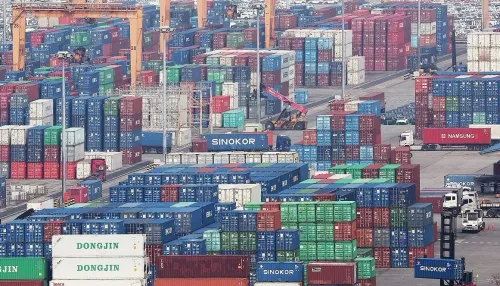
In contrast to overall cargo growth, container cargo processed at seaports fell 1.2 per cent on-year to 7.87 million twenty-foot equivalent units (TEUs) in the first quarter. Of these, export-import container cargo stood at 4.21 million TEUs, down 1.9 per cent from the previous year.
Transshipment cargo — goods processed en route to final destinations elsewhere — also declined 0.7 per cent to 3.6 million TEUs, reflecting softer demand on key transhipment corridors.
Trade Routes: US and Vietnam Down, China and Japan Up
A notable divergence emerged across bilateral trade routes. Shipments to and from the United States fell sharply by 10.2 per cent, while those involving Vietnam dropped 6.98 per cent. This comes amid persistent uncertainty over US tariff policies, which have weighed on export-oriented Asian economies.
On the other hand, cargo volumes with China rose 2.4 per cent and those with Japan surged 9.5 per cent, partly offsetting losses on other routes. The contrasting trends suggest South Korean ports are actively reorienting cargo flows toward regional partners.
Port-by-Port Breakdown
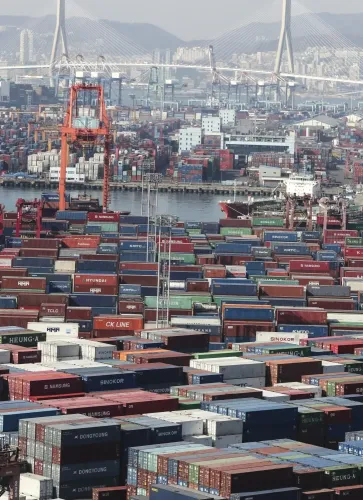
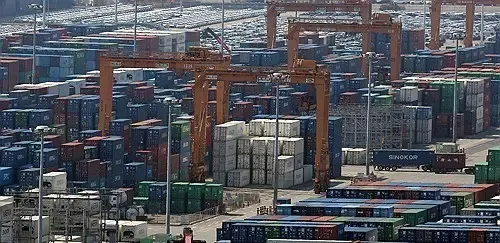
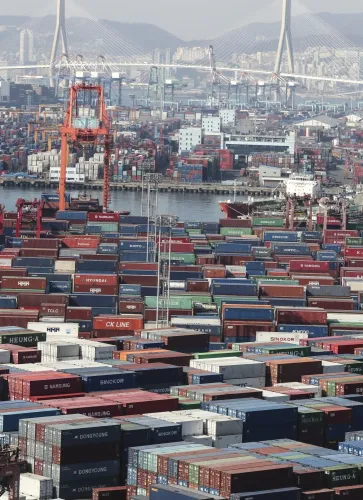
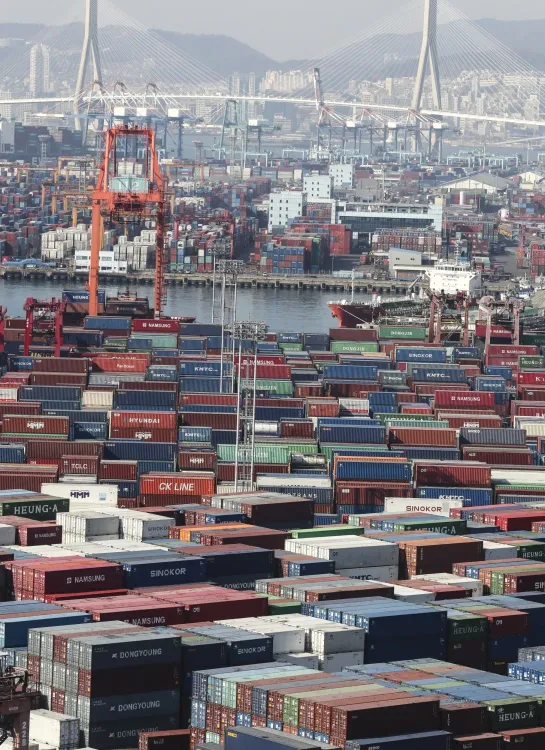
Busan, South Korea's largest and busiest port, processed 6.14 million TEUs in the first three months of the year, down 2 per cent on-year. The ministry attributed this decline to the normalisation of shipments following a sudden surge in Q1 2026 triggered by US tariff policies — effectively a base-effect correction.
The port of Incheon handled 810,000 TEUs, up 1.1 per cent on-year, while Gwangyang recorded a stronger rise of 5.2 per cent, processing 494,000 TEUs. The outperformance at Gwangyang suggests growing utilisation of secondary ports as cargo redistribution strategies evolve.
Government Response and Outlook
Oceans Minister Hwan Jong-woo acknowledged the headwinds but offered a measured assessment.
Point of View
Not just slowing them. Busan's 2 per cent decline, explained away as a base-effect correction, deserves closer scrutiny: if the Q1 2026 surge was itself a tariff-front-loading event, the real demand signal may be weaker than the ministry's statement implies. The outperformance of China and Japan routes points to a quiet but consequential pivot in South Korea's trade geography — one that carries its own geopolitical sensitivities.
NationPress
27 Sept 2026
Frequently Asked Questions
How much did South Korea's seaport cargo grow in Q1 2026?
South Korea's seaport cargo grew 1.5 per cent year-on-year in Q1 2026, reaching 388.45 million tons between January and March. Export-import cargo also rose 1.5 per cent to 327.48 million tons.
Why did container cargo at South Korean ports decline?
Container cargo fell 1.2 per cent to 7.87 million TEUs in Q1 2026, with export-import container cargo down 1.9 per cent to 4.21 million TEUs. The decline was driven partly by a sharp 10.2 per cent drop in US-bound shipments amid tariff uncertainties.
How did the Strait of Hormuz blockade affect South Korean ports?
According to Oceans Minister Hwan Jong-woo, the blockade of the Strait of Hormuz had limited impact on port cargo volumes in Q1 2026, despite lingering uncertainties from the Middle East conflict.
Which South Korean ports performed best in Q1 2026?
Gwangyang port outperformed with a 5.2 per cent rise to 494,000 TEUs, while Incheon rose 1.1 per cent to 810,000 TEUs. Busan, the largest port, declined 2 per cent to 6.14 million TEUs due to base-effect normalisation.
Why did shipments between South Korea and the US fall so sharply?
US-bound and US-origin shipments fell 10.2 per cent in Q1 2026, reportedly reflecting uncertainty over US tariff policies. The ministry noted that Busan's decline was partly a correction after a surge in the previous period triggered by front-loading ahead of tariff changes.