South Korea's Economy Sees 1% Growth in 2025 Despite Q4 Contraction
Synopsis
The South Korean economy recorded a 1% growth in 2025, driven by strong exports, but faced a downturn in the fourth quarter. The contraction marked a significant shift in economic trends, following a series of ups and downs throughout the year. Find out more about this complex economic landscape.
Key Takeaways
South Korea's economy grew by 1% in 2025.
Fourth quarter saw a contraction of 0.2%.
Exports surged by 4.2% driven by semiconductor demand .
Private consumption increased by 0.3% .
Bank of Korea projects 2% growth for 2026.
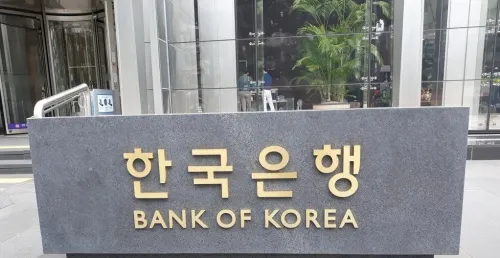
Seoul, March 10 (NationPress) The South Korean economy experienced a 1% growth in 2025, buoyed by robust exports, yet registered a negative contraction in the fourth quarter, as per central bank statistics released on Tuesday.
The nation’s real gross domestic product (GDP), a vital indicator of economic performance, fell by 0.2% from the prior quarter during the October-December timeframe, a revision from the earlier forecast of a 0.3% contraction, according to preliminary data from the Bank of Korea (BOK).
This marked the first quarterly downturn since the January-March quarter of the previous year, when the economy also contracted by 0.2%, as reported by Yonhap news agency.
For the full year of 2025, the economy grew by 1%, aligning with the BOK's prior projections and slowing down from the 2% growth seen in the prior year.
The economy faced an unexpected 0.2% shrinkage in the first quarter of 2025, largely due to a domestic political crisis triggered by then-President Yoon Suk Yeol's martial law declaration, along with uncertainties from U.S. President Donald Trump's significant tariff policies, which adversely affected consumer spending and hindered export growth.
However, there was a recovery in the second and third quarters, with growth rates of 0.7% and 1.3% respectively, fueled by government stimulus initiatives and strong exports during the semiconductor upcycle.
The data further indicated that the country's nominal gross national income (GNI) per capita reached US$36,855 in 2025, reflecting a 0.3% increase compared to the previous year.
In Korean won, the GNI experienced a 4.6% boost due to the depreciation of the local currency, the BOK stated.
The per capita GNI initially surpassed $30,000 in 2014 and continued to rise, approaching $38,000 in 2021, but dipped into the $35,000 range in 2022 before recovering to $36,195 in 2023.
Growth slowed to 1.5% in 2024 and 0.3% last year, maintaining the figure in the $36,000 range for three consecutive years.
In the fourth quarter, exports declined by 1.7% from the prior quarter, primarily due to reduced demand for automobiles and machinery, while imports fell by 1.5%.
Investment in construction plummeted by 3.5%, and facilities investment decreased by 1.7%, largely driven by drops in automobile and transport equipment sectors.
Private consumption saw a slight uptick of 0.3%, and government expenditure rose by 1.3% during this three-month period.
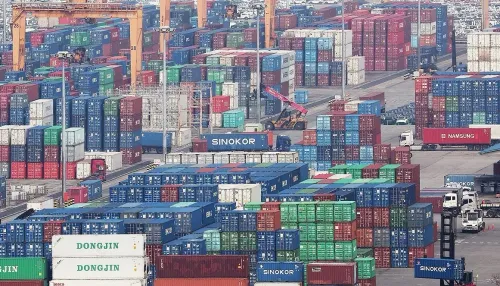
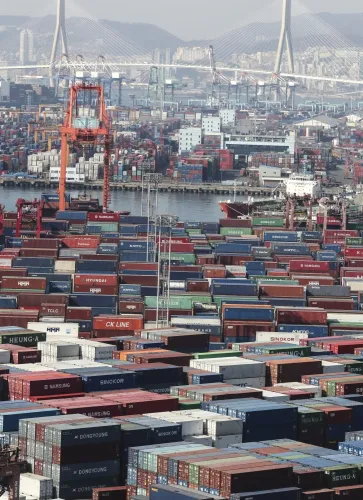
Throughout 2025, exports surged by 4.2% year-on-year, spurred by strong semiconductor demand, although this was a slowdown from the 6.8% growth of the prior year. Imports also advanced by 3.8% year-on-year.
Private spending increased by 1.3%, picking up from a 1.1% growth in the previous year.
However, construction investment saw a drastic 9.8% decline, compared to a 3.3% contraction in 2024, while facilities investment recorded a 2% year-on-year growth.
Looking ahead, the BOK projects the economy to grow by 2% in 2026, citing strong exports and a rebound in private consumption.
Point of View
It's crucial to present a balanced perspective on South Korea's economic fluctuations. While the annual growth of 1% indicates resilience, the contraction in the fourth quarter highlights underlying challenges. Political instability and external pressures from trade tariffs have impacted consumer confidence and spending. Our focus remains on understanding these shifts and their implications for the future.
NationPress
23 Sept 2026
Frequently Asked Questions
What was the GDP growth rate for South Korea in 2025?
The GDP growth rate for South Korea in 2025 was 1%.
What caused the contraction in the fourth quarter?
The contraction in the fourth quarter was primarily due to a domestic political crisis and uncertainties from U.S. tariffs.
How did exports perform in 2025?
Exports in 2025 increased by 4.2% year-on-year, led by strong demand for semiconductors.
What was the per capita GNI for South Korea in 2025?
The per capita nominal GNI for South Korea in 2025 was US$36,855.
What is the economic outlook for South Korea in 2026?
The Bank of Korea projects the economy to grow by 2% in 2026, driven by strong exports and a recovery in private consumption.