South Korea urges US tariff relief for $5.8 bn Louisiana steel mill
Synopsis
South Korea is asking the US to carve out tariff relief for equipment bound for a $5.8 billion Hyundai-POSCO steel plant in Louisiana — a facility that would be America's first electric arc furnace mill dedicated solely to automotive steel. The request exposes a tension at the heart of US industrial policy: reshoring ambitions that depend on allied investment, yet tariff walls that make that investment costlier.
Key Takeaways
Industry Minister Kim Jung-kwan urged the US to ease Section 232 tariffs on equipment for the US$5.8 billion Hyundai-POSCO Louisiana steel mill.
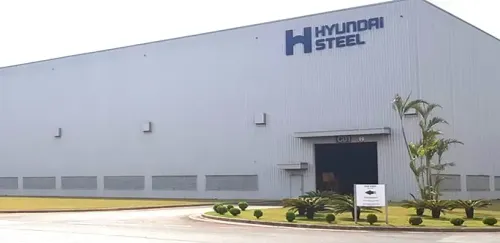
The plant — Hyundai-POSCO Louisiana Steel LLC (HPLS) — is a joint venture of Hyundai Steel , Hyundai Motor , Kia Corp. , and POSCO .
Construction is scheduled to begin in the fourth quarter ; the facility will produce 2.7 million tons of automotive steel annually.
It will be the first electric arc furnace-based steel mill in the US dedicated to automotive steel, cutting carbon emissions by roughly 70% versus blast-furnace methods.
Hyundai Motor Group Executive Chair Euisun Chung and POSCO Group Chairman Chang In-hwa attended the groundbreaking ceremony.
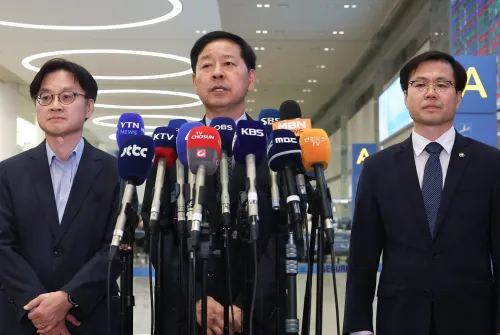
South Korea's Industry Minister Kim Jung-kwan on Saturday formally urged the United States to ease tariffs on steel mill equipment that Korean companies must import to build a US$5.8 billion integrated steel plant in Louisiana. The request signals growing friction between allied trade interests and Washington's protective trade framework, even as both nations deepen industrial cooperation.
The Tariff Request and Its Context
Minister Kim Jung-kwan raised the issue directly with Louisiana Governor Jeff Landry ahead of the groundbreaking ceremony for Hyundai-POSCO Louisiana Steel LLC (HPLS). The plant, an electric arc furnace-based integrated steel mill, is scheduled to begin construction in the fourth quarter, according to a press release from South Korea's Ministry of Trade, Industry and Resources.
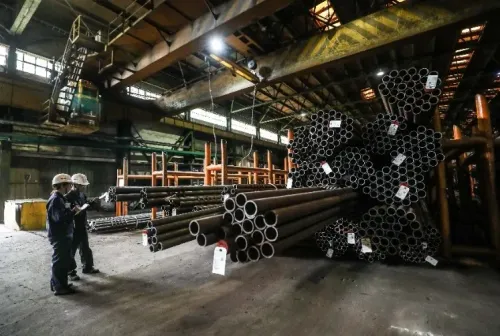
Foreign steelmakers operating in the US face levies under Section 232 of the Trade Expansion Act of 1962, which authorises the US president to restrict imports deemed a threat to national security. Kim urged Washington to pay close attention to the difficulties facing Korean companies investing in the US and to support the project by easing tariffs on equipment and materials that need to be shipped from South Korea.
What HPLS Will Build
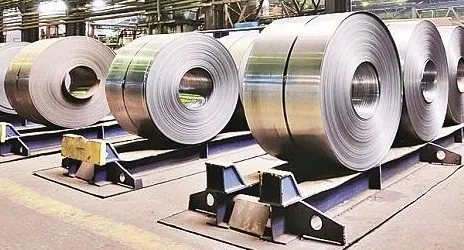
HPLS is a joint venture involving Hyundai Motor Group affiliates — Hyundai Steel Co., Hyundai Motor Co., and Kia Corp. — alongside steelmaker POSCO. The Louisiana facility is expected to produce 2.7 million tons of hot-rolled, cold-rolled, and galvanised steel annually, making it the first electric arc furnace-based steel mill in the United States dedicated exclusively to automotive steel production.
The plant will use direct reduced iron and electric arc furnaces, cutting carbon emissions by approximately 70 percent compared with conventional blast-furnace production, according to Hyundai Steel. Output will supply automotive steel to global automakers' production facilities across the southern US and Mexico, including plants operated by Hyundai Motor and Kia.
Supply Chain and Clean Steel Significance
Minister Kim stressed that the project would strengthen supply chain cooperation between South Korea and the US by combining South Korean steelmaking technology with American industrial and energy infrastructure. Notably, this investment comes at a moment when the US is actively seeking to localise critical manufacturing supply chains — making Korean participation both strategically valuable and politically complex given existing tariff structures.
Hyundai Motor Group Executive Chair Euisun Chung said automotive steel produced at the Louisiana plant would help Hyundai and US automakers develop next-generation mobility solutions. POSCO Group Chairman Chang In-hwa and South Korean Ambassador to the US Kang Kyung-wha also attended the groundbreaking ceremony.
What Happens Next
Construction is set to commence in the fourth quarter, though the tariff question remains unresolved. Washington has not yet publicly responded to Seoul's request. The outcome will be closely watched by other foreign manufacturers investing in the US under the current industrial policy environment, where trade remedy measures and reshoring incentives frequently pull in opposite directions.
Point of View
Yet the same Section 232 framework that was designed to protect domestic steel now raises costs for the very foreign investors building it. The Hyundai-POSCO plant is not a competitor to US steelmakers — it is a customer of US energy and land, and a supplier to US automakers. Refusing tariff relief would be self-defeating. But granting it sets a precedent that other foreign investors will immediately cite. How Washington navigates this will say as much about the coherence of its industrial strategy as it does about the bilateral relationship with Seoul.
NationPress
5 Sept 2026
Frequently Asked Questions
What is the Hyundai-POSCO Louisiana steel mill project?
It is a US$5.8 billion integrated steel mill being built in Louisiana by Hyundai-POSCO Louisiana Steel LLC (HPLS), a joint venture of Hyundai Steel, Hyundai Motor, Kia Corp., and POSCO. The plant will use electric arc furnace technology to produce 2.7 million tons of automotive steel annually and is the first such facility in the US dedicated solely to automotive steel.
Why is South Korea seeking tariff relief from the US?
Korean companies need to import specialised equipment from South Korea to build the Louisiana plant, but these imports are subject to Section 232 tariffs under the Trade Expansion Act of 1962. Industry Minister Kim Jung-kwan has asked Washington to ease these levies so the project remains commercially viable.
What is Section 232 and how does it affect the project?
Section 232 of the Trade Expansion Act of 1962 allows the US president to restrict imports that are deemed a threat to national security, including steel and related equipment. Foreign steelmakers investing in the US face these tariffs, which raise the cost of importing machinery and materials needed for construction.
When will construction of the Louisiana steel mill begin?
Construction is scheduled to begin in the fourth quarter, following the groundbreaking ceremony attended by Hyundai Motor Group Executive Chair Euisun Chung, POSCO Group Chairman Chang In-hwa, and South Korean Ambassador to the US Kang Kyung-wha.
What makes this steel mill environmentally significant?
The plant will use direct reduced iron and electric arc furnaces instead of conventional blast furnaces, cutting carbon emissions by approximately 70 percent. It is set to be the first electric arc furnace-based integrated steel mill in the US focused entirely on automotive-grade steel production.