Salil Chowdhury death anniversary: Jackie Shroff pays tribute to music legend
Synopsis
Thirty-one years after his passing, Salil Chowdhury remains one of Indian cinema's most underrated geniuses — a man who composed in 13 languages, played the flute, piano, and esraj, and gave Hindi film music some of its most enduring melodies. Jackie Shroff's social media tribute is a quiet reminder of how much that legacy still means.
Key Takeaways
Jackie Shroff paid tribute to Salil Chowdhury on his 31st death anniversary on 5 September .
Chowdhury was born on 19 November 1925 in Harinavi, Bengal Presidency , and passed away on 5 September 1995 , aged 69 .
He composed music for films in 13 languages , including Hindi, Bengali, and Malayalam.
His most celebrated work includes the soundtrack of Madhumati ( 1958 ) and compositions for Anand , Kabuliwala , and Chhoti Si Baat .
He collaborated with Lata Mangeshkar , Kishore Kumar , Manna Dey , Mukesh , and Asha Bhosle .
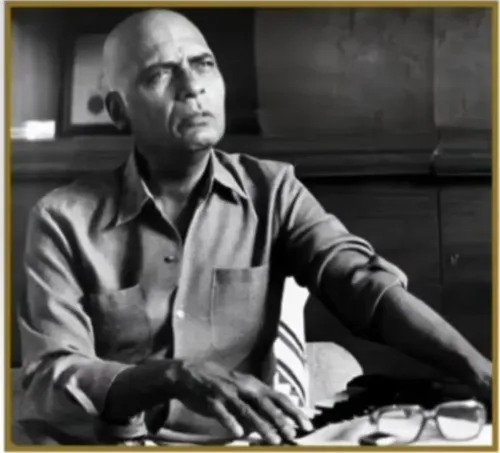
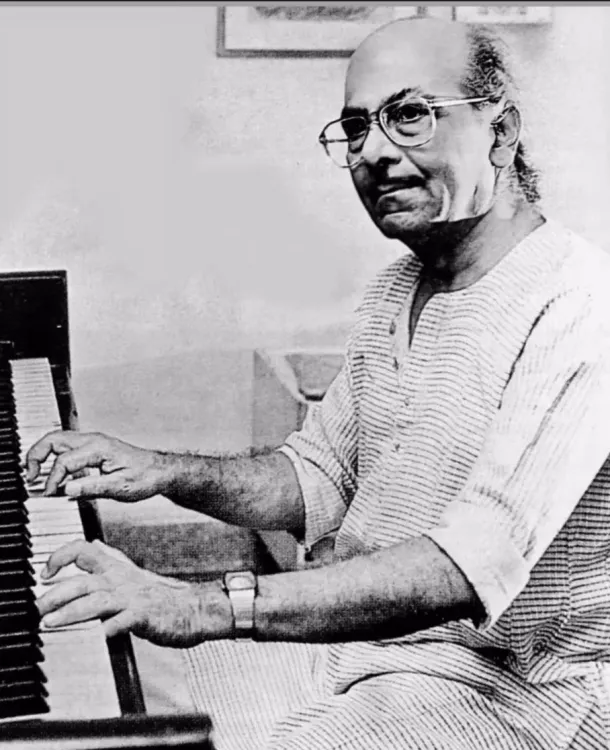
Bollywood actor Jackie Shroff on Saturday, 5 September paid a heartfelt tribute to legendary music composer Salil Chowdhury on his 31st death anniversary, sharing a rare black-and-white photograph of the maestro seated at a piano. The post, published on Shroff's social media account, carried the caption: 'Remembering the musical legend, Salil Chowdhury ji, on his death anniversary #SalilChowdhury'.
A Legacy That Spanned Languages and Genres
Salil Chowdhury, born on 19 November 1925 in Harinavi, Bengal Presidency, was far more than a film composer. A songwriter, lyricist, poet, writer, and theatre personality, he composed music for films in 13 languages, including Hindi, Bengali, and Malayalam. He was equally proficient as a performer, playing the flute, piano, and esraj.
He passed away on 5 September 1995, aged 69, leaving behind a body of work that continues to resonate across generations.
From Bengali Cinema to Bollywood's Golden Era
Chowdhury's first Bengali film as a composer was Paribartan in 1949. His Hindi cinema debut came with director Bimal Roy's Do Bigha Zamin in 1953, marking the start of a defining creative partnership. His soundtrack for Roy's Madhumati (1958) remains among his most celebrated contributions to Indian cinema, featuring timeless compositions such as 'Aaja Re Pardesi', 'Suhana Safar Aur Yeh Mausam Haseen', 'Dil Tadap Tadap Ke Keh Raha Hai', and 'Ghadi Ghadi Mora Dil Dhadke'.
Evergreen Compositions Across Decades
The breadth of Chowdhury's catalogue is remarkable. He composed 'O Sajna Barkha Bahar Aayi' from Parakh, 'Itna Na Mujhse Tu Pyaar Badha' from Chhaya, and 'Aye Mere Pyare Watan' from Kabuliwala — each a landmark in its own right. His work on Anand produced 'Kahin Door Jab Din Dhal Jaye' and 'Zindagi Kaisi Hai Paheli', while 'Na Jaane Kyun' from Chhoti Si Baat remains a staple of Indian nostalgia.
He collaborated with the foremost voices of the playback era — Lata Mangeshkar, Mukesh, Manna Dey, Kishore Kumar, and Asha Bhosle — producing melodies that have endured well beyond the films they were composed for.
Why the Tribute Matters
Chowdhury's influence on Indian film music is rarely given its full due in mainstream remembrance. His compositions bridged classical Indian sensibilities with folk and Western orchestration at a time when Hindi cinema was defining its sonic identity. Jackie Shroff's tribute, though brief, keeps that legacy in public view on a day that might otherwise pass unnoticed.
Point of View
Yet he rarely features in mainstream retrospectives. That a single social media post by Jackie Shroff can renew interest speaks to the gap between Chowdhury's stature among connoisseurs and his visibility in popular culture. Indian cinema's institutions would do well to commission deeper archival work on composers of his range before the oral history is lost entirely.
NationPress
5 Sept 2026
Frequently Asked Questions
Who was Salil Chowdhury?
Salil Chowdhury was a legendary Indian music composer, songwriter, lyricist, and poet born on 19 November 1925 in Harinavi, Bengal Presidency. He composed music for films in 13 languages and is widely regarded as one of the most versatile figures in Indian film music history.
When did Salil Chowdhury pass away?
Salil Chowdhury passed away on 5 September 1995, aged 69. His 31st death anniversary was observed on 5 September 2026.
What are Salil Chowdhury's most famous compositions?
His most celebrated works include the Madhumati (1958) soundtrack — featuring 'Aaja Re Pardesi' and 'Suhana Safar' — as well as 'Aye Mere Pyare Watan' from Kabuliwala, 'Zindagi Kaisi Hai Paheli' from Anand, and 'Na Jaane Kyun' from Chhoti Si Baat.
Why did Jackie Shroff pay tribute to Salil Chowdhury?
Jackie Shroff shared a black-and-white photo of Chowdhury on social media to mark his 31st death anniversary on 5 September, captioning it with a personal note of remembrance.
How many languages did Salil Chowdhury compose in?
Salil Chowdhury composed music for films in 13 languages, including Hindi, Bengali, and Malayalam, making him one of the most linguistically versatile composers in Indian cinema.