SEBI Chairman: PMS sector can grow over 20% CAGR as investor participation rises

Synopsis
SEBI Chairman Tuhin Kanta Pandey told the PMS industry it could grow faster than 20% annually — outpacing the broader investment universe’s 15% CAGR — but only if it sharpens its value proposition and builds investor trust in an increasingly competitive landscape where mutual funds and AIFs are also scaling fast.
Key Takeaways
SEBI Chairman Tuhin Kanta Pandey said PMS has the potential to grow at over 20% CAGR , speaking at the APMI 3rd Annual Investor Conference on 30 September .
Most segments of India’s investment universe are already growing at over 15% CAGR , creating a structural runway for PMS to outperform.
Pandey clarified that PMS , mutual funds , and AIFs serve distinct investor categories and do not directly compete with each other.
PMS primarily caters to high-net-worth individuals (HNIs) seeking customised, professionally managed portfolios.
The SEBI chief stressed that the industry must communicate a clear value proposition and build investor confidence to sustain long-term growth.
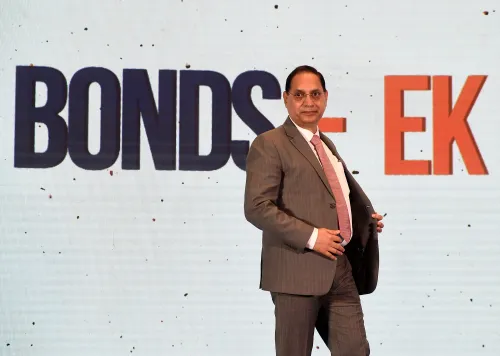
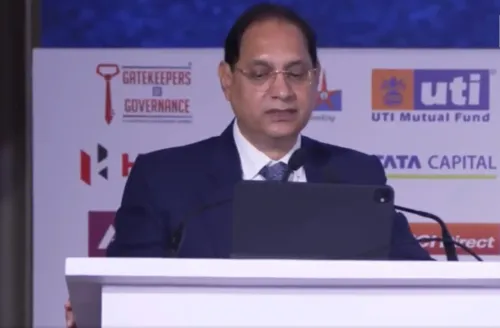
Securities and Exchange Board of India (SEBI) Chairman Tuhin Kanta Pandey on Wednesday, 30 September said that portfolio management services (PMS) in India have the potential to grow at more than 20 per cent compounded annually, as wealth creation deepens and investor participation expands across the country. He made the remarks while addressing the 3rd Annual Investor Conference of the Association of Portfolio Managers in India (APMI) in New Delhi.
What Pandey Said
Pandey noted that most segments of India's investment universe have already been clocking growth rates in excess of 15 per cent CAGR, creating a structural runway for PMS to outpace that benchmark. “In fact, PMS can go over 20 per cent,” he said, though he was careful to frame the figure as an indicative potential rather than a formal regulatory projection.
The SEBI chief stressed that the PMS industry must sharpen and communicate its distinct value proposition as the broader investment market grows more competitive and diverse.
PMS vs Mutual Funds and AIFs
Pandey addressed the question of whether PMS competes with other investment vehicles, drawing a clear distinction between the segments. “Let’s not discount the fact that we have other means. They have a mutual fund industry and AIF. These are components that are meeting different kind of clientele. They do not necessarily compete with each other,” he said.
He explained that PMS is designed for high-net-worth individuals (HNIs) seeking professionally managed, customised portfolios, while mutual funds serve the mass-market investor base and alternative investment funds (AIFs) cater to yet another distinct category. Passive investment products, he added, appeal to cost-conscious investors who prioritise low-fee structures over active management.
Why It Matters for the Industry
The PMS segment, though niche relative to the mutual fund industry, has been gaining traction as India's affluent investor class grows. According to SEBI data, the number of registered PMS providers and assets under management have risen steadily over recent years, tracking the broader expansion in financial savings.
Notably, Pandey’s remarks come at a time when SEBI has been tightening disclosure and reporting norms across investment products, pushing the industry toward greater transparency and investor trust. The regulator has also been working to strengthen the framework around HNI-focused products to ensure that product complexity does not outrun investor understanding.
Building Investor Confidence
The SEBI chairman underlined that as competition and product choice intensify, the PMS industry’s long-term growth will hinge on its ability to build and sustain investor confidence. Communicating a clear, differentiated value proposition — particularly against the backdrop of low-cost passive funds gaining ground globally — will be critical for the sector’s next phase of expansion.
With India’s household financial savings increasingly moving into market-linked instruments, the APMI conference signals a growing institutional focus on positioning PMS as a credible, regulated, and scalable wealth management option for the country’s expanding affluent class.
Point of View
But it comes with an implicit challenge: the sector must justify its premium positioning in a market where low-cost index funds are steadily eroding the case for active management globally. India’s HNI base is growing, but so is investor sophistication — and with SEBI tightening disclosure norms, PMS providers that cannot demonstrate consistent, risk-adjusted outperformance will find the growth story harder to sustain. The regulator’s framing of PMS, mutual funds, and AIFs as complementary rather than competitive is sensible in theory, but in practice, distribution incentives and fee compression will keep the boundaries blurry. The real test for the industry is whether it can grow AUM without compromising the bespoke, high-touch model that justifies its existence.
NationPress
30 Sept 2026
Frequently Asked Questions
What did SEBI Chairman Tuhin Kanta Pandey say about PMS growth?
SEBI Chairman Tuhin Kanta Pandey said portfolio management services (PMS) in India have the potential to grow at more than 20% CAGR, driven by deepening investor participation and expanding wealth creation. He made the remarks at the APMI 3rd Annual Investor Conference on 30 September in New Delhi, framing the figure as indicative potential rather than a formal projection.
What is portfolio management services (PMS) and who does it cater to?
PMS is a professionally managed investment service that offers customised portfolios to investors, primarily targeting high-net-worth individuals (HNIs). Unlike mutual funds, which pool retail investor money, PMS provides tailored strategies based on the individual client’s financial goals and risk profile.
How does PMS differ from mutual funds and AIFs?
According to SEBI Chairman Pandey, PMS, mutual funds, and alternative investment funds (AIFs) serve distinct investor categories and do not directly compete. Mutual funds cater to mass-market retail investors, AIFs serve a separate institutional and ultra-HNI segment, and PMS targets HNIs seeking personalised, actively managed portfolios.
Why is SEBI emphasising investor confidence in PMS?
As competition in India’s investment market intensifies — with passive funds, mutual funds, and AIFs all scaling up — SEBI wants PMS providers to clearly differentiate their offering and build trust. Pandey stressed that the industry’s long-term growth depends on transparent communication of its value proposition to investors.
What is the broader context for PMS growth in India?
India’s household savings are increasingly shifting into market-linked instruments, and the affluent investor class is expanding. SEBI has also been tightening disclosure and reporting norms across investment products, pushing for greater transparency — a regulatory environment that rewards credible, well-governed PMS providers.