SEBI F&O curbs cut retail losses 18% to ₹91,685 crore in FY26
Synopsis
SEBI's F&O clampdown cut aggregate retail losses by 18% to ₹91,685 crore in FY26 and pushed 19.5 lakh investors out of derivatives trading — but the average loss per remaining investor actually climbed. The data, tabled in Parliament, reveals a partial victory: fewer people are losing money, but those still in the game are losing more.
Key Takeaways
SEBI measures reduced aggregate retail F&O losses by 18 per cent to ₹91,685 crore in FY26 , down from ₹1,11,788 crore in FY25.
Unique retail investors in F&O fell 20 per cent to 78.6 lakh in FY26 from 98.1 lakh in FY25.
Average loss per investor rose to ₹1,16,654 in FY26 from ₹1,13,913 a year earlier.
Equity derivatives turnover moderated to ₹202 lakh crore in FY26 from ₹213 lakh crore in FY25.
STT collections on F&O trades surged nearly fourfold to ₹27,695 crore in FY26 from ₹7,893 crore in FY25.
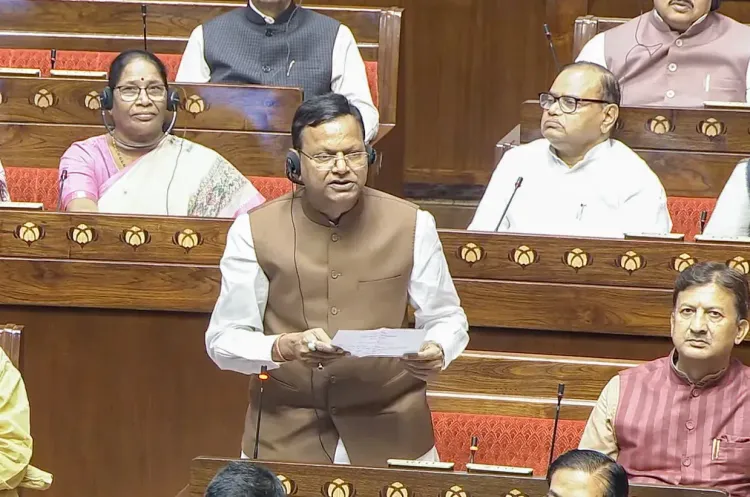
Data was disclosed by Minister of State for Finance Pankaj Chaudhary in a written reply in the Rajya Sabha on 11 August 2025 .
The Securities and Exchange Board of India (SEBI)'s regulatory interventions reduced aggregate retail investor losses in the equity derivatives segment by 18 per cent to ₹91,685 crore in FY26, down from ₹1,11,788 crore in FY25, Parliament was informed on Tuesday, 11 August 2025. The figures were disclosed by Minister of State for Finance Pankaj Chaudhary in a written reply to a question in the Rajya Sabha.
Key Developments in FY26
The number of unique retail investors active in the futures and options (F&O) segment fell approximately 20 per cent — from 98.1 lakh in FY25 to 78.6 lakh in FY26 — following regulatory measures that came into effect from November 2024. Overall turnover in equity derivatives also moderated, declining to ₹202 lakh crore in FY26 from ₹213 lakh crore a year earlier.
What SEBI's Measures Covered
The regulator's intervention package included rationalisation of weekly and monthly index derivatives products, higher contract sizes for index derivatives, increased tail-risk coverage on options expiry days, upfront collection of option premiums from buyers, removal of calendar spread treatment on expiry days, and intraday monitoring of position limits. In May 2025, SEBI introduced additional steps to streamline expiry days across exchanges and strengthen risk monitoring and disclosure in the F&O segment.
A Troubling Counter-Signal: Average Loss Per Investor Rose
Despite the headline reduction in aggregate losses, the average loss per retail investor rose to ₹1,16,654 in FY26 from ₹1,13,913 in FY25. This suggests that while fewer individuals are entering the F&O segment, those who remain are losing more per head — a nuance that tempers the overall narrative of progress.
STT Collections Surge Sharply
Collections from the securities transaction tax (STT) on F&O trades surged to ₹27,695 crore in FY26, compared to ₹7,893 crore a year earlier, according to Minister Chaudhary. The near-fourfold jump reflects both elevated trading volumes in earlier periods and the revised STT rates applied to derivatives.
What Comes Next
SEBI's ongoing calibration of the F&O framework signals that the regulator views the current round of measures as a work in progress rather than a concluded exercise. Market participants and investor advocacy groups will likely watch whether the average per-investor loss metric improves in FY27, which would indicate that the remaining active traders are better informed or better capitalised — not merely more risk-tolerant.
Point of View
Which means the regulatory squeeze primarily filtered out smaller, more casual participants while leaving behind a core of heavier traders who are losing more than before. That is risk concentration, not risk elimination. The near-fourfold surge in STT collections also raises a structural question: as the government earns more from derivatives activity, its fiscal interest in curbing that activity is not perfectly aligned with investor protection. SEBI's next policy move must address the quality of remaining participation, not just its quantity.
NationPress
26 Sept 2026
Frequently Asked Questions
By how much did SEBI reduce retail F&O losses in FY26?
SEBI's regulatory measures reduced aggregate retail investor losses in the equity derivatives segment by 18 per cent to ₹91,685 crore in FY26, down from ₹1,11,788 crore in FY25. The data was presented in Parliament by Minister of State for Finance Pankaj Chaudhary on 11 August 2025.
How many retail investors exited the F&O segment after SEBI's intervention?
The number of unique retail investors in the F&O segment fell by approximately 20 per cent, from 98.1 lakh in FY25 to 78.6 lakh in FY26, following SEBI's regulatory measures introduced from November 2024.
Did the average loss per retail F&O investor fall in FY26?
No. Despite the decline in aggregate losses, the average loss per retail investor rose to ₹1,16,654 in FY26 from ₹1,13,913 in FY25, suggesting that those who remained active in the segment lost more on a per-person basis.
What specific measures did SEBI introduce to curb F&O risks?
SEBI's measures included rationalisation of weekly and monthly index derivatives products, higher contract sizes, increased tail-risk coverage on expiry days, upfront collection of option premiums, removal of calendar spread treatment on expiry days, and intraday position-limit monitoring. Additional steps were introduced in May 2025 to streamline expiry days and strengthen disclosure.
How much did STT collections from F&O trades change in FY26?
Securities transaction tax (STT) collections on F&O trades surged to ₹27,695 crore in FY26 from ₹7,893 crore in FY25 — a near-fourfold increase — according to the minister's statement in the Rajya Sabha.