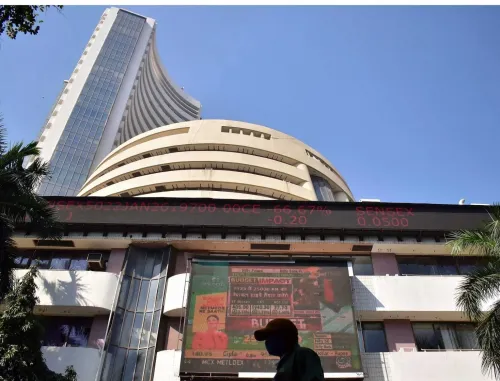
Why Did Sensex and Nifty Close Sharply Lower?
Synopsis
On January 23, the Indian equity markets closed significantly lower due to persistent foreign institutional selling, reversing earlier gains. Despite positive global cues, investors remain cautious amid mixed earnings reports and geopolitical tensions. Experts predict continued vigilance as crucial economic decisions loom.
Key Takeaways
The Sensex dropped 769 points, closing at 81,537.
Nifty declined 241 points, ending at 25,048.
Foreign selling remains a significant factor affecting market performance.
All sector indices closed lower, with Nifty Realty seeing the most significant drop.
Investor sentiment is cautious ahead of the Union Budget and U.S. interest rate decisions.
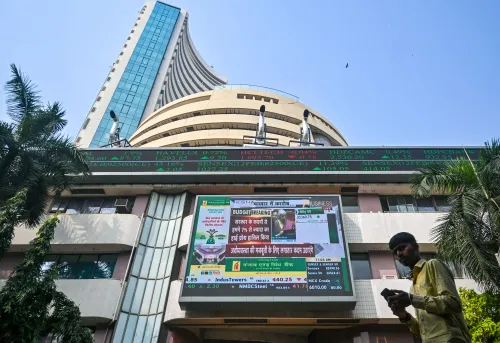
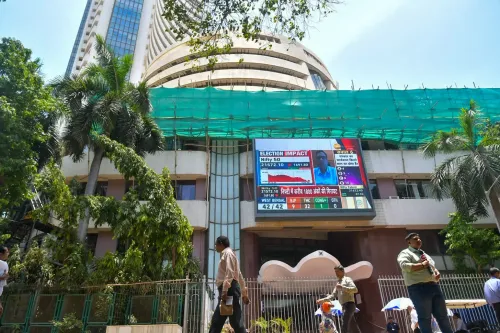
Mumbai, Jan 23 (NationPress) The Indian stock markets experienced significant declines on Friday, reversing early gains amid ongoing selling pressure from foreign institutional investors.
By the end of trading, the Sensex had dropped 769 points, or 0.94 percent, to close at 81,537. Meanwhile, the Nifty index fell 241 points, or 0.95 percent, finishing at 25,048.
The losses in the broader markets were even steeper than the main indices, with the Nifty Midcap 100 index declining 1.95 percent, and the NSE Smallcap 100 index falling 2.06 percent.
Initially, both the Nifty 50 and Sensex opened the trading week on a positive note, buoyed by favorable global cues following a relaxation of geopolitical tensions over Greenland.
However, the indices sharply retreated due to substantial foreign selling activity and mixed earnings reports, prompting a cautious outlook among investors.
Across the various sectors, all indices faced declines. The Nifty Realty sector suffered the heaviest loss, plummeting 3.42 percent. The Nifty Media index fell 2.79 percent, while the Nifty PSU Bank and Nifty Auto indices decreased by 2.43 percent and 1.25 percent, respectively. The Nifty Oil and Gas index also slid 1.30 percent.
Market analysts noted that the Indian equity markets entered a sell-off phase, despite a generally optimistic global market and supportive domestic PMI data. This sentiment was pressured by rising crude oil prices, a sharp fall in the rupee's value, persistent foreign institutional selling, and earnings reports that marginally missed expectations against the backdrop of premium valuations in India.
Looking forward, market analysts anticipate that investor sentiment will likely remain cautious as they await the upcoming Union Budget and the U.S. Federal Reserve's interest rate decision.
Experts predict that if certain companies report better-than-expected results for Q3 FY26, it may lead to stock-specific reactions, but overall, foreign institutional selling is expected to persist in the near term.
On Friday, the rupee fell by 41 paise, reaching 91.99 against the U.S. dollar during intraday trading, amidst continuous foreign fund outflows.
Experts have indicated that while the central bank's interventions have somewhat mitigated volatility, they have not reversed the overall downward trend for the domestic currency.
aar/na
Point of View
The Indian equity markets are currently navigating a turbulent phase. While foreign institutional selling poses challenges, the overall economic landscape still holds potential for recovery. Stakeholders should remain informed and prepared for upcoming financial developments that may influence market dynamics.
NationPress
19 Sept 2026
Frequently Asked Questions
What caused the decline in Sensex and Nifty?
The decline was primarily driven by persistent selling from foreign institutional investors and mixed earnings reports, despite earlier gains.
How did the broader markets perform compared to the benchmark indices?
The broader markets experienced steeper losses, with the Nifty Midcap 100 index down 1.95 percent and NSE Smallcap 100 down 2.06 percent.
What are analysts predicting for the market outlook?
Analysts suggest that market sentiment will remain cautious, particularly with the upcoming Union Budget and U.S. Fed interest rate decisions.
What impact did the rupee's depreciation have?
The rupee's depreciation to 91.99 against the U.S. dollar reflects ongoing foreign fund outflows, contributing to market volatility.
Will there be a recovery in the market soon?
While some companies may report better-than-expected results, a broader recovery will depend on the resolution of foreign selling pressures.