Why Did Sensex and Nifty Drop by Nearly 2%?
Synopsis
In a surprising turn of events, India's stock markets faced a drastic decline on Budget Day, triggered by the government's hike in Securities Transaction Tax (STT). This article delves into the details of the sell-off and its implications for investors.
Key Takeaways
Securities Transaction Tax hike led to significant market reactions.
Sensex and Nifty faced their largest Budget-day drop in six years.
Investor anxiety surged, reflected in the India VIX .
Public sector banks were hit hardest by the sell-off.
IT sector stocks provided some relief.
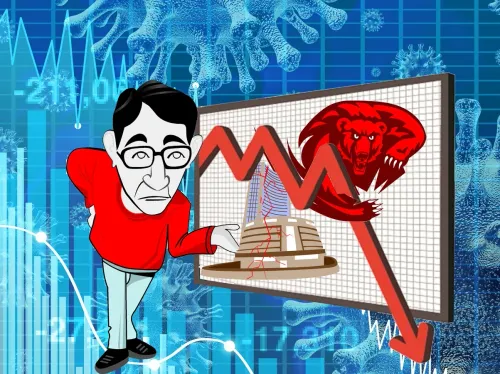
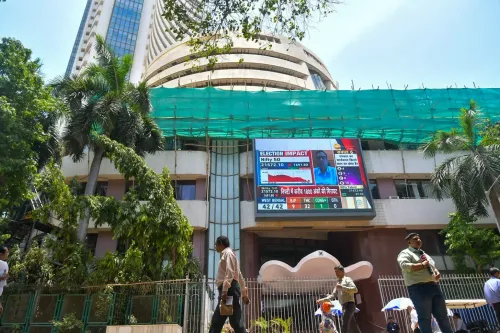
Mumbai, Feb 1 (NationPress) The Indian stock markets experienced a significant downturn on Budget Day as investors reacted unfavorably to the government's announcement regarding an increase in the Securities Transaction Tax (STT) on futures and options trading. The prominent indices, Sensex and Nifty, suffered their most substantial Budget-day drop in six years, concluding approximately 2 percent lower during a special trading session on February 1.
At the end of the trading day, the Sensex settled at 80,723, while the Nifty ended at 24,825, reflecting a loss of 495 points or nearly 2 percent.
Throughout the day, the markets showed considerable weakness, with the Sensex plummeting nearly 3,000 points at one point, reaching an intra-day low of 79,899.42.
The Nifty also faced a steep decline, hitting a low of 24,572 before experiencing a slight recovery.
“The negative market reaction can be largely attributed to low expectations, restricted outlays, and the adverse sentiment triggered by the increased Securities Transaction Tax (STT) on futures, which caused an immediate sell-off,” commented an expert.
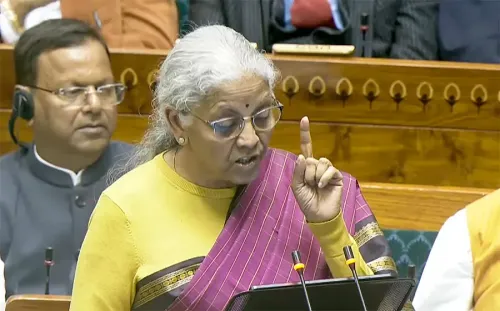
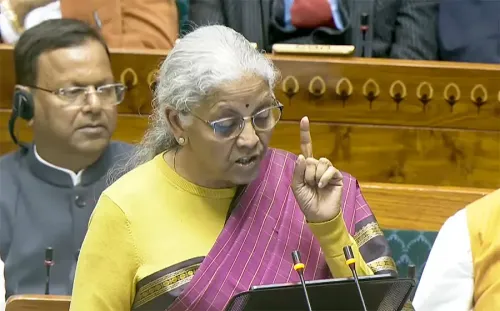
This sell-off followed Finance Minister Nirmala Sitharaman's announcement of elevated STT rates during her Budget 2026 address.
The tax on futures was raised from 0.02 percent to 0.05 percent, and the STT on options premium was increased from 0.1 percent to 0.15 percent.
These significant hikes led to extensive selling, particularly in stocks related to trading and financial operations.
The broader market faced intense pressure as well, with the Nifty Midcap 100 index declining by 2 percent and the Nifty Smallcap 100 dropping by 2.7 percent, indicating that the sell-off was not confined to just large-cap stocks.
Investor anxiety surged sharply, as reflected by the India VIX, which measures market volatility, rising nearly 12 percent, signaling heightened nervousness.
Sector-wise, nearly all indices closed in the negative, with the exception of the IT sector. Public sector bank stocks took the hardest hit, with the Nifty PSU Bank index plunging by nearly 6 percent.
Metal stocks faced significant losses as well, dropping about 4 percent. Banking and financial services stocks fell by over 2 percent each.
Among the Nifty companies, Bharat Electronics, Hindalco, and ONGC were the top losers, each declining by around 6 percent.
Other major stocks such as SBI, Coal India, Jio Financial Services, Nestle India, ITC, and Tata Consumer Products also finished lower.
On a brighter note, the IT sector provided some support, with stocks like Wipro, TCS, and Max Healthcare gaining roughly 2 percent each.
Point of View
I believe that today's market reaction highlights the sensitivity of investors to governmental policies. The hike in the Securities Transaction Tax has not only impacted major indices but has also raised concerns about future financial stability. It is essential for policymakers to consider the long-term effects of such decisions on market sentiment.
NationPress
20 Sept 2026
Frequently Asked Questions
What caused the drop in Indian stock markets?
The decline was primarily triggered by the government's increase in the Securities Transaction Tax (STT) on futures and options trading.
How much did the Sensex and Nifty fall?
Both the Sensex and Nifty fell by nearly 2%, marking their biggest Budget-day decline in six years.
What were the intra-day lows reached?
The Sensex hit an intra-day low of 79,899.42, while the Nifty slipped to a low of 24,572.
Which sectors were most affected?
Public sector banks and metal stocks faced the most significant losses, with the Nifty PSU Bank index dropping nearly 6%.
Did any stocks perform well amidst the decline?
Yes, some IT stocks like Wipro, TCS, and Max Healthcare managed to gain around 2%.