Seoul's Stock Market Hits New Heights Amid U.S.-Iran Peace Hopes and Tech Resurgence
Synopsis
On April 21, Seoul's stock market achieved a historic high, buoyed by optimism for U.S.-Iran peace talks and a tech sector revival. This turnaround follows a severe downturn due to the Middle East crisis, with analysts forecasting promising corporate earnings ahead.
Key Takeaways
Seoul's KOSPI index reached a record high of 6,388.47 points.
Market capitalization of KOSPI firms hit 5,236 trillion won.
Investors are optimistic about U.S.-Iran peace talks.
Samsung Electronics reported record earnings driven by AI demand.
Foreign investors are returning to the market.
Seoul, April 21 (NationPress) After a tumultuous period marked by a significant downturn due to the Middle East conflict, South Korea's stock market made a remarkable comeback on Tuesday, achieving a new all-time high. This surge is fueled by optimism surrounding the potential for U.S.-Iran peace negotiations and a resurgence in technology stocks.
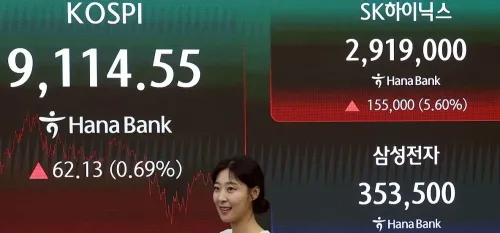
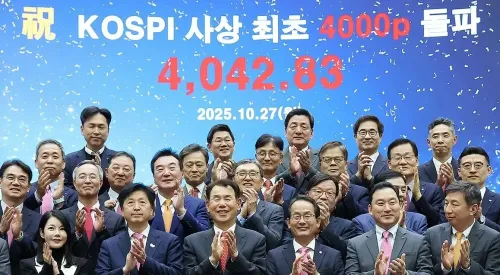
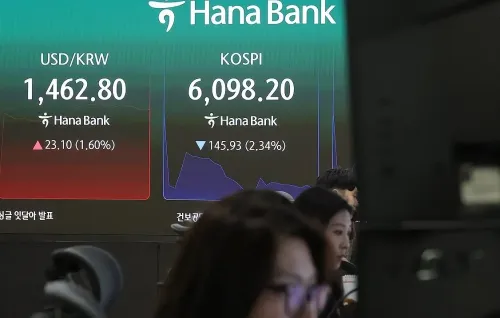
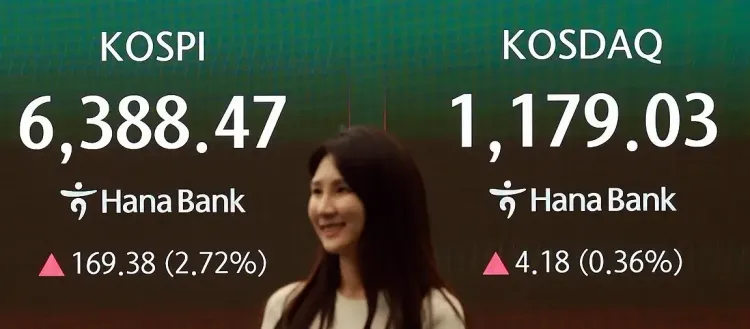
The KOSPI index, which serves as the benchmark for South Korea's stock market, closed 2.72 percent higher at 6,388.47 points. This surpasses the previous record set on February 26, when it finished at 6,307.27, as reported by Yonhap news agency.
The total market capitalization of companies listed on the KOSPI has also reached an unprecedented level of 5,236 trillion won, as per the Korea Exchange, South Korea's primary stock market operator.
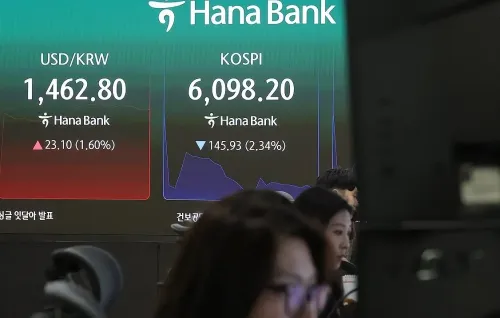
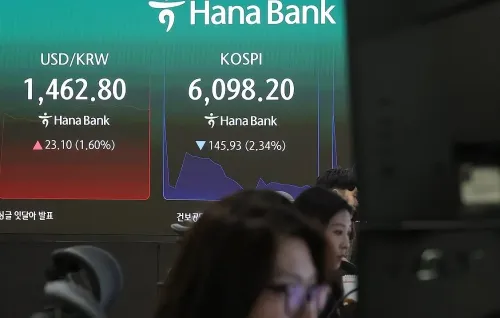
Since the onset of hostilities between the U.S. and Iran, Seoul's market has experienced significant fluctuations, declining by as much as 12 percent in one trading session while rallying by up to 9 percent.
In March, the stock market faced a severe drop of over 19 percent compared to global counterparts, driven by concerns over escalating inflation and an economic slowdown, according to data from Yonhap Infomax, the financial division of Yonhap News Agency.
Additionally, global oil prices surged past US$100 per barrel following Iran's closure of the strategic Hormuz Strait.
This new achievement comes as investors appear less reactive to developments in the Middle East, focusing instead on the positive prospects of U.S.-Iran discussions and renewed confidence in South Korea's leading semiconductor companies, as noted by Han Ji-young, an analyst at Kiwoom Securities.
Foreign investors have also returned to the local market after net selling a staggering 35 trillion won (approximately US$23.8 billion) worth of local stocks last month.
Attention is now shifting to corporate earnings, particularly from SK hynix Inc., which is set to disclose its first-quarter earnings this week.
Samsung Electronics Co., the largest company in the country, announced record-breaking earnings for the first quarter, reporting an operating profit exceeding 50 trillion won, bolstered by soaring demand for chips amid the artificial intelligence (AI) boom.
Market analysts anticipate that SK hynix will also report a remarkable earnings surprise for the first quarter, driven by strong sales of high bandwidth memory (HBM) utilized in AI applications and a limited supply of DRAM chips.
Furthermore, government initiatives aimed at improving shareholder returns and reforming capital markets could pave the way for further growth in the KOSPI's momentum, according to market observers.
Despite ongoing geopolitical uncertainties and the impending expiration of a two-week ceasefire on Wednesday (Washington time), global banks maintain a positive outlook for the South Korean market.
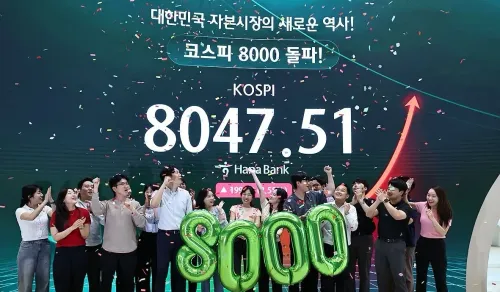
Goldman Sachs recently updated its 12-month target for the KOSPI from 7,000 points to 8,000 points, citing improved fundamentals across various sectors.
Meanwhile, JPMorgan Chase & Co. has listed South Korea among its "top preferred markets" in the region, raising its bullish forecast for the KOSPI to 8,500 points.
Point of View
I observe that the recent performance of the KOSPI reflects a resilient market responding to geopolitical developments and a robust tech sector. While caution remains prudent due to ongoing tensions, the optimism surrounding corporate earnings and peace talks offers a glimmer of hope for investors.
NationPress
19 Sept 2026
Frequently Asked Questions
What drove the rise in Seoul's stock market?
The rise was primarily driven by optimism for U.S.-Iran peace talks and a resurgence in the technology sector.
How much did the KOSPI increase?
The KOSPI closed 2.72 percent higher at 6,388.47 points.
What is the significance of the KOSPI's new record?
The new record represents a significant recovery from previous downturns, highlighting investor confidence amid geopolitical uncertainties.
What are analysts predicting for SK hynix's earnings?
Analysts expect SK hynix to deliver a remarkable earnings surprise for the first quarter, driven by strong demand for high bandwidth memory.
What do global banks think about the South Korean market?
Global banks maintain a bullish outlook, with Goldman Sachs and JPMorgan raising their forecasts for the KOSPI.