SK Group chairman Chey Tae-won ordered to pay $644 million in divorce asset split
Synopsis
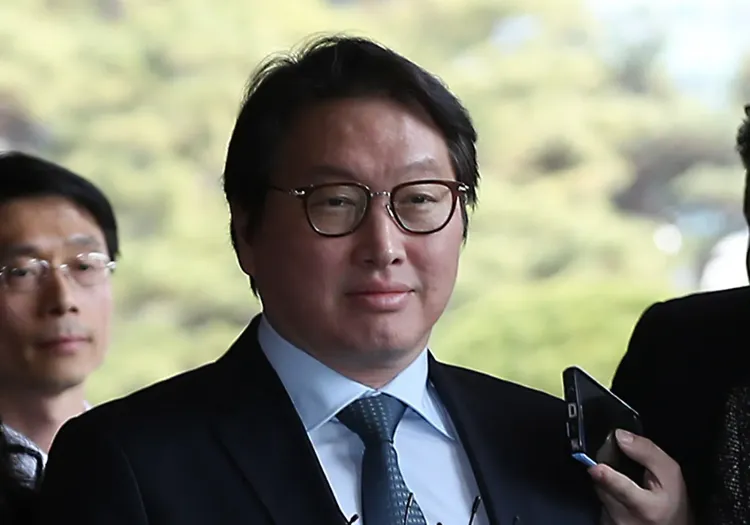
SK Group Chairman Chey Tae-won has been ordered to hand over $644 million to his ex-wife in one of South Korea's biggest-ever corporate divorce settlements — a figure that fell from an earlier 1.38 trillion won order after the Supreme Court struck out an alleged illegal slush fund. The ruling that SK Inc. shares count as joint property is the verdict's most consequential detail.
Key Takeaways
Seoul High Court ordered SK Group Chairman Chey Tae-won to pay 944 billion won ($644 million) in asset division to former wife Roh Soh-yeong .
The amount is lower than the 1.38 trillion won ordered in May 2024 , after the Supreme Court excluded an alleged illegal 30 billion won slush fund from the calculation.
The court ruled Roh is entitled to one-third of the couple's property; SK Inc. shares held by Chey were included in the division.
Chey also owes 2 billion won in alimony, as finalised by the Supreme Court .
Chey's lawyers said they would consider a further appeal; Roh's legal team declined to comment.
The couple married in 1988 and have three children ; Chey initiated divorce proceedings in 2017 .
Seoul High Court on Friday, 25 July 2025 ordered SK Group Chairman Chey Tae-won to pay 944 billion won ($644 million) in asset division to his former wife, Roh Soh-yeong, in one of South Korea's most closely watched corporate divorce cases. The appellate ruling follows a Supreme Court directive to revisit the matter after the top court finalised the divorce and set Chey's alimony obligation at 2 billion won.
Key Developments in the Ruling
The Seoul High Court ruled that SK Inc. shares held by Chey must be included in the asset division — a central point of contention throughout the prolonged legal battle. The court determined that Roh is entitled to one-third of the couple's total property, with the remainder belonging to Chey.
The 944 billion won figure is notably lower than the 1.38 trillion won the appellate court had initially ordered Chey to pay in May 2024. That earlier ruling had factored in an alleged slush fund worth 30 billion won, reportedly channelled by Roh's late father, former President Roh Tae-woo, to Chey's father as part of the marriage arrangement. The Supreme Court subsequently struck down that portion, ruling that even if the fund had been transferred, its allegedly illegal nature barred it from being considered in asset division.
The Dispute Over SK Inc. Shares
Chey had argued that his SK Inc. shareholding constitutes separate property acquired through inheritance or gifts, and should therefore be excluded from the marital estate. Roh, however, contended that the shares qualify as joint property, citing her contributions through child-rearing and household management over the course of the marriage.
The appellate court sided with Roh on this point, ruling the shares subject to division — a decision that significantly shapes the final settlement figure.
Background: A Nine-Year Legal Battle
Chey initiated divorce proceedings in 2017, two years after publicly acknowledging an extramarital relationship and a child born from it. He and Roh Soh-yeong — daughter of the late former South Korean President Roh Tae-woo — had married in 1988 and have three children together. The case wound through the courts for nearly a decade, escalating to the Supreme Court before being remanded back to the appellate level.
This is the third major ruling in the asset division dispute alone, reflecting the legal complexity of valuing and dividing the estate of one of South Korea's most prominent conglomerate leaders.
What Happens Next
Chey's legal team stated they would review the verdict before deciding whether to file a further appeal, adding that Chey expressed regret for the public attention the case has generated. Lawyers representing Roh declined to comment on the ruling. If Chey does appeal, the case could return once again to the Supreme Court, extending a dispute that has already spanned nearly a decade.
Point of View
Not a vindication of his position on the SK Inc. shares, which the appellate court firmly ruled as joint property. That share-inclusion precedent is the ruling's sharpest edge: it signals that shareholding in a family-controlled conglomerate cannot be easily ring-fenced as inherited wealth when a spouse has made demonstrable household contributions. South Korea's chaebol families will be watching the potential appeal closely, since the legal logic here could reshape how courts treat founder-family equity in future matrimonial disputes.
NationPress
24 Jul 2026
Frequently Asked Questions
How much has Chey Tae-won been ordered to pay his ex-wife?
The Seoul High Court ordered Chey Tae-won to pay 944 billion won, equivalent to approximately $644 million, in asset division to Roh Soh-yeong. This is separate from his 2 billion won alimony obligation finalised by the Supreme Court.
Why is the amount lower than the 2024 ruling?
In May 2024, the Seoul High Court had ordered Chey to pay about 1.38 trillion won, partly because it factored in an alleged 30 billion won slush fund linked to Roh's late father, former President Roh Tae-woo. The Supreme Court overturned that portion, ruling the fund could not be included in asset division as it appeared to have been illegal, bringing the figure down to 944 billion won.
Were Chey Tae-won's SK Inc. shares included in the divorce settlement?
Yes. The Seoul High Court ruled that SK Inc. shares held by Chey must be included in the asset division. Chey had argued they were separate property acquired through inheritance or gifts, but the court accepted Roh's position that her child-rearing and household contributions made them joint marital property.
Who is Roh Soh-yeong?
Roh Soh-yeong is the daughter of late former South Korean President Roh Tae-woo. She married SK Group Chairman Chey Tae-won in 1988; the couple have three children together. Chey filed for divorce in 2017 after admitting to an extramarital relationship.
Can Chey Tae-won appeal the ruling?
Yes. Chey's legal team stated they would review the verdict before deciding whether to appeal, which would send the case back to the Supreme Court. Chey's lawyers added that he expressed regret over the public attention the case has attracted.