Advocates urge SC suo motu cognisance of Rahul Gandhi's protest near PM residence
Synopsis
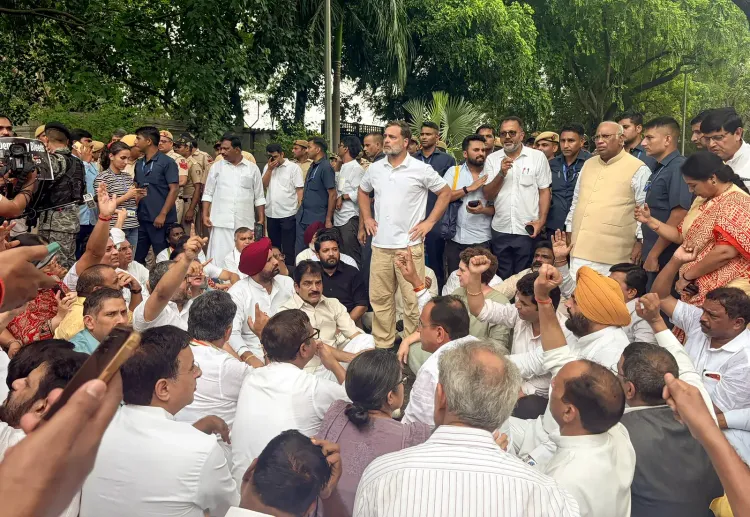
A multi-High Court group of advocates has formally asked the Supreme Court to step in after Rahul Gandhi and top Opposition leaders staged a sit-in outside the PM's residence on 21 July without prior permission — raising a sharp constitutional question: does the right to protest extend to the country's most security-sensitive address?
Key Takeaways
Advocates coordinated by Sanket Gupta have written to CJI Surya Kant seeking Supreme Court suo motu cognisance of the 21 July protest near 7, Lok Kalyan Marg .
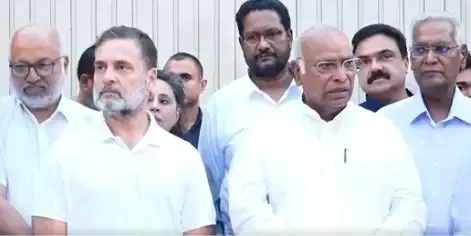
Rahul Gandhi , Mallikarjun Kharge , Priyanka Gandhi Vadra , Akhilesh Yadav , and Chief Ministers of Kerala and Karnataka were among the protesters.
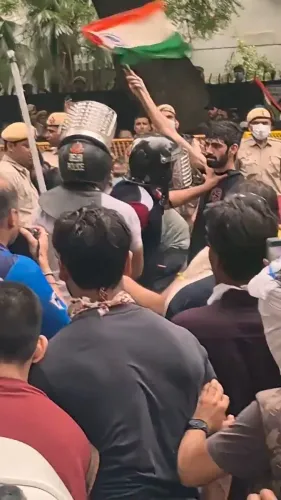
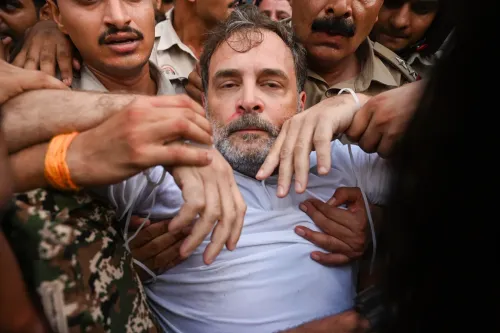
Delhi Police removed the protesters after nearly three hours ; senior officers had earlier requested dispersal citing the high-security zone.
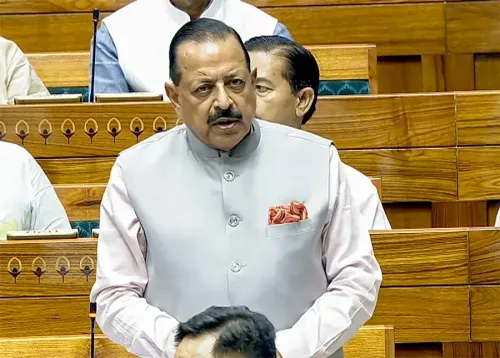
MoS PMO Jitendra Singh reportedly met Rahul Gandhi during the protest and offered parliamentary discussion, but the demonstration continued.
The representation invokes Article 19(1)(b) and Article 19(3) , arguing the right to protest is subject to reasonable restrictions near security-sensitive installations.
Advocates seek uniform Supreme Court guidelines applicable to all political parties for protests near high-security locations.
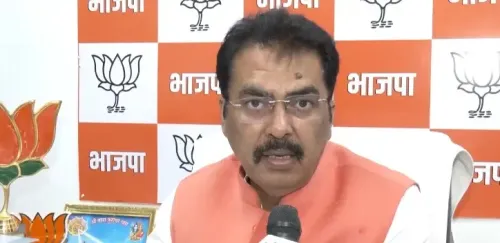
A group of advocates from across India has written to Chief Justice of India (CJI) Sanjiv Khanna — addressed to CJI Surya Kant — urging the Supreme Court to take suo motu cognisance of the 21 July sit-in protest led by Leader of Opposition Rahul Gandhi and other Opposition leaders near Prime Minister Narendra Modi's official residence at 7, Lok Kalyan Marg, New Delhi. The representation, coordinated by advocate Sanket Gupta and signed by lawyers from multiple High Courts, seeks a fact-finding inquiry and binding guidelines on demonstrations near high-security installations.
What the Representation Alleges
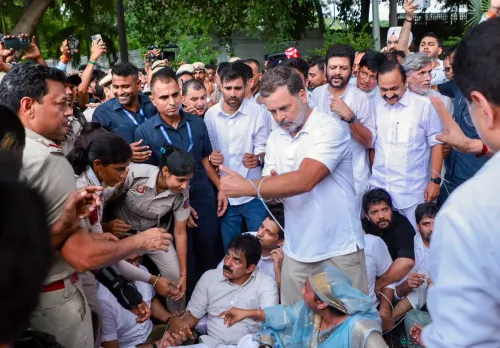
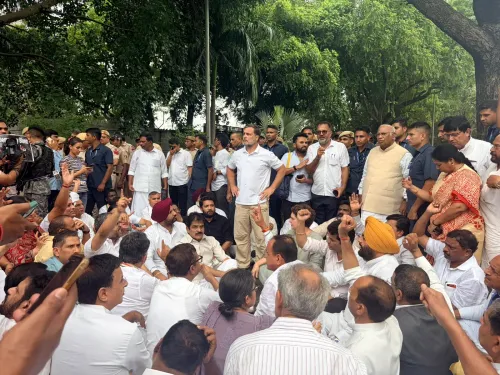
According to the representation, Rahul Gandhi, Congress president Mallikarjun Kharge, Priyanka Gandhi Vadra, Samajwadi Party chief Akhilesh Yadav, several Members of Parliament, and the Chief Ministers of Kerala and Karnataka participated in a sit-in protest in the immediate vicinity of the Prime Minister's residence without prior information or permission from authorities.
The advocates described the site as 'among the most security-sensitive locations in the National Capital,' arguing that any unregulated gathering there carries security implications well beyond those ordinarily associated with public protests. They further alleged that senior police officers repeatedly requested the protesters to disperse, citing the high-security nature of the zone, but the assembly continued despite those appeals.
Minister's Intervention and Police Action
The representation claimed that Union Minister of State in the Prime Minister's Office Jitendra Singh personally met Rahul Gandhi during the standoff and urged him to end the protest, assuring him that the government was willing to discuss the matter in Parliament. The demonstration nonetheless continued for several hours. Delhi Police eventually removed Rahul Gandhi and other MPs from the site after nearly three hours.
'It is a matter of grave concern that a Constitutional functionary such as the Leader of Opposition himself placed the police in a position where such physical removal became necessary,' the representation stated, adding that any untoward incident during the standoff could have had 'severe' consequences given the sensitivity of the location.
Constitutional Arguments Raised
The advocates stressed that while the right to protest is constitutionally protected, it is not absolute. They cited Article 19(1)(b) of the Constitution, which guarantees the right to assemble peaceably and without arms, alongside Article 19(3), which expressly permits reasonable restrictions in the interests of public order and the sovereignty and integrity of India.
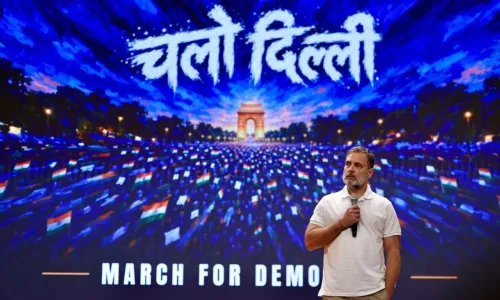
The representation also flagged Rahul Gandhi's social media post calling on citizens to join the dharna, arguing that inviting members of the public to gather near the Prime Minister's residence carried 'serious and foreseeable security implications' given the unpredictable size and composition of any responding crowd.
What the Advocates Are Seeking
The advocates urged the Supreme Court to take suo motu cognisance of the incident, direct an appropriate fact-finding inquiry, and frame uniform, prospective guidelines regulating protests in the immediate vicinity of high-security installations. They emphasised that such guidelines should apply equally to all political parties and formations, balancing the constitutional right to protest with legitimate security imperatives.
'The Constitution makes no distinction between the ordinary citizen and the highest office-holder — all are equally bound by law,' the representation said. With the matter now formally before the apex court's notice, the question of where the constitutional right to protest ends and security necessity begins is set to attract fresh judicial scrutiny.
Point of View
Rather than letting law enforcement handle it through standard procedure, also deserves scrutiny that the representation conspicuously avoids.
NationPress
22 Oct 2026
Frequently Asked Questions
What is the suo motu cognisance demand regarding Rahul Gandhi's protest?
A group of advocates has written to CJI Surya Kant urging the Supreme Court to independently take up the matter of the 21 July sit-in protest led by Rahul Gandhi and other Opposition leaders near the PM's residence at 7, Lok Kalyan Marg, without waiting for a formal petition. They want the court to order a fact-finding inquiry and lay down binding guidelines on protests near high-security installations.
Why do the advocates consider the protest a security concern?
The advocates describe 7, Lok Kalyan Marg as 'among the most security-sensitive locations in the National Capital.' They argue that holding a protest there without prior permission — and publicly inviting citizens to join via social media — created unpredictable crowd dynamics with foreseeable security risks.
What happened during the 21 July protest?
Rahul Gandhi, Congress president Mallikarjun Kharge, Priyanka Gandhi Vadra, Akhilesh Yadav, several MPs, and the Chief Ministers of Kerala and Karnataka held a sit-in near the PM's residence. Delhi Police removed the protesters after nearly three hours; MoS PMO Jitendra Singh reportedly met Gandhi during the standoff and offered parliamentary dialogue, but the protest continued.
What constitutional provisions are cited in the representation?
The representation cites Article 19(1)(b), which guarantees the right to assemble peaceably and without arms, and Article 19(3), which allows reasonable restrictions on that right in the interests of public order and national sovereignty. The advocates argue these provisions justify prior-permission requirements for protests near high-security zones.
Who coordinated the advocates' letter to the CJI?
The representation was coordinated by advocate Sanket Gupta and signed by lawyers from multiple High Courts across India. It urges the Supreme Court to frame guidelines applicable equally to all political parties for demonstrations near high-security installations.