How Did Corporate Growth and Profitability Change in Q3 in South Korea?

Synopsis
Discover the latest insights into South Korea's corporate landscape as companies showcase improved growth and profitability in Q3, driven by the booming semiconductor market and the AI revolution. This article dives into the factors contributing to this economic turnaround and what it means for the future.
Key Takeaways
The overall sales of South Korean companies increased by 2.1% in Q3.
Strong semiconductor exports played a pivotal role in this growth.
Profitability margins improved, reaching 6.1%.
Financial stability indicators also showed positive trends.
Large e-commerce retailers and digital platforms contributed to the upturn.
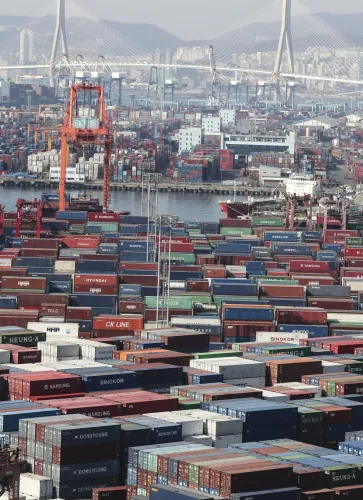
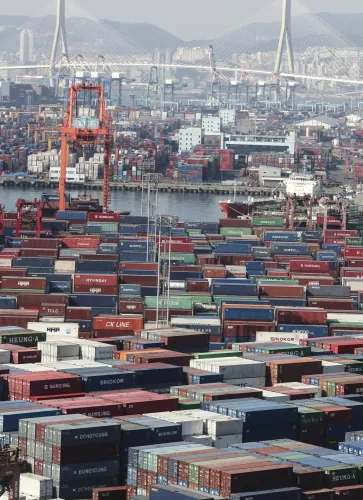
Seoul, Dec 17 (NationPress) South Korean enterprises have recorded a notable uptick in both growth and profitability during the third quarter, spurred by strong semiconductor exports amidst a booming artificial intelligence (AI) sector, as stated by the central bank on Wednesday.
The aggregated revenue of 26,067 companies undergoing external audits surged by 2.1 percent compared to the same period last year in the July-September timeframe, marking a reversal from a 0.7 percent year-on-year decline in the previous quarter, according to data released by the Bank of Korea (BOK), as reported by Yonhap news agency.
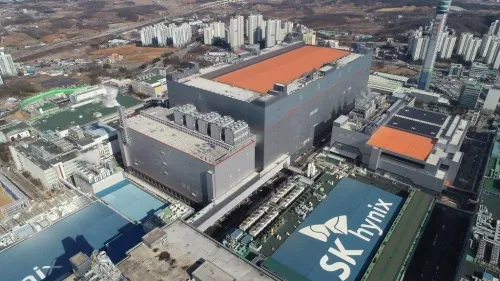
Moon Sang-yoon, head of the BOK's corporate statistics division, explained during a press briefing, "The sales increase was largely fueled by rising exports of high-value products like HBM and DDR5, driven by growing global AI investments, coupled with elevated memory prices."
Furthermore, sales growth in the machinery and electrical and electronics sectors soared by 8.9 percent, significantly up from just 2.2 percent in the preceding quarter. Excluding these sectors, the growth rate was approximately 1.1 percent.
Moon added, "The robust performances of several major e-commerce platforms, a rise in imported electric vehicle sales, and solid earnings from digital platform companies also played a role in this positive trend."
Indicators of profitability have also shown improvement.
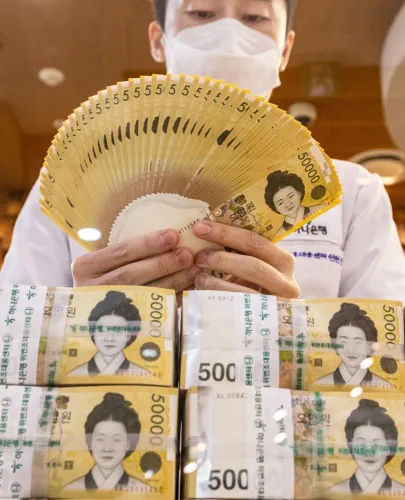
The operating profit margin for the surveyed companies increased to 6.1 percent in the third quarter, up from 5.8 percent a year prior.
Moreover, financial stability indicators have also strengthened.
The debt-to-equity ratio decreased to 88.8 percent in the third quarter, down from 89.8 percent in the previous quarter, while companies' dependence on borrowing fell by 0.4 percentage points to 26.2 percent.
Moon commented, "The adverse effects stemming from new U.S. tariffs persisted into the third quarter; however, the uncertainty has significantly diminished, and the strong performance of the semiconductor sector has helped to mitigate the impact."
Point of View
I believe this report reflects a significant shift in South Korea's economic landscape. The resurgence in profitability and growth signals resilience amid global uncertainties, particularly in the tech sector. It is crucial for stakeholders to monitor these trends closely as they could influence investment strategies moving forward.
NationPress
21 Sept 2026
Frequently Asked Questions
What factors contributed to the growth of South Korean companies in Q3?
The growth was largely driven by increased exports of high-value semiconductor products, particularly HBM and DDR5, fueled by a surge in global AI investments.
How did profitability indicators change in the third quarter?
The operating profit margin for companies surveyed rose to 6.1 percent, an increase from 5.8 percent a year earlier.
What impact did U.S. tariffs have on South Korean companies?
While new U.S. tariffs had ongoing negative effects, the overall uncertainty has eased, and the semiconductor industry's strong performance helped mitigate these impacts.