CAS suspension urged: BJP's Kirit Somaiya writes to SEBI after Sensex 2,200-point swing
Synopsis
A 2,200-point Sensex crash-and-recovery in ten minutes on the first derivatives expiry under SEBI's new Closing Auction Session has drawn a formal suspension demand from former BJP MP Kirit Somaiya. His letter to SEBI chief Tuhin Kanta Pandey identifies a structural flaw: CAS removes continuous liquidity at the worst possible moment, then relies on a shallow auction to recreate it.
Key Takeaways
Former BJP MP Kirit Somaiya has written to SEBI Chairman Tuhin Kanta Pandey demanding suspension and redesign of the Closing Auction Session (CAS) .
The Sensex reportedly swung more than 2,200 points before recovering around 2,000 points between 3.20 pm and 3.30 pm on 27 August .
The episode coincided with the first monthly derivatives expiry since CAS was introduced.
Somaiya argues CAS eliminates continuous trading liquidity at 3.15 pm , leaving a shallow auction to set the closing price while derivatives trade until 3.40 pm .
He also flagged fragmented closing auctions across NSE and BSE , which can produce different equilibrium closing prices for the same security.
Somaiya has called for a formal inquiry into whether the volatility was deliberate, alongside appropriate regulatory action.
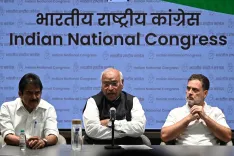
Former Bharatiya Janata Party (BJP) MP Kirit Somaiya has written to Securities and Exchange Board of India (SEBI) Chairman Tuhin Kanta Pandey, demanding a temporary suspension and redesign of the newly introduced Closing Auction Session (CAS) mechanism, following an extraordinary 2,200-point intraday swing in the Sensex during the final minutes of trading on 27 August. The episode has reignited debate over the structural readiness of India's equity market infrastructure for auction-based price discovery.
What Triggered the Letter
The sharp market movement occurred between 3.20 pm and 3.30 pm IST on 27 August, when the Sensex reportedly crashed by more than 2,200 points before recovering approximately 2,000 points within the same window. Critically, this was the first monthly derivatives expiry since CAS was introduced, making the episode a live stress test of the new mechanism under peak-liquidity-demand conditions.
Somaiya urged SEBI not to treat the episode 'casually', arguing that if the volatility reflected a structural weakness in the CAS framework, officials responsible for its design must explain what went wrong. He also raised the possibility that the movement could have been deliberate, calling for a formal inquiry and appropriate action based on its findings.
The Structural Flaw Somaiya Identified
At the heart of Somaiya's critique is what he describes as a fundamental architectural problem: under the current CAS framework, continuous trading in CAS-eligible securities ends at 3.15 pm, after which the market transitions into a separate closing auction. Equity derivatives, however, continue trading until 3.40 pm.
According to Somaiya's proposal, this design 'switches off' a deep continuous market at precisely the moment when liquidity is most critical, and then expects a comparatively shallow auction to recreate adequate depth for closing price determination. He argued that a closing auction should build upon existing market liquidity — not first drain it and then attempt to reconstitute it through an auction mechanism.
Liquidity Fragmentation Across NSE and BSE
Somaiya also flagged a separate concern around market fragmentation. Under the current structure, the same security can undergo parallel closing auctions on the National Stock Exchange (NSE) and the Bombay Stock Exchange (BSE), each with independent order books, separate imbalances, and potentially divergent equilibrium closing prices. This, he argued, undermines the very purpose of a unified price discovery mechanism that CAS was intended to create.
Citing observations from a market participant, he noted that the absence of sufficient liquidity after 3.15 pm could systematically amplify volatility, as investors seeking to buy or sell in that window may not find adequate market depth to execute orders without significant price impact.
What Somaiya Has Proposed
In a proposal attached to his letter, Somaiya called for the immediate and temporary suspension of CAS, followed by a thorough redesign grounded in practical market considerations before any reintroduction. He stopped short of prescribing a specific alternative architecture but emphasised that any revised mechanism must preserve — rather than eliminate — continuous trading liquidity at the market close.
This comes amid broader scrutiny of SEBI's recent market structure reforms, several of which have drawn pushback from market participants over implementation timelines and real-world stress testing. How SEBI responds to Somaiya's letter is likely to shape the near-term trajectory of CAS and, more broadly, the regulator's approach to auction-based closing mechanisms in Indian equity markets.
Point of View
Or a fundamental redesign requiring a pause.
NationPress
29 Aug 2026
Frequently Asked Questions
What is the Closing Auction Session (CAS) that SEBI introduced?
The Closing Auction Session (CAS) is a mechanism introduced by SEBI to determine the official closing price of listed securities through an auction process in the final minutes of trading, replacing continuous trading for that window. Under the current framework, continuous trading in CAS securities ends at 3.15 pm, after which a separate closing auction sets the final price.
Why did the Sensex swing 2,200 points on 27 August?
The Sensex reportedly fell more than 2,200 points before recovering approximately 2,000 points between 3.20 pm and 3.30 pm on 27 August, during the first monthly derivatives expiry since CAS was introduced. The sharp movement has been attributed to reduced liquidity in the post-3.15 pm window, when continuous trading is halted and a shallower auction takes over.
What has Kirit Somaiya asked SEBI to do?
Former BJP MP Kirit Somaiya has asked SEBI to temporarily suspend CAS and redesign it based on practical market considerations before reintroduction. He has also called for a formal inquiry into whether the 27 August volatility was deliberate, and for appropriate action based on the inquiry's findings.
What is the liquidity fragmentation problem Somaiya raised?
Somaiya pointed out that under the current CAS structure, the same security undergoes separate closing auctions on the NSE and BSE, with independent order books and potentially different equilibrium closing prices. This fragmentation, he argued, undermines the unified price discovery that CAS was designed to achieve.
Who is Tuhin Kanta Pandey, and why was he addressed in the letter?
Tuhin Kanta Pandey is the current Chairman of the Securities and Exchange Board of India (SEBI), the country's primary capital markets regulator. Somaiya addressed the letter to him as the head of the body responsible for designing, approving, and overseeing the CAS mechanism.