SWISS Flight LX147 Aborts Delhi Takeoff: Engine Failure Injures 6
Synopsis
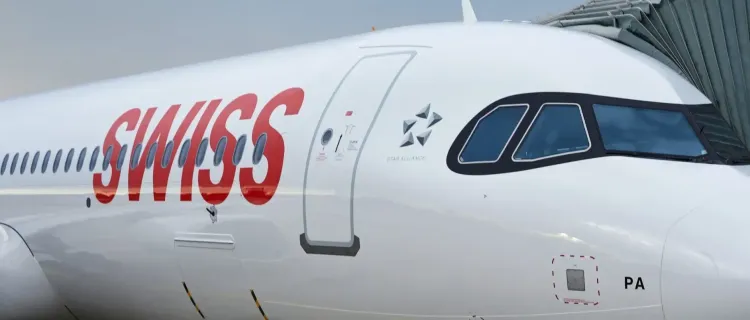
SWISS flight LX147, an Airbus A330 carrying 232 people, aborted takeoff at Delhi's IGI Airport at 1:08 AM on April 27 after an engine malfunction. Six passengers were injured during emergency slide evacuation. The airline has deployed a technical task force to Delhi and is probing the cause.
Key Takeaways
SWISS flight LX147 (Airbus A330, registration HB-JHK ) aborted takeoff at Indira Gandhi International Airport, New Delhi at approximately 1:08 AM on April 27, 2025 .
The aircraft was carrying 228 passengers, 4 infants, and crew members — a total of 232 people on board — on a Delhi-to-Zurich route.
Six passengers were injured during emergency slide evacuation and transported to Medanta Hospital ; all crew members were unharmed.
SWISS International Air Lines has activated a task force and is dispatching technical specialists to Delhi to inspect the aircraft and determine the cause of the engine malfunction.
The airline is arranging rebookings and hotel accommodation for over 200 stranded passengers, who have been issued contact cards for ongoing communication.
India's DGCA is expected to launch a parallel regulatory investigation into the incident at one of Asia's busiest international airports.
New Delhi, April 27: A SWISS International Air Lines flight bound for Zurich made an emergency abort at Indira Gandhi International Airport (IGIA), New Delhi, in the early hours of Sunday, April 27, after one of its engines developed a critical malfunction during takeoff roll. The incident left six passengers injured, all of whom were hospitalised, while the airline activated a crisis task force and dispatched technical specialists to India to investigate the cause.
What Happened on Runway 28
The Airbus A330 aircraft, registered as HB-JHK and operating as flight LX147, was accelerating down Runway 28 at approximately 1:08 AM local time when the engine anomaly was detected. The flight crew immediately executed a rejected takeoff (RTO) — a high-stakes emergency procedure that demands precise execution to bring a fully loaded aircraft to a safe stop within the remaining runway length.
Following a rapid on-ground assessment, the crew made the precautionary call to evacuate all passengers and crew via emergency slides. The aircraft was carrying 228 passengers, 4 infants, and multiple crew members — totalling 232 individuals on board.
For a small number of passengers physically unable to use the inflatable evacuation slides, ground stairs were deployed as an alternative exit method, the airline confirmed.
Injuries and Medical Response
Six passengers sustained injuries during the evacuation process — a common risk in emergency slide deployments, where the rapid descent and ground impact can cause sprains, fractures, or abrasions, particularly among elderly or physically vulnerable travellers. All six were transported to Medanta Hospital in the Delhi-NCR region for medical evaluation and treatment.
The airline confirmed that all crew members were unharmed. The remaining passengers were moved to the terminal and are being assisted by SWISS ground teams coordinating re-bookings and hotel accommodation.
Airline's Response and Investigation
SWISS International Air Lines issued an official statement confirming the incident and said: "SWISS technical specialists will travel to Delhi to inspect the aircraft and initiate the next steps." The airline also stated it is "working intensively to find swift and suitable onward travel solutions for all passengers."
Passengers were issued contact cards to ensure the airline can maintain reliable communication throughout the disruption. "Such a situation is stressful for everyone involved. Our local teams are taking care of our passengers on site," the airline added.
The airline has established a dedicated task force to manage both the passenger welfare response and the technical investigation running in parallel.
Aviation Safety Context and Broader Implications
This incident adds to a growing global conversation around mid-takeoff engine failures and the robustness of emergency protocols at major international airports. IGI Airport is one of Asia's busiest aviation hubs, handling over 70 million passengers annually, and incidents of this nature — while rare — test the readiness of both airline crews and airport emergency response systems.
Notably, emergency slide evacuations, while life-saving, carry an inherent injury risk estimated by aviation safety researchers at roughly 10–30% minor injury rate per evacuation event, depending on passenger demographics and cabin configuration. The fact that only six of 232 people were hurt suggests the crew executed the evacuation with considerable discipline.
The Directorate General of Civil Aviation (DGCA), India's aviation regulatory authority, is expected to initiate its own parallel inquiry into the incident, as is standard procedure for any serious aviation occurrence at an Indian airport involving a foreign carrier. The findings from both the SWISS technical inspection and the DGCA probe will be critical in determining whether the engine fault was an isolated mechanical failure or indicative of a systemic maintenance concern with the Airbus A330 fleet type.
As investigations proceed, affected passengers face significant travel disruptions, with SWISS scrambling to rebook over 200 travellers on alternate routes to Zurich — a logistical challenge that underscores the cascading human impact of even a single serious aviation incident.
Point of View
Even on modern wide-body jets like the Airbus A330. What deserves scrutiny here is not just the mechanical failure itself, but the speed and transparency of both the airline's and India's DGCA's response — past incidents have exposed regulatory gaps in how foreign carriers are monitored during Indian operations. The injury of six passengers during evacuation also raises questions about whether passenger briefings on emergency slide procedures are genuinely effective or merely a compliance checkbox. As air travel in India surges toward record volumes, this incident must serve as a systemic audit trigger, not just a one-off investigation.
NationPress
19 Sept 2026
Frequently Asked Questions
What happened to SWISS flight LX147 at Delhi airport?
SWISS flight LX147, an Airbus A330 carrying 232 people, aborted its takeoff from Runway 28 at Indira Gandhi International Airport at around 1:08 AM on April 27, 2025, after one of its engines developed a fault. The crew evacuated all passengers and crew via emergency slides as a precaution.
How many passengers were injured in the SWISS Airlines Delhi incident?
Six passengers were injured during the emergency evacuation of SWISS flight LX147 at Delhi airport. All six were taken to Medanta Hospital for medical evaluation and treatment; crew members were reported unharmed.
Which hospital treated the injured passengers from the SWISS flight Delhi incident?
The six injured passengers from SWISS flight LX147 were taken to Medanta Hospital in the Delhi-NCR region. They were undergoing medical evaluation following injuries sustained during the emergency slide evacuation.
What is SWISS Airlines doing after the Delhi flight engine failure?
SWISS International Air Lines has established a crisis task force and is sending technical specialists to Delhi to inspect the Airbus A330 aircraft (HB-JHK). The airline is also arranging rebookings and hotel accommodation for all stranded passengers.
Will India's DGCA investigate the SWISS flight engine failure at IGI Airport?
India's Directorate General of Civil Aviation (DGCA) is expected to conduct a parallel investigation into the incident, as is standard for serious aviation occurrences at Indian airports involving foreign carriers. The findings will complement SWISS's own technical inquiry.