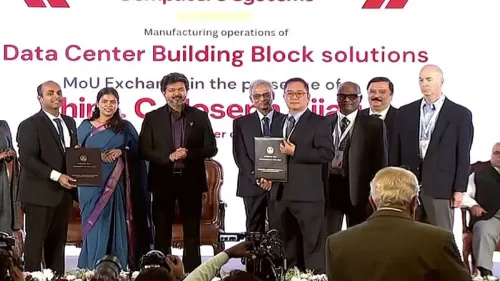
Tamil Nadu signs 112 investment pacts worth ₹1.15 lakh crore, targeting 1.33 lakh jobs

Synopsis
In the first 195 days of CM C. Joseph Vijay's tenure, Tamil Nadu has locked in ₹1.15 lakh crore worth of investment deals across 23 sectors — with 83 of 112 projects already past land confirmation. Automobiles and electronics alone account for nearly 30 per cent of the committed value, and investors from 17 countries are in the mix, signalling serious momentum beyond routine MoU optics.
Key Takeaways
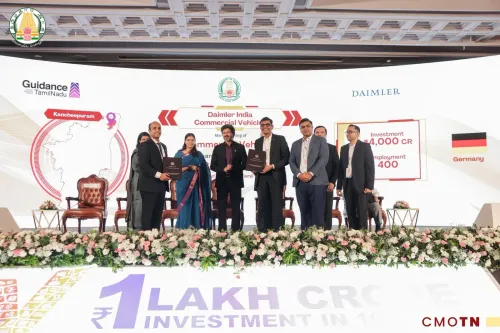
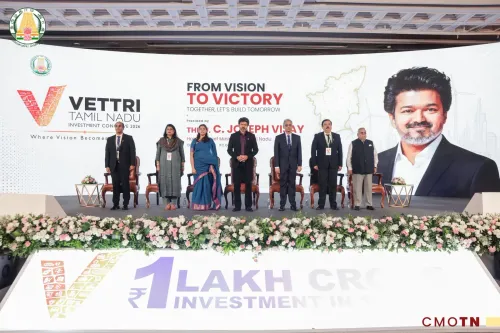
Tamil Nadu signed 112 investment agreements worth ₹1,14,811.91 crore across 23 sectors between 10 May and 21 November 2026 .
The projects are expected to generate 1,32,771 jobs across the state.
Automobile manufacturing (₹17,073 crore) and electronics (₹16,832 crore) together account for nearly 30% of total proposed investment.
83 of 112 projects ( 74.11% ) have reached at least the land confirmation stage; 23 are at foundation stone stage.
Investors from 17 countries signed MoUs; global skill centres created 5,870 high-skilled jobs .
The state has introduced more than 25 reforms across 11 sectors and a 21-working-day permit-issuance procedure to ease business setup.
Tamil Nadu signed 112 investment agreements worth ₹1,14,811.91 crore across 23 sectors between 10 May and 21 November 2026, the state government announced, projecting 1,32,771 new jobs from the proposed projects. The disclosure came as part of a review of the first 195 days of Chief Minister C. Joseph Vijay's administration.
Sector-Wise Investment Breakdown
Automobile manufacturing led the sectoral rankings with committed investment worth ₹17,073 crore, closely followed by electronics at ₹16,832 crore. Together, the two sectors accounted for nearly 30 per cent of the total proposed investment.
Textiles attracted pledges worth ₹7,871 crore. Combining automobiles, electronics, and textiles, the three sectors jointly drew ₹41,776 crore — just over 36 per cent of the total agreement value. The proposals span the establishment of new factories and industrial enterprises across the state.
International Participation and Implementation Progress
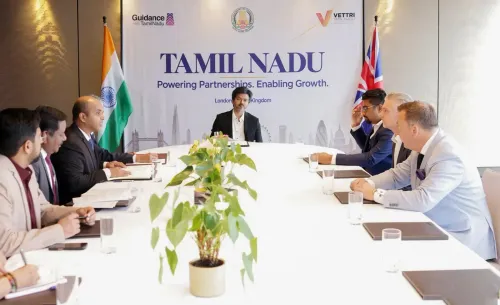
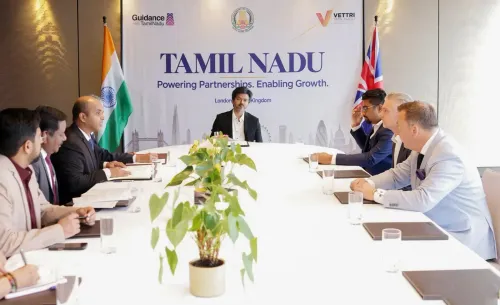
Investors from 17 countries signed memoranda of understanding with Tamil Nadu during the review period, which the government cited as evidence of continued global interest in the state as an investment destination. The government separately noted that 35 agreements had been recorded, though it did not specify the category to which they belonged.
On implementation, 83 of the 112 projects — representing 74.11 per cent of all covered agreements — had reached at least the land confirmation stage. Of these, 23 projects had progressed to the foundation stone stage. Global skill centres operating in the state had additionally created 5,870 high-skilled jobs, according to the government statement.
Reforms to Ease Business Setup
Tamil Nadu has introduced a permit-issuance procedure requiring approvals within 21 working days, as part of broader efforts to lower the entry barrier for industrial investment. The state has also constituted the Tamil Nadu Investment Promotion Authority, chaired by the Chief Secretary, to expedite business clearances.
Notably, the government said it had rolled out more than 25 reforms across 11 sectors to simplify procedures companies must follow before commencing industrial operations. This regulatory overhaul signals a deliberate pivot toward faster project commissioning — a key friction point that has historically widened the gap between MoU signings and actual factory floors.
What the Government Aims to Achieve Next
The state has stated its intention to pursue fresh investment rounds while simultaneously accelerating approvals for projects already covered by existing agreements. The overarching goal, according to the government, is to translate signed commitments into active enterprises and, ultimately, into employment across Tamil Nadu. With 74 per cent of projects past land confirmation and nearly a quarter at the foundation stone stage, the pipeline appears more advanced than typical post-MoU timelines seen in many Indian states.
Point of View
However, is whether the ₹1.15 lakh crore in commitments converts to operating factories at scale; India's industrial history is littered with MoUs that stalled at groundbreaking. The 21-working-day permit window and the new Tamil Nadu Investment Promotion Authority are structural signals worth watching, but their credibility will depend entirely on whether timelines are enforced uniformly across projects or selectively for flagship announcements.
NationPress
22 Nov 2026
Frequently Asked Questions
How many investment agreements did Tamil Nadu sign in 2026?
Tamil Nadu signed 112 investment agreements worth ₹1,14,811.91 crore across 23 sectors between 10 May and 21 November 2026. The deals are projected to generate 1,32,771 jobs across the state.
Which sectors attracted the most investment in Tamil Nadu?
Automobile manufacturing led with ₹17,073 crore in commitments, followed by electronics at ₹16,832 crore. Together with textiles (₹7,871 crore), these three sectors accounted for over 36 per cent of the total investment value.
How far along are the signed Tamil Nadu investment projects?
Of the 112 projects, 83 — representing 74.11 per cent — have reached at least the land confirmation stage, and 23 have advanced to the foundation stone stage. This suggests a higher-than-average implementation rate compared to typical MoU-to-ground timelines.
What is the Tamil Nadu Investment Promotion Authority?
It is a newly constituted body chaired by the Chief Secretary of Tamil Nadu, set up to expedite business approvals and fast-track investment clearances. The state has also introduced a 21-working-day permit-issuance procedure as part of broader ease-of-doing-business reforms.
Which countries have invested in Tamil Nadu under these agreements?
Investors from 17 countries signed memoranda of understanding with Tamil Nadu between May and November 2026. The government cited this international participation as evidence of sustained global interest in the state as an investment destination.