TNGECL plans Tamil Nadu's first floating solar projects at 7 reservoirs
Synopsis
Tamil Nadu is set to launch its first floating solar projects across seven major reservoirs, targeting 100 MW in a pilot phase that could eventually unlock 3,000 MW of untapped clean energy potential. With land constraints squeezing conventional solar expansion, TNGECL's reservoir-based push could save the state up to ₹15,000 crore in coal-power costs over five years.
Key Takeaways
TNGECL has identified seven reservoirs including Mettur Dam , Vaigai Dam , and Red Hills Reservoir for Tamil Nadu's first floating solar pilot.
The pilot phase targets 100 MW of generation, with Tamil Nadu's total floating solar potential estimated at 3,000 MW across 57 reservoirs .
Project cost is estimated at ₹5 crore to ₹6 crore per MW — around 20% higher than conventional ground-mounted solar.
Each MW requires approximately 3.5 acres of water surface and feasibility studies will assess BESS integration and site suitability.
The state could save ₹10,000–₹15,000 crore over five years by reducing coal-based power dependence.
Formal announcement is pending withdrawal of the Model Code of Conduct following ongoing elections.
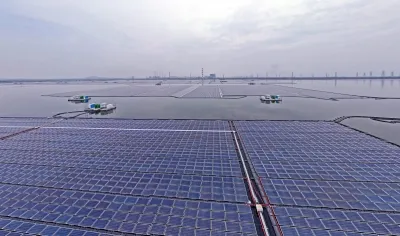
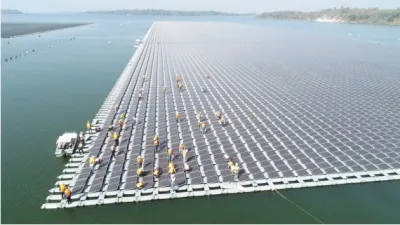
Tamil Nadu Green Energy Corporation Limited (TNGECL) has initiated plans to develop the state's first floating solar photovoltaic (FPV) projects across seven reservoirs, in a significant push to unlock Tamil Nadu's estimated 3,000 MW of untapped floating solar potential. The move addresses growing land constraints for conventional solar parks while accelerating the state's clean energy transition.
Seven Sites Identified for Pilot Phase
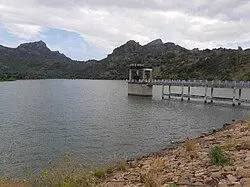
TNGECL has shortlisted seven locations for the pilot phase, including prominent water bodies such as Mettur Dam, Bhavanisagar Dam, Vaigai Dam, Red Hills Reservoir, and Sathanur Dam, along with a TNGECL-owned site at Avalanche. These sites were selected based on their size, water availability, and structural suitability for floating solar infrastructure.
Officials confirmed that TNGECL has already approached the Water Resources Department (WRD) to secure permission for using these reservoirs. Simultaneously, a private firm has been engaged to conduct feasibility studies covering technical viability and environmental considerations.
Scale and Costs of the Pilot Project
The pilot phase is expected to generate around 100 MW of power, serving as a benchmark for future expansion. According to TNGECL sources, Tamil Nadu holds a floating solar potential of approximately 3,000 MW spread across 57 reservoirs statewide — a resource that has largely remained untapped.
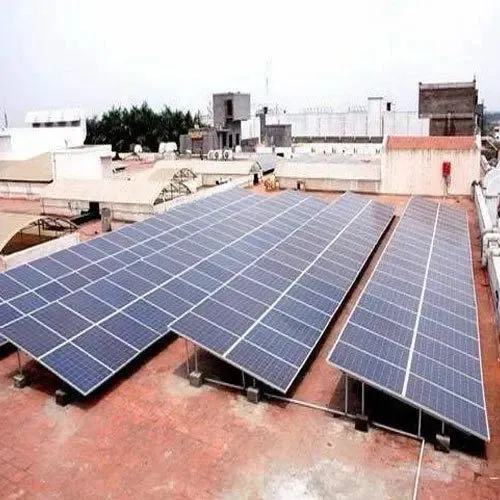
Floating solar projects, however, come at a premium. Officials noted that FPV installations typically involve around 20% higher investment compared to conventional ground-mounted solar plants. The cost is estimated at ₹5 crore to ₹6 crore per MW, with each megawatt requiring roughly 3.5 acres of water surface to accommodate the additional floating infrastructure.
Long-Term Savings and Environmental Benefits
Despite the higher upfront investment, TNGECL believes FPV projects offer substantial long-term returns. By reducing dependence on coal-based power generation, the state could potentially save between ₹10,000 crore and ₹15,000 crore over the next five years. Floating solar panels also benefit from the cooling effect of water, which typically improves energy generation efficiency compared to land-based installations.
The feasibility study will assess critical factors including project costs, integration of battery energy storage systems (BESS), reservoir depth, and overall site suitability. Implementation is expected to commence only after all regulatory approvals are secured.
Formal Announcement Awaits Election Code Withdrawal
The project is expected to be formally announced once the Model Code of Conduct, currently in force due to ongoing elections, is lifted. This comes amid a broader national push toward renewable energy, with land scarcity increasingly driving interest in alternative solar deployment models such as floating and agri-solar installations.
TNGECL is expected to scale up the initiative based on the performance and outcomes of the pilot phase, potentially unlocking the full 3,000 MW floating solar capacity across Tamil Nadu's reservoir network.
Point of View
But the 20% cost premium over ground-mounted solar means execution discipline will be everything. The ₹10,000–₹15,000 crore savings projection over five years is compelling on paper, yet it hinges on timely regulatory clearances, WRD cooperation, and BESS integration — none of which are straightforward in India's infrastructure landscape. Notably, the formal announcement being held back by the Model Code of Conduct signals the political weight attached to this project, raising questions about whether the timeline is driven by energy planning or electoral optics. The real test will be whether the 100 MW pilot delivers verifiable efficiency and cost data before TNGECL commits to scaling across all 57 reservoirs.
NationPress
19 Sept 2026
Frequently Asked Questions
What is TNGECL's floating solar project in Tamil Nadu?
Tamil Nadu Green Energy Corporation Limited (TNGECL) is planning to set up floating solar photovoltaic (FPV) projects across seven reservoirs in Tamil Nadu, including Mettur Dam, Vaigai Dam, and Red Hills Reservoir. The pilot phase targets around 100 MW of power generation, with potential to scale up to 3,000 MW across 57 reservoirs statewide.
Which reservoirs have been selected for the floating solar pilot?
TNGECL has identified Mettur Dam, Bhavanisagar Dam, Vaigai Dam, Red Hills Reservoir, Sathanur Dam, and a TNGECL-owned site at Avalanche as locations for the pilot phase. Sites were chosen based on size, water availability, and suitability for floating infrastructure.
How much will Tamil Nadu's floating solar projects cost?
The cost is estimated at ₹5 crore to ₹6 crore per MW, which is approximately 20% higher than conventional ground-mounted solar plants. Each MW of floating solar requires roughly 3.5 acres of water surface to accommodate the floating infrastructure.
What are the expected benefits of floating solar for Tamil Nadu?
By reducing dependence on coal-based power, Tamil Nadu could potentially save between ₹10,000 crore and ₹15,000 crore over the next five years. Floating solar panels also benefit from the water's cooling effect, improving energy generation efficiency compared to land-based installations.
When will the floating solar project be officially announced?
The formal announcement is expected once the Model Code of Conduct, currently in force due to ongoing elections, is withdrawn. Implementation will begin after all regulatory approvals are secured, including permissions from the Water Resources Department (WRD).