Has the US Established a Framework with China to Prevent Tariffs?
Synopsis
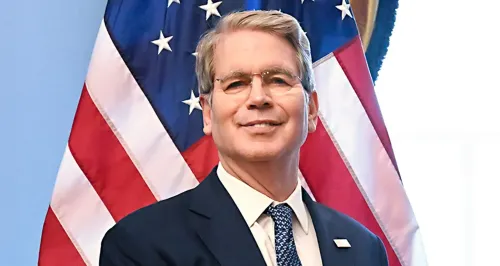
In a significant development, US Treasury Secretary Scott Bessent has indicated that the United States and China are on the verge of a framework agreement that could avert a looming tariff crisis. This agreement aims to ease trade tensions and set the stage for a productive dialogue between President Trump and President Xi Jinping.
Key Takeaways
Framework agreement reached to avoid tariffs.
Trade tensions between the US and China are being addressed.
Upcoming meeting between Trump and Xi Jinping is crucial.
Positive discussions on rare-earth export controls.
Concerns over reciprocal tariffs and economic issues.
Washington, Oct 27 (NationPress) US Treasury Secretary Scott Bessent has expressed optimism that the US has established a framework agreement with China to prevent the implementation of a further 100 percent tariff on Chinese imports.
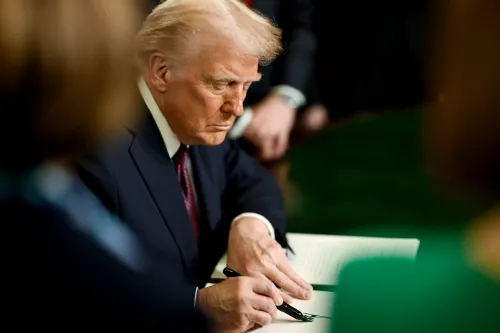
"I believe we have achieved a substantial framework ahead of the meeting between the two leaders next Thursday... this means tariffs will be avoided," Bessent stated on Sunday during an interview with ABC News from Kuala Lumpur, Malaysia, where President Donald Trump arrived on Saturday for a week-long diplomatic tour in Asia.
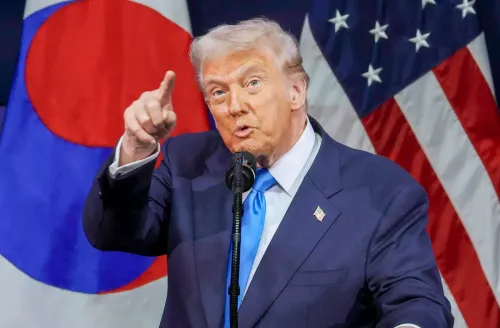
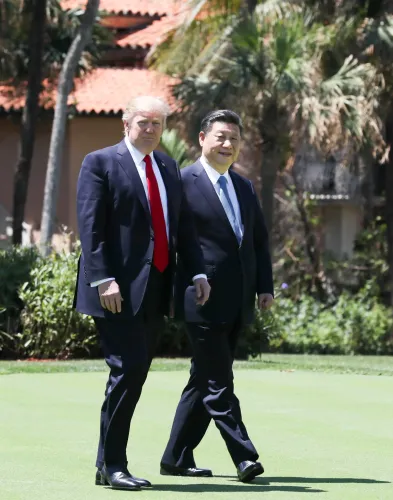
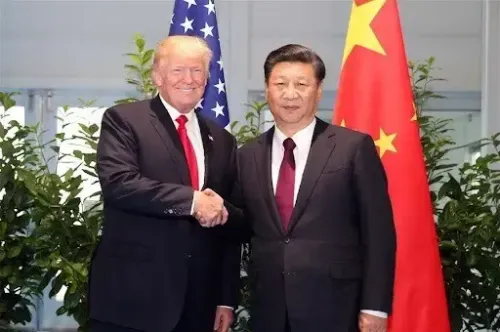
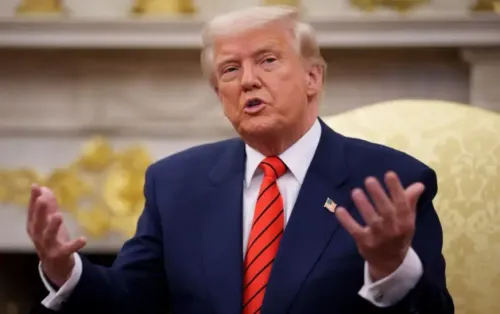
Trump is set to engage with Chinese leader Xi Jinping in South Korea later this week.
Earlier, Chinese International Trade Representative Li Chenggang mentioned that the US and China had reached a "preliminary consensus" on trade matters during discussions in Malaysia, as reported by Chinese media.
Bessent did not disclose specifics regarding the framework but mentioned on NBC News that he expects the US to receive some form of deferral concerning rare-earth export controls.
These minerals have been pivotal in the trade tensions between the two leading global economies.
Bessent highlighted that the framework prepares Trump and Xi for a "very productive meeting," further stating, "I believe it will be beneficial for US citizens, farmers, and the nation overall."
Bessent indicated that an increase in tariffs on China is "practically off the table" after what he characterized as "very positive" trade discussions with his Chinese counterparts.
President Trump had previously warned of an additional 100 percent tariff on China effective November 1 due to Beijing's attempts to enforce export controls on critical rare earths, escalating tensions between the US and China.
When inquired about the current status of those tariffs, Bessent informed CBS News on Sunday that the tariff threat has "subsided" following two days of discussions in Malaysia.
"We had a very fruitful two-day meeting. I would assert that the idea of an extra 100 percent tariff from our present position is effectively off the table," he stated.
Bessent added, "I anticipate that the threat of the 100 percent tariff has dissipated, along with the immediate imposition of China initiating a worldwide export control regime."
US and Chinese trade negotiators reached a "basic consensus" on how to tackle their "respective concerns," as per Chinese state media on Sunday, following talks between the two parties over the weekend in Kuala Lumpur.
A delegation led by Chinese Vice Premier He Lifeng met with US officials, including Treasury Secretary Scott Bessent and Trade Representative Jameson Greer, for the discussions, which occur just days ahead of a highly anticipated meeting between Chinese leader Xi Jinping and US President Donald Trump.
The two leaders are expected to convene on the sidelines of the APEC summit in South Korea, although Beijing has yet to confirm the meeting, unlike Washington.
Bessent noted earlier on Sunday that the two sides had "set the groundwork for the leaders' meeting" with a "very successful framework for discussion".
"Both parties engaged in open, thorough, and constructive exchanges on significant economic and trade issues of mutual concern," stated the Chinese state media release.
It highlighted concerns such as US sanctions on China’s maritime logistics and shipbuilding industry, reciprocal tariffs, fentanyl tariffs, agricultural trade, and export controls – a wide array of tensions that have positioned the world’s two largest economies at odds.
"Both sides reached a basic consensus on arrangements to address each other’s concerns. Both parties agreed to further refine the specific details and complete their respective domestic approval processes," the release stated.
Trade and technology tensions between the world’s two largest economies have escalated recently after the US broadened its export blacklist, limiting China’s access to American high-tech, while China intensified its own export controls on rare earth minerals.
Point of View
It is imperative to recognize that ongoing trade negotiations not only impact economic policies but also the livelihoods of citizens on both sides. The progress reported by Secretary Bessent suggests a potential thawing of tensions, which could benefit the broader international community. It is essential for the US to maintain a balanced approach that prioritizes national interests while fostering global cooperation.
NationPress
22 Sept 2026
Frequently Asked Questions
What is the significance of the US-China framework agreement?
The framework agreement aims to prevent the imposition of additional tariffs, which would alleviate trade tensions and promote economic cooperation between the two nations.
When is the meeting between President Trump and President Xi Jinping?
The meeting is scheduled to take place on the sidelines of the APEC summit in South Korea later this week.
What were the key issues discussed in the US-China talks?
The discussions included topics such as tariffs, export controls, and various economic concerns that affect both countries.