Is Vizhinjam Port’s Rapid Growth a Sign of India’s Transhipment Aspirations?
Synopsis
Discover how Vizhinjam International Seaport is rapidly evolving into a major player in India's container transshipment sector. With impressive throughput numbers and technological advancements, this port is set to redefine maritime logistics in the region and elevate India's position in global shipping.
Key Takeaways
Record container throughput achieved with 1,23,092 TEUs in January 2026.
Highest vessel handling since operations began with 62 vessels .
Positioned as India's first semi-automated container port .
Strategically located to compete with major global ports.
Expansion plans to increase capacity to 5.7 million TEUs by 2029.
Thiruvananthapuram, Feb 5 (NationPress) The Vizhinjam International Seaport, managed by Adani Ports and Special Economic Zone Ltd (APSEZ) in collaboration with the Kerala government through a public-private partnership, is swiftly becoming one of India’s premier container transshipment centers.
A series of significant operational achievements in January 2026 underscores the rapid advancement of this greenfield port as it integrates into global shipping networks.
In January, Vizhinjam achieved its highest monthly container throughput ever, reaching 1,23,092 twenty-foot equivalent units (TEUs).
The port accommodated 62 vessels during the month, marking the highest number since it began commercial operations, and recorded an impressive gross crane rate of 30.12 container moves per hour.
For a port that has been operational for just over a year, these statistics emphasize remarkable productivity and operational efficiency.
This performance has led to a consistent improvement in its global rankings.
Vizhinjam has ascended to the 83rd position globally among container ports by volume.
Since its launch, it has serviced 740 vessels and processed 1.57 million TEUs, placing it on a growth path akin to established transshipment hubs in the region.
A standout feature is Vizhinjam’s capability to accommodate large, next-generation vessels.
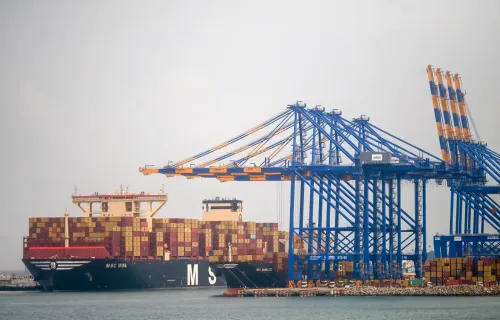
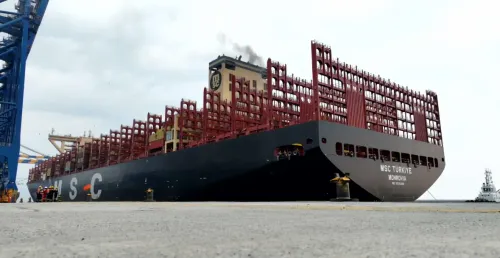
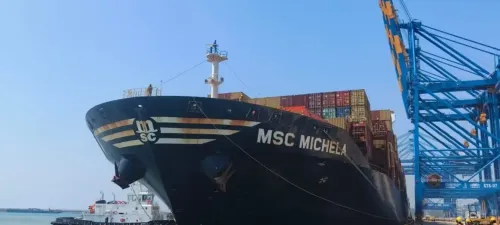
As India’s first semi-automated container port, it is among the few facilities in South Asia equipped to berth ultra-large container vessels (ULCVs).
From December 2024 to January 2026, the port successfully handled over 50 ULCVs exceeding 399 metres in length.
During this timeframe, more than 160 vessels were over 300 metres long, and 50 had drafts exceeding 16 metres.
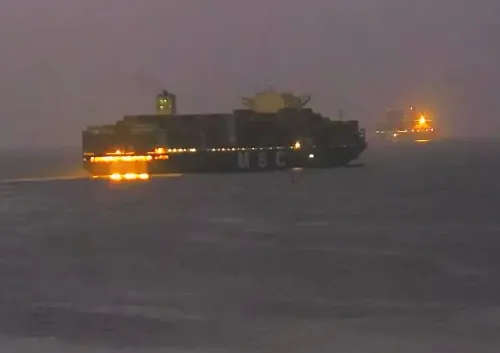
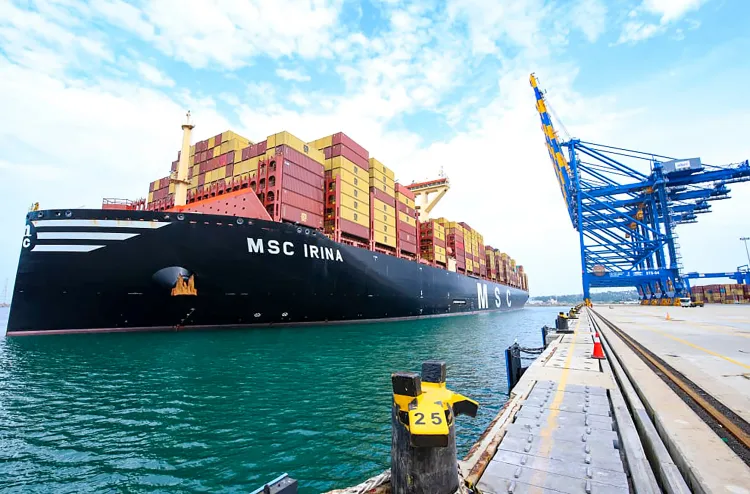
The MSC Verona was noted as the deepest-draft vessel ever managed in South Asia at 17.1 metres, and the MSC IRINA, recognized as the world’s largest container ship, also docked at Vizhinjam.
Technological advancements and workforce preparedness have bolstered this progress.
The port has implemented an advanced, Made-in-India vessel traffic management system designed to digitally monitor vessel and yard movements, enhancing safety and turnaround efficiency.
Additionally, it is the first container port in India to employ women as automated crane operators.
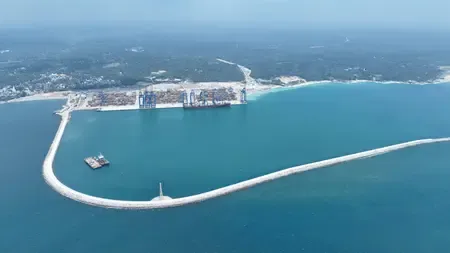
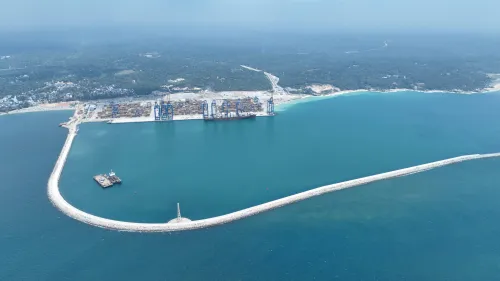
With natural advantages including depths of 18–20 metres, minimal littoral drift, and a three-kilometre breakwater, Vizhinjam can operate year-round with limited dredging requirements.
Its strategic location near key east-west shipping lanes positions it as a viable alternative to major hubs like Colombo, Dubai, Singapore, and Port Klang.
The port is poised for significant expansion.
On January 24, 2026, APSEZ Managing Director Karan Adani announced a substantial investment of Rs 16,000 crore for Phase 2, which will extend the berth length from 800 metres to 2,000 metres and expand the breakwater to approximately 3,900 metres by 2028.
Capacity is anticipated to increase from 1 million TEUs to 5.7 million TEUs by 2029.
As Vizhinjam capitalizes on its early successes, it is emerging as a vital gateway in India’s maritime growth narrative and a cornerstone of the nation’s endeavor to capture a larger share of global container transshipment traffic.
Point of View
It is evident that Vizhinjam Port is not just a local asset; it is a vital component of India's strategy to enhance its role in global trade. With significant investment and strategic positioning, this port is set to become a key player in the maritime sector, driving economic growth and improving logistics efficiency.
NationPress
28 Sept 2026
Frequently Asked Questions
What is the significance of Vizhinjam International Seaport?
Vizhinjam International Seaport is significant as it is rapidly establishing itself as one of India's foremost container transshipment hubs, enhancing the country’s position in global shipping.
Who operates the Vizhinjam Seaport?
The Vizhinjam Seaport is developed and operated by Adani Ports and Special Economic Zone Ltd (APSEZ) in collaboration with the Kerala government.
What are the operational milestones achieved by Vizhinjam?
In January 2026, Vizhinjam achieved record container throughput, handling 1,23,092 TEUs and accommodating 62 vessels, showcasing its operational efficiency.
What makes Vizhinjam unique compared to other ports?
Vizhinjam is unique as it is India's first semi-automated container port and one of the few in South Asia capable of accommodating ultra-large container vessels (ULCVs).
What are the future expansion plans for Vizhinjam?
The future expansion plans include a substantial investment of Rs 16,000 crore to increase berth length and capacity, aiming to handle 5.7 million TEUs by 2029.