Amitabh Bachchan shares Hindu Vishnu Temple video from Iran, misdates it
Synopsis
Amitabh Bachchan's Instagram post on a Hindu Vishnu Temple in Bandar Abbas, Iran, went viral — but came with a factual slip. The temple, built in 1892 for Indian traders during the Qajar era, is roughly 135 years old, not 'ancient'. The post nonetheless illuminates a remarkable, often-overlooked chapter of India-Iran civilisational exchange.
Key Takeaways
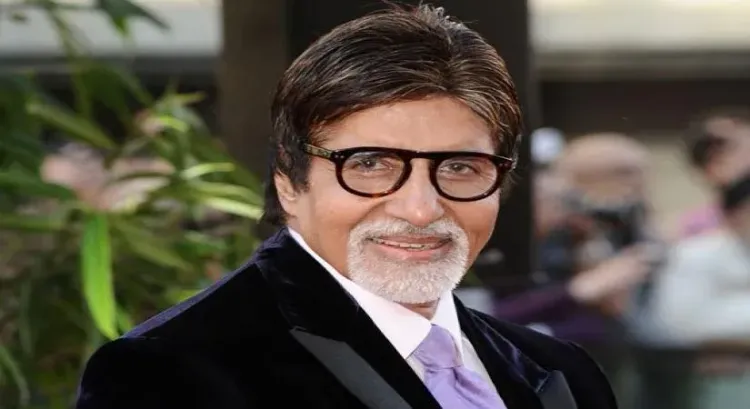
Amitabh Bachchan shared a video of the Hindu Vishnu Temple in Bandar Abbas, Iran on his Instagram on Sunday .
The temple was built in 1892 during the Qajar era for Hindu traders from India — making it approximately 135 years old , not 'ancient' as Bachchan's caption stated.
Bachchan used the Persian song Ae Vishnu Jaan as the video's soundtrack.
India and Iran share a civilisational relationship dating back thousands of years through trade, language, and religion.
Persian has deeply influenced Hindi , Urdu , Punjabi , Bengali , and Kashmiri , particularly during the Mughal era .
Modern India-Iran ties are anchored in energy trade, the Chabahar Port project, and strategic interests.
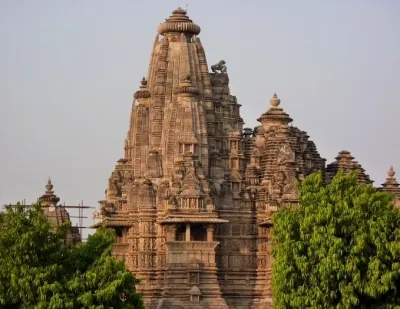
Bollywood veteran Amitabh Bachchan on Sunday shared a video of a Hindu Vishnu Temple located in Bandar Abbas, Iran, on his Instagram account, pairing it with the Persian song Ae Vishnu Jaan. While the post sparked widespread interest in India-Iran cultural ties, Bachchan reportedly mislabelled the structure as 'ancient' — the temple was, in fact, built in 1892, making it approximately 135 years old.
What Bachchan Posted
In a lengthy caption accompanying the video, Bachchan wrote: 'The Ancient Hindu Vishnu Temple in Abbas Bandar, Iran .. Built in 1892 during the Qajar era, it was constructed for Hindu traders from India working in the city .. the song .. in Persian (sic).' The post drew attention both for its cultural significance and for the factual inconsistency — a structure from 1892 does not qualify as ancient by historical standards, though its heritage value remains intact.
A Temple Built for Indian Traders
The Bandar Abbas Vishnu Temple, constructed during the Qajar era, served the community of Hindu traders from India who had settled in the Iranian port city for commerce. Its existence is a tangible marker of the centuries-old mercantile relationship between the two civilisations. Before the Partition of India in 1947, India shared a border with Iran, and trade links between the two regions stretched back many centuries.
India-Iran: A Deep Civilisational Bond
The temple's story is embedded in a far longer history. India and Iran share one of Asia's oldest civilisational relationships, rooted in trade, language, religion, and culture. Persian influence profoundly shaped medieval Indian courts, literature, architecture, and administration — most visibly during the Mughal era, when Persian served as the primary language of governance and elite culture. Thousands of Persian-origin words entered everyday Hindi, Urdu, Punjabi, Bengali, and Kashmiri vocabularies, covering everything from governance to food and emotion.
After India's independence, the two nations formally established diplomatic ties in 1950. During the Cold War, relations were uneven — Iran aligned with the West while India maintained a non-aligned posture close to the Soviet Union. In recent decades, cooperation has deepened through energy trade, the Chabahar Port project, and shared interests in Afghanistan. Despite international sanctions and geopolitical pressures, India has sustained a carefully balanced relationship with Iran.
Why the Post Resonated
Bachchan's post, though factually imprecise on the temple's age, succeeded in surfacing a lesser-known chapter of South Asian diaspora history. The image of a functioning Hindu temple in an Iranian port city — built by Indian merchants over a century ago — offers a window into how trade once wove cultures together across the Persian Gulf. Notably, the use of a Persian devotional song as the soundtrack underscored the syncretism the post was attempting to celebrate.
Point of View
Which risks compressing and distorting the actual historical timeline. That said, the post does something mainstream coverage rarely manages — it makes the India-Iran civilisational thread visible to a mass audience. The Bandar Abbas temple is a genuine artefact of Indian mercantile diaspora history, and its story deserves accurate telling. The bigger missed angle here is not Bachchan's factual slip, but why a Hindu temple built for Indian traders in an Iranian port city is not already a well-known landmark in Indian public consciousness.
NationPress
2 Oct 2026
Frequently Asked Questions
What is the Hindu Vishnu Temple in Bandar Abbas, Iran?
The Hindu Vishnu Temple in Bandar Abbas is a place of worship built in 1892 during the Qajar era for Hindu traders from India who lived and worked in the Iranian port city. It stands as a historic marker of centuries-old India-Iran trade relations.
Why did Amitabh Bachchan's post draw attention?
Bachchan's Instagram post went viral for spotlighting a little-known piece of Indian diaspora history in Iran. However, it also drew scrutiny because he described the 1892 structure as 'ancient', which is factually imprecise — the temple is approximately 135 years old.
What is the historical connection between India and Iran?
India and Iran share one of Asia's oldest civilisational relationships, rooted in trade, language, and religion. Persian deeply influenced Indian courts, literature, and administration during the Mughal era, and thousands of Persian-origin words remain embedded in Hindi, Urdu, Punjabi, Bengali, and Kashmiri.
How are India and Iran connected today?
Modern India-Iran ties are built around energy trade, the Chabahar Port development project, and cooperation on regional issues including Afghanistan. India has maintained balanced relations with Iran despite international sanctions and geopolitical pressures.
Which Persian song did Amitabh Bachchan use in his video?
Bachchan used the Persian song Ae Vishnu Jaan as the soundtrack for his video of the Bandar Abbas temple, underscoring the cultural and linguistic overlap between Indian and Iranian traditions.