Eisha Singh on 'Juhi Mui': 'I hope it won't become a saas-bahu saga'
Synopsis
Eisha Singh is betting that 'Juhi Mui' — only the second autism-focused show on Indian primetime in 16 years — can hold its ground against the gravitational pull of the saas-bahu format. The early audience response, she says, suggests Indian television's mass viewers may finally be ready for something genuinely different.
Key Takeaways
Eisha Singh stars in 'Juhi Mui' , an autism-centred drama airing on Colors .
The show follows Juhi Suri , a young autistic woman navigating grief after her father's death.
Singh expressed hope the show will not follow the trajectory of becoming a saas-bahu saga .
She noted it has taken 16 years since a 2008 show for Indian TV to revisit autism as a central theme.
Audience response has been positive, with Singh saying viewers have 'accepted the show with open arms and open hearts'.
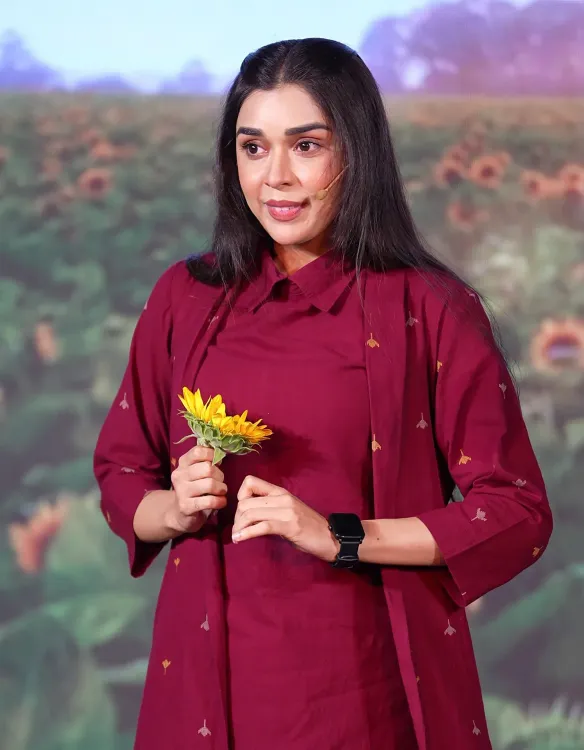
Television actress Eisha Singh has expressed confidence that her latest show 'Juhi Mui' — one of Indian television's rare narratives centred on autism — will resist the pull of the conventional saas-bahu format that has long dominated the small screen. Speaking to reporters on 9 July, Singh said she is hopeful the show will continue to chart its own course.
What 'Juhi Mui' Is About
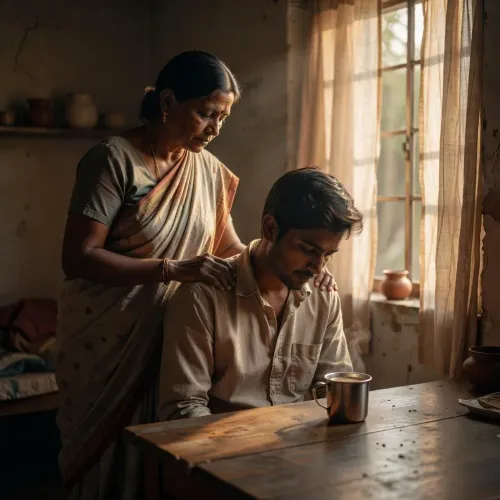
'Juhi Mui' follows the journey of Juhi Suri, a gifted young autistic woman whose exceptional mind becomes her defining strength in a world that frequently misunderstands her. In the show's current track, Juhi is navigating grief after the loss of her father — the one person who had shielded her from society's harsh judgements. The series airs on Colors.
Singh on the Saas-Bahu Question
When asked whether 'Juhi Mui' risks drifting into the saas-bahu template that has consumed many well-intentioned shows before it, Singh was direct. 'I highly doubt it will happen to this show. I hope not because the story is very different,' she said.
She acknowledged, however, that Indian television is ultimately a mass medium. 'We are serving the mass audience and we sometimes show what they want to see. That is why I think around 2008 a show came on a different channel about autism and it took us 16 years to make a show like this. I think we show saas-bahu drama only because that's what audiences have wanted to watch,' she noted.
Audience Response and Changing Tastes
Singh said the early audience response to 'Juhi Mui' has been encouraging, suggesting that viewer appetite is evolving. 'Times are changing, and television needs to change with them. Of course, there is still a space for saas-bahu drama, but at the same time, people are embracing Juhi Mui so beautifully. They have accepted the show with open arms and open hearts, and that's exactly what we wanted,' she said.
She emphasised that the show's characters are deliberately unconventional. 'They are very different. They have their own flaws, they each live in their own world, and the story is about how they come together and begin to see the world from a completely different perspective,' Singh explained. 'So far, the audience has showered us with a lot of love, and I sincerely hope the show doesn't end up becoming a typical saas-bahu saga.'
A Rare Spotlight on Autism
Notably, autism-centric narratives remain exceptionally rare on Indian primetime television. Singh's reference to a 2008 show on a separate channel underscores just how infrequently the medium has engaged with neurodiverse stories in the 16 years since. Industry observers argue that 'Juhi Mui' arrives at a moment when OTT-influenced viewers are increasingly open to nuanced, character-driven storytelling — and that its commercial success or failure could shape how risk-averse broadcasters approach similar subjects going forward.
Point of View
It becomes a proof-of-concept that broadcasters can no longer easily dismiss. If it eventually folds into familiar tropes, it will confirm what critics have long argued: that the medium's structural incentives are stronger than any individual show's ambitions.
NationPress
8 Oct 2026
Frequently Asked Questions
What is 'Juhi Mui' about?
'Juhi Mui' is an Indian television drama airing on Colors that centres on Juhi Suri, a young autistic woman whose exceptional mind is her greatest strength in a world that often misunderstands her. The current storyline follows her as she copes with grief after losing her father, who had been her primary protector.
Who plays the lead in 'Juhi Mui'?
Actress Eisha Singh plays the central character in 'Juhi Mui'. Singh is known for her earlier television work and has described this role as a departure from conventional lead characters on Indian primetime TV.
Why is 'Juhi Mui' considered significant for Indian television?
According to Eisha Singh, it has taken 16 years since a 2008 show on a different channel for Indian television to revisit autism as a central theme in primetime fiction. This makes 'Juhi Mui' a rare attempt to bring neurodiverse storytelling to a mass audience.
Will 'Juhi Mui' turn into a saas-bahu drama?
Eisha Singh has said she 'highly doubts' the show will drift into the saas-bahu format, citing its fundamentally different premise and the positive early audience response. However, she acknowledged that Indian TV ultimately serves a mass audience, which has historically favoured family-drama formats.
Where can viewers watch 'Juhi Mui'?
'Juhi Mui' airs on Colors, one of India's leading Hindi general entertainment channels.