GCCs now high-value innovation hubs, key to Viksit Bharat: Labour Ministry

Synopsis
India's top Labour Ministry official has declared GCCs a cornerstone of the Viksit Bharat mission — not as back-office cost centres, but as research and innovation engines. With over 1,700 GCCs already operating in India, the sector's shift up the value chain could redefine the country's role in the global knowledge economy.
Key Takeaways
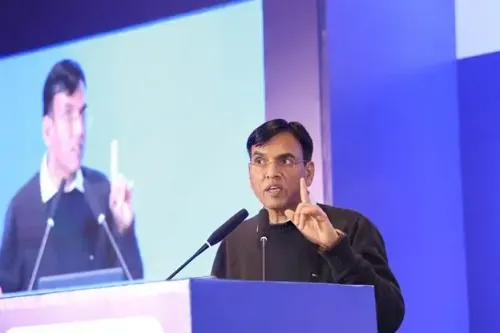
Ajoy Sharma , Additional Secretary and DG (Employment), Ministry of Labour and Employment , spoke on 9 July in New Delhi .
He described GCCs as having moved from back-office support to high-value research, design, and innovation functions.
Sharma linked GCC growth directly to PM Modi's Viksit Bharat vision of making India a developed nation.
He called for a whole-of-government approach , with every ministry coordinating alongside industry and stakeholders.
India hosts over 1,700 GCCs employing upwards of 1.9 million professionals, according to industry estimates.
Global Capability Centres (GCCs) have undergone a fundamental transformation — evolving from cost-driven back-office operations into full-fledged hubs for research, design, and innovation — and are now a critical pillar of India's economic ambitions, Ajoy Sharma, Additional Secretary and Director General (Employment) at the Ministry of Labour and Employment, said on Thursday, 9 July. Speaking in New Delhi, Sharma positioned GCCs as central to realising Prime Minister Narendra Modi's vision of Viksit Bharat — a developed India.
From Back-Office to Innovation Engine
Sharma noted that the perception of GCCs as entities focused purely on cost-effective support functions has shifted decisively. 'The GCC is a very important pillar of our economy, and as we have seen, GCCs have grown tremendously. This is a time when a great transformation is taking place. Earlier, GCCs were thought of as entities doing back-office work cost-effectively, but that has changed significantly. They are now undertaking research and design work, which is much higher up the value chain,' he said.
This shift up the value chain reflects a broader global trend, with multinationals increasingly using their India-based GCCs not just for IT support but for product engineering, artificial intelligence research, and strategic decision-making functions.
GCCs and the Viksit Bharat Vision
Sharma drew a direct line between the GCC sector's growth trajectory and the government's long-term development agenda. He emphasised that the Viksit Bharat goal is not a government-only initiative but a collective endeavour involving industry and all stakeholders. 'Prime Minister Modi's vision of Viksit Bharat is something that not only the government but also the industry and everyone else is working towards. It is something that everyone is focusing on,' he stated.
India currently hosts over 1,700 GCCs, according to industry estimates, employing upwards of 1.9 million professionals. The sector is projected to grow significantly over the coming years, with several global corporations expanding their India footprints in technology, finance, and engineering.
Whole-of-Government Approach
Sharma underlined that achieving the Viksit Bharat objective demands coordinated action across every ministry, not siloed efforts. 'It's not only the government. In achieving the vision of Viksit Bharat, every ministry is working hand in hand, and it is a whole-of-government approach, whatever project we take up,' he said.
He stressed that industry participation is equally essential, framing the public-private partnership model as non-negotiable for India's long-term development goals. The Ministry of Labour and Employment's engagement with the GCC sector signals growing policy attention to how these centres contribute to formal employment generation and skilling outcomes.
What This Means for India's Economy
The GCC sector's evolution carries significant implications for India's employment landscape. As centres move into higher-value functions, demand for skilled professionals in domains such as data science, chip design, and advanced manufacturing is rising sharply. This aligns with the Centre's broader push on skilling and workforce development under various national missions.
With global corporations doubling down on their India operations, the GCC sector is increasingly seen as a strategic lever — not merely an outsourcing destination — in India's bid to become a developed nation by 2047.
Point of View
Not just manufacturing headcounts, in its development scorecard. But the rhetoric of 'whole-of-government approach' has been heard before; what is missing is a measurable framework linking GCC expansion to skilling pipelines and formal employment quality. India's GCC story is real and growing, but without policy teeth — on data localisation, talent supply, or sectoral incentives — it risks remaining a feel-good narrative rather than a structural economic strategy.
NationPress
8 Oct 2026
Frequently Asked Questions
What are Global Capability Centres (GCCs) and why are they important for India?
Global Capability Centres are units set up by multinational corporations in India to handle specialised functions ranging from IT support to research and product development. India hosts over 1,700 GCCs employing nearly 1.9 million professionals, making them a significant contributor to high-skilled employment and the broader economy.
What did Labour Ministry official Ajoy Sharma say about GCCs?
Ajoy Sharma, Additional Secretary and Director General (Employment) at the Ministry of Labour and Employment, said on 9 July that GCCs have evolved from back-office operations into centres for research, design, and innovation, and are now a key pillar of India's economy aligned with the Viksit Bharat vision.
How are GCCs connected to the Viksit Bharat mission?
Sharma described GCCs as an important contributor to Prime Minister Narendra Modi's Viksit Bharat goal of making India a developed nation by 2047. He said both the government and industry are collectively working towards this objective, with GCCs playing a strategic role in moving India up the global value chain.
What is the 'whole-of-government approach' Sharma referred to?
Sharma used the term to describe coordinated action across all central ministries — rather than isolated departmental efforts — to achieve the Viksit Bharat development agenda. He stressed that industry and all stakeholders must actively participate alongside the government.
How has the role of GCCs in India changed over the years?
GCCs were historically associated with cost-effective back-office and IT support work. According to Sharma, they have now shifted significantly up the value chain, taking on research, design, artificial intelligence, and strategic functions that add far greater economic value.