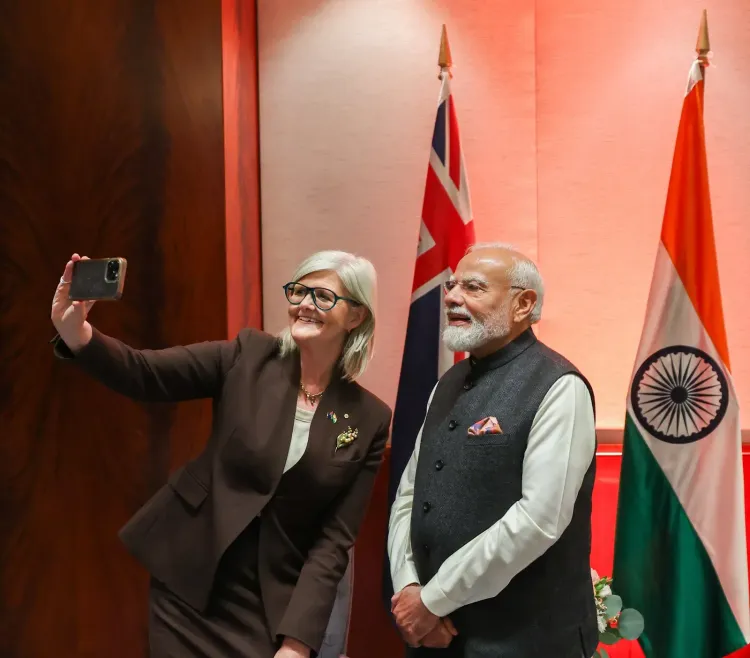
PM Modi Meets Australia Governor-General Sam Mostyn in Melbourne
Synopsis
Prime Minister Narendra Modi met Australia's Governor-General Sam Mostyn in Melbourne on 9 July 2026, reaffirming the India-Australia Comprehensive Strategic Partnership built on shared democratic values, people-to-people ties, and expanding sectoral cooperation within the broader Quad framework.
Key Takeaways
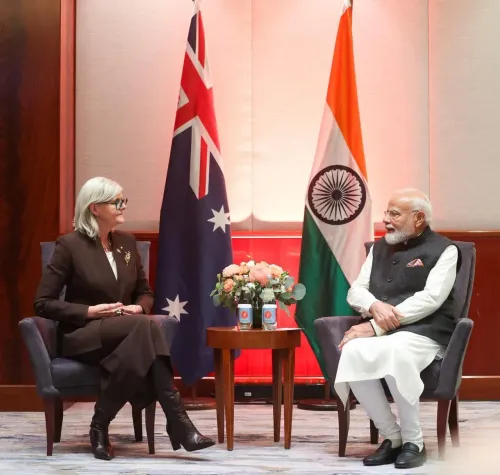
PM Modi met Governor-General of Australia Hon.
Sam Mostyn in Melbourne on 9 July 2026 .
Discussions covered shared values, people-to-people ties, and cooperation across diverse sectors.
India and Australia elevated ties to a Comprehensive Strategic Partnership in 2020 and signed the ECTA trade agreement in 2022 .
Both nations are Quad partners alongside the United States and Japan , with cooperation spanning defence, trade, and education.
The Indian diaspora in Australia and defence industries on both sides are key stakeholders in the bilateral relationship.
Follow-up outcomes on defence technology sharing, critical minerals, and student mobility are expected at future Quad and bilateral forums.
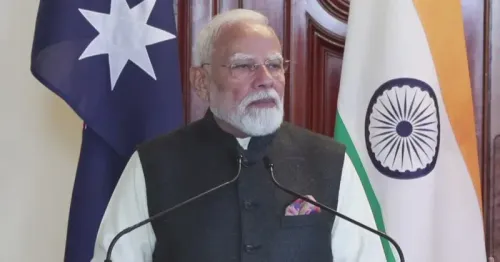
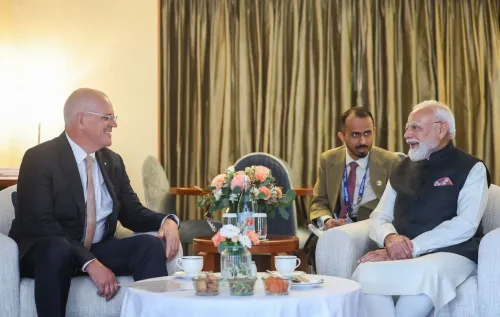
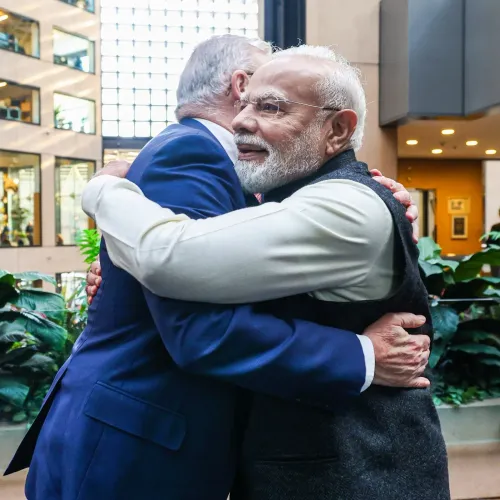
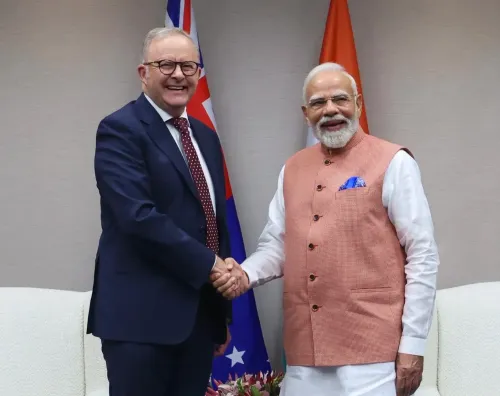
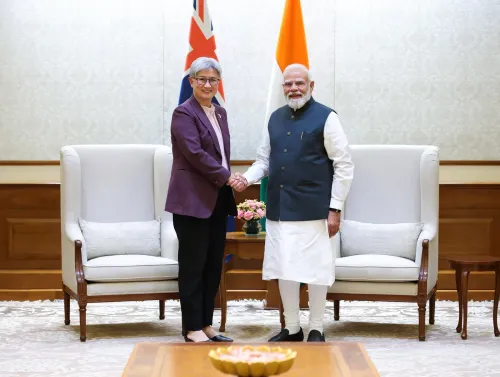
Prime Minister Narendra Modi met Governor-General of Australia Hon. Sam Mostyn in Melbourne on Thursday, 9 July 2026, in a meeting that underscored the deepening bilateral relationship between the two nations. Modi described the encounter as a 'delight,' highlighting shared values, people-to-people ties, and expanding cooperation across sectors.
Context
Modi posted on X that the two leaders 'discussed the strong and enduring bonds between India and Australia, anchored in our shared values, vibrant people-to-people ties and expanding cooperation across diverse sectors.' The meeting with Sam Mostyn — appointed Governor-General in 2024 — represents an engagement at the highest ceremonial level of the Australian state. As the representative of the head of state, Mostyn's role carries significant diplomatic weight in bilateral visits of this nature.
The Melbourne meeting forms part of PM Modi's broader Australia visit, reflecting New Delhi's continued prioritisation of Indo-Pacific partnerships. India and Australia have significantly elevated the tenor of their relationship over the past several years, with high-level contacts becoming a regular feature of the diplomatic calendar.
Policy Backdrop
The India-Australia relationship was formally elevated to a Comprehensive Strategic Partnership in 2020, during a virtual leaders' summit. That upgrade set the stage for more structured cooperation across defence, trade, education, and technology. Two years later, in 2022, both countries signed the Economic Cooperation and Trade Agreement (ECTA), which expanded market access for goods and services on both sides.
India's engagement with Australia is also embedded in the broader Quad framework — a strategic grouping that includes India, Australia, the United States, and Japan — which has gained momentum since 2017 as a vehicle for Indo-Pacific security and supply-chain cooperation. Annual 2+2 ministerial dialogues and expanding participation in Malabar naval exercises have further institutionalised the defence dimension of the relationship.
Stakeholders and Impact
The Indian diaspora in Australia — one of the fastest-growing migrant communities in that country — stands as a direct beneficiary of strengthened bilateral ties, particularly in education and skilled migration pathways. Student mobility between the two nations has grown substantially, and frameworks for mutual recognition of qualifications remain a live area of negotiation.
Defence and strategic industries on both sides also have a stake in the relationship's trajectory. Talks around defence technology sharing and supply-chain resilience — particularly in critical minerals, where Australia holds significant reserves — are expected to feature in follow-up engagements. Indian manufacturers and exporters, meanwhile, continue to benefit from the preferential access unlocked by the ECTA.
What's Next
Analysts and officials will watch closely for concrete outcomes from PM Modi's Melbourne visit, particularly any announcements on defence technology cooperation, student mobility agreements, or critical minerals supply chains. The next Quad leaders' summit and scheduled bilateral trade review meetings are expected to serve as natural checkpoints for translating high-level goodwill into actionable deliverables.
The meeting with Governor-General Mostyn signals that India's Indo-Pacific engagement continues to operate at the highest diplomatic registers, with New Delhi treating Australia as a cornerstone partner in its vision for a stable, rules-based regional order.
Point of View
Not merely at the working-ministry tier. The choice to highlight 'shared values' alongside trade and people-to-people ties reflects New Delhi's consistent framing of the India-Australia relationship as ideologically grounded — a counterpoint to transactional partnerships. Coming within the architecture of the Quad, this visit reinforces India's positioning as an active, not passive, stakeholder in the regional order. Domestically, the optics of a sitting Prime Minister engaging Australia's head-of-state representative also serve to underscore the bilateral relationship's elevation since 2020.
NationPress
8 Oct 2026
Frequently Asked Questions
Why did PM Modi meet Australia's Governor-General in Melbourne?
PM Modi met Governor-General Sam Mostyn in Melbourne on 9 July 2026 to reaffirm the strong bilateral ties between India and Australia, covering shared values, people-to-people connections, and cooperation across multiple sectors.
Who is Sam Mostyn, Australia's Governor-General?
Sam Mostyn is the Governor-General of Australia, appointed in 2024. The Governor-General represents the head of state and plays a significant role in formal diplomatic engagements with visiting foreign leaders.
What is the India-Australia Comprehensive Strategic Partnership?
The India-Australia Comprehensive Strategic Partnership was established in 2020 during a virtual leaders' summit. It elevated the bilateral relationship and set the framework for deeper cooperation in defence, trade, education, and technology.
What is the ECTA agreement between India and Australia?
The Economic Cooperation and Trade Agreement (ECTA), signed in 2022, expanded market access for goods and services between India and Australia and is a cornerstone of the two countries' growing trade relationship.
How does Australia fit into India's Indo-Pacific strategy?
Australia is a key partner in India's Indo-Pacific outreach, most prominently through the Quad grouping with the United States and Japan. The two countries also hold annual 2+2 ministerial dialogues and participate in joint Malabar naval exercises.