PM Modi Highlights India-Australia Visit Outcomes, Eyes Shared Growth

Synopsis
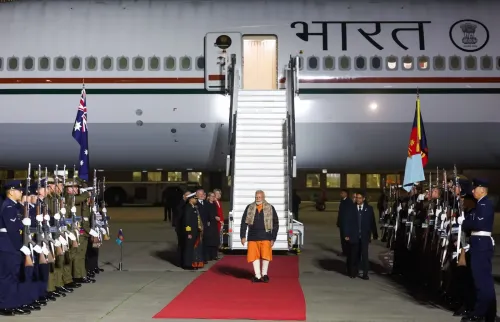
Prime Minister Narendra Modi on 9 July 2026 highlighted the outcomes of his Australia visit, saying both nations are confidently building toward shared growth, innovation and prosperity under their expanding Comprehensive Strategic Partnership.
Key Takeaways
Prime Minister Narendra Modi posted on 9 July 2026 reflecting on outcomes of his visit to Australia .
Modi said the visit reflects the confidence with which India and Australia are looking toward the future together.
The two countries have maintained a Comprehensive Strategic Partnership since June 2020 , covering defence, trade, education and technology.
The India-Australia Economic Cooperation and Trade Agreement (ECTA) , signed in April 2022 , underpins the bilateral trade relationship.
Both nations are members of the Quad , linking their partnership to broader Indo-Pacific stability goals.
Key stakeholders include bilateral traders, defence establishments, academic institutions and the Indian diaspora in Australia.
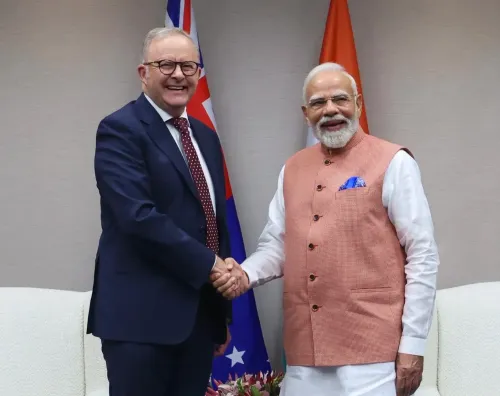
Prime Minister Narendra Modi on Thursday, 9 July 2026 reflected on the outcomes of his visit to Australia, calling them a testament to the confidence both nations hold in their shared future. Modi said the visit had unlocked new avenues for growth, innovation and prosperity between the two democracies.
Posting on X, the Prime Minister wrote: 'The outcomes during this visit reflect the confidence with which India and Australia are looking towards the future. Together, we will continue to unlock new opportunities for growth, innovation and shared prosperity.'
Context
The visit forms part of a sustained diplomatic engagement between India and Australia that has deepened considerably since 2014, when Prime Minister Modi addressed a joint sitting of the Australian Parliament — a landmark moment that reset the bilateral relationship. The two countries elevated their ties to a Comprehensive Strategic Partnership in June 2020, broadening cooperation across defence, trade, education and technology.
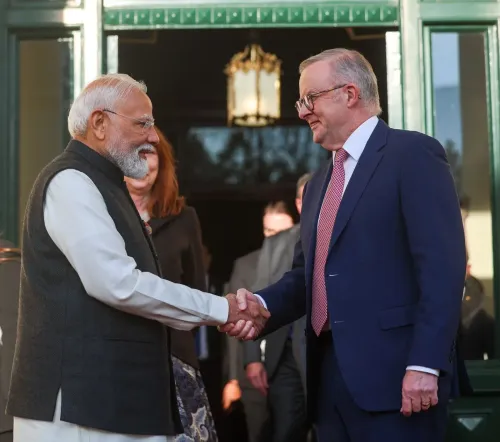
Australian Prime Minister Anthony Albanese has been an active partner in advancing this partnership, participating in multiple high-level exchanges aimed at translating strategic intent into concrete deliverables. Leader-level meetings between the two sides have consistently produced joint statements signalling forward momentum.
Policy Backdrop
A foundational pillar of the current relationship is the India-Australia Economic Cooperation and Trade Agreement (ECTA), signed in April 2022, which liberalised tariffs on goods and services and gave bilateral trade a structural boost. The agreement was seen as a milestone in moving the relationship beyond diaspora and people-to-people links into a mature economic partnership.
Both countries are also members of the Quadrilateral Security Dialogue (Quad), alongside Japan and the United States, a grouping focused on Indo-Pacific stability, critical supply chains and economic resilience. The Quad framework has added a security and technology dimension to what was once primarily a trade and education relationship.
Successive visits have produced outcomes in areas such as defence exercises, critical minerals supply chains — a priority for both nations given global demand — and academic mobility, reflecting the multi-domain character of the partnership today.
Stakeholders and Impact
The communities most directly affected by the deepening partnership include bilateral traders who benefit from ECTA's preferential tariff regime, defence establishments that participate in joint exercises and technology-sharing arrangements, and academic institutions in both countries that facilitate student and researcher mobility.
The large Indian diaspora in Australia, one of the fastest-growing migrant communities on the continent, also stands to benefit from stronger people-to-people frameworks that typically accompany leader-level summits. Critical minerals cooperation, in particular, is seen as a strategic priority that could reshape supply chains across the Indo-Pacific region.
What's Next
Observers will watch closely for the formal release of any joint statements, agreements or memoranda of understanding signed during the visit, which will give substance to the broad language of 'growth, innovation and shared prosperity' used by the Prime Minister. Progress on these deliverables is expected to be reviewed at the next annual leaders' meeting or at an upcoming Quad summit.
The trajectory of India-Australia relations suggests that the bilateral relationship will continue to expand in scope and depth, with critical minerals, defence technology and education mobility likely to remain the defining pillars of engagement in the years ahead.
Point of View
Signalling that the visit produced outcomes both sides are prepared to publicly celebrate. The emphasis on 'growth, innovation and shared prosperity' maps directly onto the economic and technology pillars of the Comprehensive Strategic Partnership, suggesting the deliverables are likely to span trade, critical minerals and possibly defence technology. For Modi, deepening the Australia relationship also reinforces India's Indo-Pacific positioning and its role within the Quad, which carries strategic value beyond the bilateral. The consistency of this diplomatic arc since 2014 indicates that India-Australia ties have moved from aspiration to institutionalisation.
NationPress
9 Jul 2026
Frequently Asked Questions
What was the outcome of PM Modi's Australia visit in 2026?
Prime Minister Modi described the outcomes as reflecting the confidence both India and Australia hold in their shared future, with new opportunities expected in growth, innovation and shared prosperity. Specific deliverables from the visit are expected to be detailed in formal joint statements.
What is the India-Australia Comprehensive Strategic Partnership?
The Comprehensive Strategic Partnership is a bilateral framework elevated in June 2020 that expanded India-Australia cooperation across defence, trade, education and technology, forming the foundation for all subsequent leader-level engagements.
What is the India-Australia ECTA trade agreement?
The Economic Cooperation and Trade Agreement, signed in April 2022, is a bilateral trade pact that reduces tariffs on goods and services between India and Australia, giving the trade relationship a stronger structural footing.
Is India part of the Quad with Australia?
Yes, India and Australia are both members of the Quadrilateral Security Dialogue, or Quad, alongside Japan and the United States. The grouping focuses on Indo-Pacific stability, critical supply chains and economic resilience.
Why does PM Modi visit Australia frequently?
India and Australia share democratic values, a large diaspora connection, and overlapping strategic interests in the Indo-Pacific. Successive visits since 2014 have built a multi-domain partnership covering trade, defence, education and critical minerals.