India's GCC ecosystem to drive innovation-led growth: NITI Aayog conclave

Synopsis
India's GCC sector — 2,100-plus centres, nearly USD 100 billion in revenue — is no longer just a global services hub. NITI Aayog's AIM is now pushing to wire these multinationals directly into India's startup and tinkering-lab ecosystem, a structural bet that could turn cost-centre GCCs into genuine engines of homegrown innovation ahead of Viksit Bharat 2047.
Key Takeaways
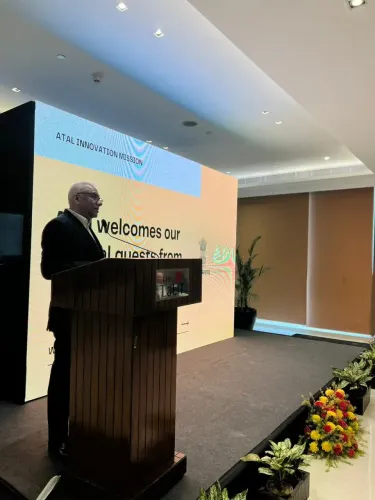
AIM Director Deepak Bagla called for GCC-startup collaboration at the GCC Conclave on Innovation 2026 in Bengaluru on 30 June .
India's GCC ecosystem spans over 2,100 centres generating nearly USD 100 billion in annual revenue, according to STPI Director General Arvind Kumar .
AIM has built over 10,000 Atal Tinkering Labs and supports startups through more than 100 incubators nationwide.
The conclave was jointly organised by AIM , NITI Aayog , and STPI , with participation from Intel , IBM , NVIDIA , Amazon , Samsung , and over a dozen other multinationals.
Bengaluru has been identified as India's leading GCC hub, with stronger startup-GCC ties seen as key to accelerating technology commercialisation.
India's Global Capability Centre (GCC) ecosystem is well-positioned to power the country's next phase of innovation-led growth, Atal Innovation Mission (AIM) Director Deepak Bagla said on Tuesday, 30 June, at a conclave in Bengaluru. Bagla called for deeper collaboration between GCCs, startups, incubators, and young innovators to accelerate India's technological ambitions.
Key Developments at the GCC Conclave
The GCC Conclave on Innovation 2026 was jointly organised by AIM, NITI Aayog, and the Software Technology Parks of India (STPI). Bagla underscored that India's innovation pipeline — built over the last decade — spans more than 10,000 Atal Tinkering Labs and over 100 incubators supporting startups and grassroots innovators.
'As Prime Minister Narendra Modi has often emphasised, Jai Anusandhan must become the driving force of a developed India,' Bagla said. He added that GCCs have established India as a global hub for technology, engineering, and product innovation, and that combining these strengths can build globally competitive enterprises contributing to the vision of Viksit Bharat 2047.
India's GCC Scale: $100 Billion and Growing
STPI Director General Arvind Kumar noted that India's GCC ecosystem now comprises over 2,100 centres generating nearly USD 100 billion in annual revenue — a figure that reflects the country's deepening technological capabilities. He highlighted that STPI has played a foundational role in building India's technology infrastructure and policy framework since 1991, and that its partnership with AIM would help connect GCCs with startups and innovators nationwide.
Dr. Sanjay Tyagi, Director of STPI Bengaluru, said Bengaluru has emerged as India's leading hub for GCCs and stressed that stronger collaboration between startups, incubators, and GCCs could accelerate technology commercialisation and entrepreneurship across the country.
Who Participated
The conclave drew participation from leading multinational technology organisations including Intel, IBM, Bosch, Amazon, SAP, Thermo Fisher Scientific, CGI, Shell, Mercedes-Benz, Philips, Morgan Stanley, NVIDIA, Samsung, SanDisk, Wipro, and Yahoo. Representatives from Atal Tinkering Labs (ATLs), Atal Incubation Centres (AICs), Atal Community Innovation Centres (ACICs), STPI Centres of Entrepreneurship, and the Karnataka Digital Economy Mission (KDEM) also attended.
Why This Matters for India's Innovation Agenda
This comes amid India's broader push to position itself as a global technology and innovation powerhouse ahead of Viksit Bharat 2047. GCCs — once seen primarily as cost centres for multinational back-office operations — have evolved into high-value R&D and product engineering hubs. Notably, India hosts the largest number of GCCs outside the United States, and the sector's USD 100 billion revenue footprint makes it a significant driver of skilled employment and export earnings.
The AIM-STPI partnership signals a deliberate policy effort to bridge the gap between India's grassroots innovation infrastructure and the global R&D capacity parked within these centres — a linkage that could accelerate commercialisation of homegrown technologies at scale.
Point of View
Not local startup pipelines. The USD 100 billion GCC revenue figure is impressive, yet the share of that flowing into genuine co-innovation with Indian startups remains opaque. Until there are measurable outcomes — patents co-filed, startups funded, products commercialised — this risks being another well-attended conclave that stops short of structural change. The Viksit Bharat 2047 framing adds political urgency, but execution will depend on whether STPI and AIM can create incentive structures that make GCC-startup collaboration a business priority, not a CSR footnote.
NationPress
29 Sept 2026
Frequently Asked Questions
What is India's GCC ecosystem and how large is it?
India's Global Capability Centre (GCC) ecosystem comprises over 2,100 centres that collectively generate nearly USD 100 billion in annual revenue. These centres, set up by multinational companies, have evolved from back-office operations into high-value R&D and product engineering hubs.
What was the GCC Conclave on Innovation 2026 about?
The GCC Conclave on Innovation 2026, held in Bengaluru on 30 June, was organised by the Atal Innovation Mission (AIM), NITI Aayog, and STPI to explore how GCCs can partner with Indian startups, incubators, and young innovators to drive innovation-led growth. It brought together multinationals including Intel, IBM, Amazon, NVIDIA, and Samsung alongside representatives from India's grassroots innovation ecosystem.
What role does the Atal Innovation Mission play in this initiative?
AIM has built India's innovation pipeline over the last decade through more than 10,000 Atal Tinkering Labs and over 100 incubators supporting startups and grassroots innovators. Its partnership with STPI aims to connect this network directly with GCCs to accelerate technology commercialisation.
Why is Bengaluru central to India's GCC strategy?
Bengaluru has emerged as India's leading hub for Global Capability Centres, hosting a significant concentration of the country's 2,100-plus GCC facilities. STPI Bengaluru Director Dr. Sanjay Tyagi noted that stronger collaboration between the city's startups, incubators, and GCCs could accelerate entrepreneurship and technology adoption.
How does this connect to the Viksit Bharat 2047 vision?
AIM Director Deepak Bagla said that by combining GCC strengths in technology and engineering with India's startup and innovator ecosystem, the country can build globally competitive enterprises that contribute to the Viksit Bharat 2047 goal of making India a fully developed nation by its centenary of independence.