Shekhar Kapur recalls Nusrat Fateh Ali Khan's emotional Bandit Queen tribute to R D Burman
Synopsis
Decades after 'Bandit Queen' released, Shekhar Kapur has revealed the extraordinary story behind its most haunting sequence: Nusrat Fateh Ali Khan, grieving the death of R D Burman, asked Kapur to look at the film while he stared into the filmmaker's eyes — and sang. The result was a background score the director describes as a journey to 'the space where life and death merged into one.'
Key Takeaways
Shekhar Kapur shared a memory from recording the 'Bandit Queen' background score, involving Nusrat Fateh Ali Khan and the late R D Burman .
Nusrat was overcome with grief over R D Burman's recent death during the session and asked Kapur to look at the film while he stared into the filmmaker's eyes and sang.
The sequence being scored depicted the aftermath of the Behmai Massacre , featuring rows of funeral pyres and lamenting women.
R D Burman had composed the music for Kapur's debut film, 'Masoom' (1983), deepening the personal significance of the session.
Kapur urged audiences to revisit the Behmai Massacre aftermath scene in 'Bandit Queen' for the full impact of Nusrat's score.
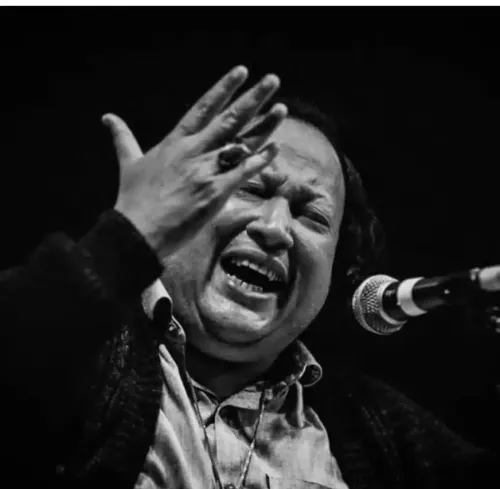
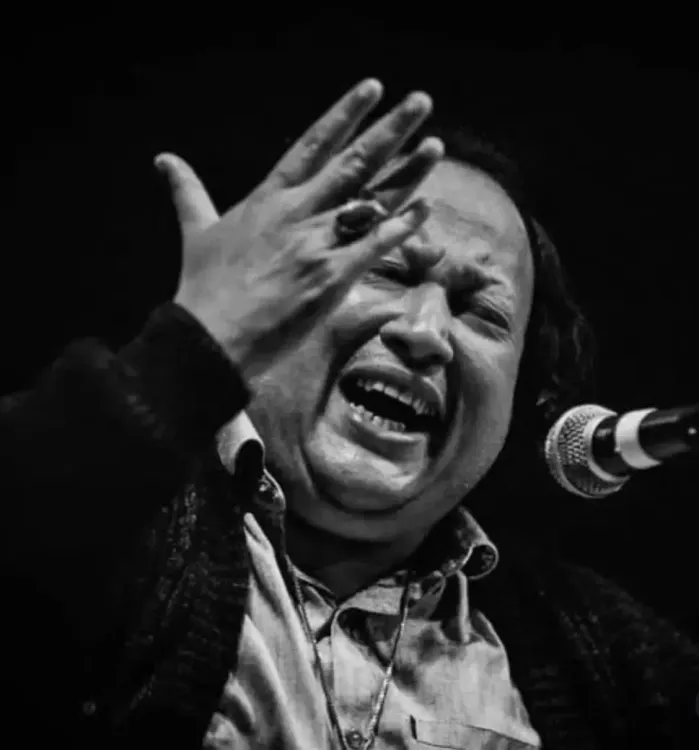
Filmmaker Shekhar Kapur has revisited a deeply moving memory from the making of his landmark film 'Bandit Queen', recalling how legendary Qawwali maestro Nusrat Fateh Ali Khan channelled raw grief over the passing of music composer R D Burman into one of the film's most haunting background score sequences.
The Moment That Defined a Scene
Kapur shared the memory on social media, describing an extraordinary recording session in which Nusrat, visibly overcome with emotion following Burman's demise, made an unusual request before the microphones went live. Nusrat told the filmmaker: 'Shekhar ji.. you look at your film and I will look into your eyes. And I will sing.'
The sequence being scored was among the film's most visceral — the aftermath of the Behmai Massacre, depicted through rows of funeral pyres and the sounds of women lamenting on a riverbank. Kapur described being transfixed as Nusrat stared into his eyes, as if, in his words, 'he could find my soul, and look deep into it.'
A Shared Bond Over R D Burman
Nusrat's emotional intensity during the session was, Kapur noted, amplified by a personal connection. The singer was deeply fond of R D Burman's music, and Kapur himself shared a close bond with the late composer — Burman had scored Kapur's debut directorial venture, 'Masoom' (1983). The recording session thus carried layers of grief and artistic kinship that went far beyond a professional assignment.
Kapur wrote: 'His eyes and his voice arrested me. I was transported to a far deeper realm. For Khan Sahib was taking me closer to God and into the space where life and death merged into one.'
Kapur Urges Audiences to Revisit the Scene
In his post, Kapur urged anyone watching 'Bandit Queen' again to seek out the Behmai Massacre aftermath sequence and pay close attention to its score. He described the experience of working with Nusrat as the very reason he makes films — to find, as he put it, 'the space between life and death.. for in that space exists creativity.'
The filmmaker's reflection underscores how personal loss and artistic collaboration can merge to produce work that transcends its technical origins, turning a background score into something approaching the spiritual.
Nusrat Fateh Ali Khan: A Legacy Without Parallel
Nusrat Fateh Ali Khan remains widely regarded as one of the greatest exponents of Qawwali and Sufi music in recorded history. Among his most celebrated compositions are 'Afreen Afreen', 'Mere Rashke Qamar', 'Tumhe Dillagi', 'Sanson Ki Mala', 'Yeh Jo Halka Halka Suroor Hai', 'Dam Mast Qalandar', and 'Mera Piya Ghar Aaya'. His work on 'Bandit Queen' is frequently cited as one of Indian cinema's most emotionally arresting background scores, and Kapur's account adds a remarkable dimension to its origin.
The anecdote, shared decades after the film's release, is a reminder of how deeply personal the creative process behind 'Bandit Queen' was — and how closely grief and art intertwined on that recording floor.
Point of View
Its portrayal of Phoolan Devi — has overshadowed the extraordinary creative labour behind its score. This recollection, arriving decades later, quietly reframes the film as a work shaped as much by the deaths happening around its makers as by the events depicted on screen.
NationPress
2 Nov 2026
Frequently Asked Questions
What did Nusrat Fateh Ali Khan do during the Bandit Queen recording session?
Nusrat Fateh Ali Khan, visibly emotional over the recent death of R D Burman, asked Shekhar Kapur to watch the film while he stared into the filmmaker's eyes and sang. The scene being scored was the aftermath of the Behmai Massacre, and Kapur described being transported to a 'far deeper realm' during the session.
Why was Nusrat Fateh Ali Khan emotional during the Bandit Queen recording?
Nusrat was deeply fond of music composer R D Burman, who had passed away shortly before the recording session. Kapur also shared a close personal bond with Burman, who had composed the music for Kapur's debut film 'Masoom', adding another layer of shared grief to the session.
Which scene in Bandit Queen features Nusrat's emotional background score?
The scene is the aftermath of the Behmai Massacre, depicting rows of funeral pyres and the sounds of women lamenting on a riverbank. Shekhar Kapur has urged audiences to revisit this sequence to fully experience the emotional depth of Nusrat's score.
What is R D Burman's connection to Shekhar Kapur?
R D Burman composed the music for Shekhar Kapur's directorial debut, 'Masoom' (1983). Kapur has described being deeply close to the legendary composer, which made Nusrat's awareness of that bond all the more significant during the Bandit Queen recording session.
What are some of Nusrat Fateh Ali Khan's most celebrated songs?
Nusrat Fateh Ali Khan is celebrated for compositions including 'Afreen Afreen', 'Mere Rashke Qamar', 'Tumhe Dillagi', 'Sanson Ki Mala', 'Yeh Jo Halka Halka Suroor Hai', 'Dam Mast Qalandar', and 'Mera Piya Ghar Aaya'. He is widely regarded as one of the greatest exponents of Qawwali and Sufi music.