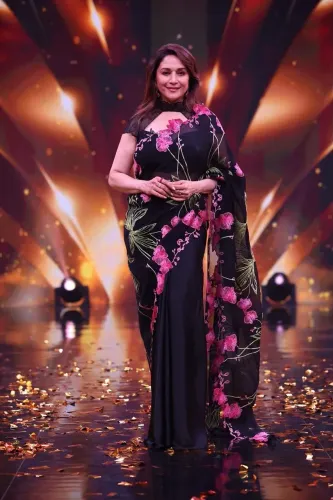
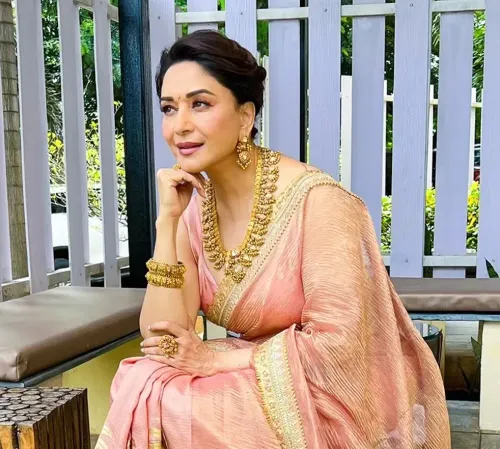
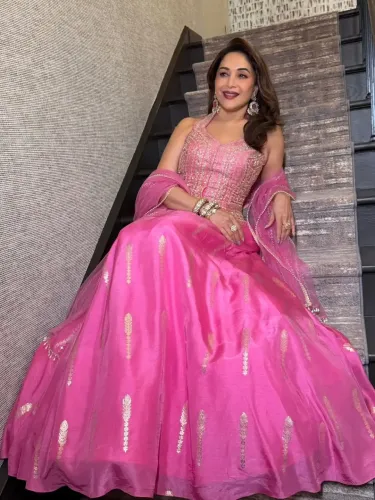
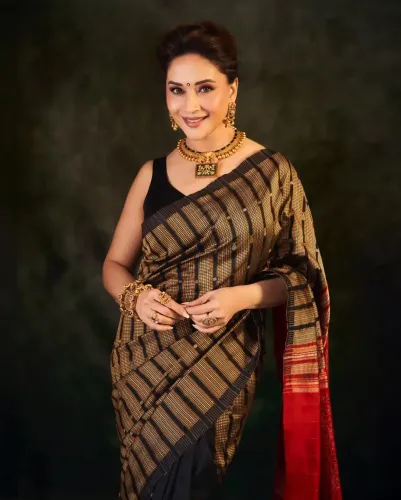
Why Doesn’t Madhuri Dixit Want to Reflect on Her Early Bollywood Days Without Luxuries?

Synopsis
Madhuri Dixit opens up about her early Bollywood experiences, reminiscing about the challenges of filming without modern luxuries. Discover her thoughts on the evolution of the film industry from her debut to today, and the passion that kept actors dedicated in those tough times.
Key Takeaways
Madhuri Dixit reflects on her challenging early days in Bollywood.
The absence of modern luxuries made filming a true test of dedication.
Filmmaking has evolved significantly from the spontaneity of the past to a more organized approach today.
Her journey from “Abodh” to “Mrs Deshpande” showcases the changing landscape of cinema.
Despite challenges, the love for the craft kept actors and crew committed.
Mumbai, Dec 31 (NationPress) The renowned Bollywood star Madhuri Dixit recently shared her thoughts on her early experiences in the film industry.
In a candid conversation with IANS, she reflected on a period when luxury and comfort were nearly absent on film sets. Recalling her time shooting in locations like Ooty, Madhuri described how both actors and crew members had to adapt without the convenience of vanity vans and proper facilities, with hairdressers and assistants enduring the elements to ensure everyone was stage-ready.
While she values the enthusiasm that characterized those earlier times, Madhuri confesses she prefers not to look back too often. Nevertheless, the ‘Devdas’ actress emphasized that the sacrifices made during that era stemmed from a profound passion for their craft.
Madhuri Dixit expressed, “When we were working in Ooty, we would often seek out a jungle to film in. Our hairdressers would stand with shawls to shield us from the weather. I don't wish to reminisce about those days; they were quite challenging... But despite it all, we had a great time. We truly loved our work, and that love united us, leading us to willingly make those sacrifices. At that time, we didn't even realize they were sacrifices; it was just our way of life.”
The 'Hum Aapke Hain Koun' star also discussed how the filmmaking landscape has transformed over the years, reflecting on her journey from her debut film “Abodh” to her latest project, the drama “Mrs Deshpande.”
When asked about her experiences with direction in the 1980s and 1990s, and how filmmaking has changed from “Abodh” to “Mrs Deshpande,” Madhuri contemplated the evolution of the industry.
“Back then, there were only a handful of organized producers, like Yash Chopra, B R Chopra, Subhash Ghai, Rajshri Productions, and a few others, making the rest rather disorganized. Today, the industry is much more structured. In the past, we relied heavily on spontaneity; nowadays, we can prepare for roles more thoroughly. We receive scripts along with amenities such as RVs, where we can relax between shots or get ready. In those earlier days, we would sit outside under the sun with just an umbrella for shade,” Madhuri elaborated.
Point of View
Her insight sheds light on the contrasts between past and present filmmaking practices, highlighting the commitment artists had in those formative years.
NationPress
5 Oct 2026
Frequently Asked Questions
What did Madhuri Dixit say about her early days in Bollywood?
Madhuri recalled the absence of luxuries like vanity vans during her early shoots, emphasizing the dedication and passion that drove actors and crew despite the challenging conditions.
How has filmmaking changed since Madhuri's debut?
Madhuri noted that filmmaking has become more organized today, with improved amenities and preparation, contrasting with the spontaneity of her early days.
What was Madhuri's first film?
Her debut film was 'Abodh', which marked the beginning of her illustrious career in Bollywood.
What is Madhuri's latest film?
Her latest release is the drama 'Mrs Deshpande'.
What themes does Madhuri's journey highlight?
Her journey highlights themes of dedication, evolution in the film industry, and the sacrifices made by artists out of love for their craft.