Morgan Freeman's Friendship Lesson That Tim Robbins Never Forgot
Synopsis
Tim Robbins revealed that Morgan Freeman taught him the true meaning of friendship on the last day of filming 'The Shawshank Redemption' — simply by saying, 'Being a friend is getting the other a cup of coffee.' The resurfaced Oscar tribute is a timely reminder that great bonds are built on small, consistent acts of care.
Key Takeaways
Tim Robbins shared a touching tribute to Morgan Freeman at an Oscar ceremony , recalling a life-changing lesson about friendship from their time on set.
Morgan Freeman told Robbins on the last day of filming that 'being a friend is getting the other a cup of coffee' — a philosophy rooted in small, consistent acts of care.
Robbins described Freeman as 'an extremely giving actor, a master at his craft, and an inspiration' to all who worked with him. 'The Shawshank Redemption' , directed by Frank Darabont and released in 1994 , is based on a novella by Stephen King and stars both actors in its central roles.
The film consistently ranks #1 on IMDb's Top 250 Movies list and celebrated its 30th anniversary in 2024, with its message of hope still resonating globally.
The resurfaced video of Robbins' tribute went viral online, reigniting public appreciation for both the film and the real-life bond between its two lead actors.
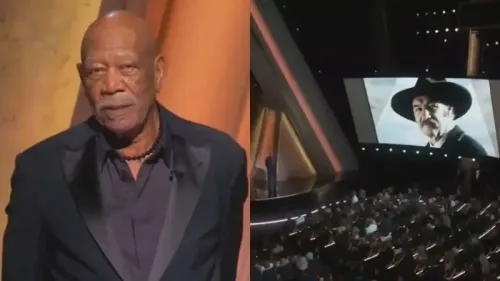
Los Angeles — Hollywood actor Tim Robbins once revealed a deeply personal and memorable moment from the sets of the legendary film 'The Shawshank Redemption', sharing how co-star Morgan Freeman offered him a quietly profound lesson about what true friendship really means. The heartfelt account resurfaced through an old video from an Oscar ceremony, reigniting admiration for both actors and the timeless bond they forged on set.
The Moment That Stayed With Tim Robbins
In the resurfaced clip, Tim Robbins spoke warmly about Morgan Freeman, recalling how their real-life friendship closely mirrored the on-screen relationship their characters shared in the film. Robbins said, "Morgan, we became friends working together on the Shawshank Redemption, for which you were nominated for an Academy Award. The film follows the trajectory of a friendship, and that friendship was easily mirrored in real life on the set."
He then recalled a specific moment from the final day of shooting that left a lasting impression. Freeman had told him, "Being a friend is getting the other a cup of coffee." The simplicity of that statement, delivered with characteristic warmth, encapsulated a philosophy of friendship rooted in everyday acts of care rather than grand gestures.
Robbins Pays Tribute to Freeman's Craft and Generosity
Tim Robbins did not stop at recounting the anecdote. He went on to describe Morgan Freeman as "an extremely giving actor and a master at his craft" — words that reflect the deep professional respect the two men share. Robbins also called Freeman "an inspiration to all those lucky enough to have the chance to work with him."
He concluded his tribute with a line that struck a personal chord: "Morgan, I salute you and your tremendous talent, and I'm always proud to call you my friend when you take the call." The closing remark — a gentle nod to the reality that even the closest friendships require effort and availability — was met with visible emotion.
About 'The Shawshank Redemption' — A Film That Defined a Generation
'The Shawshank Redemption', released in 1994 and directed by Frank Darabont, is widely regarded as one of the greatest films in cinematic history. Based on a novella by Stephen King, the film stars Tim Robbins as Andy Dufresne, a banker wrongly convicted of murder, and Morgan Freeman as Red, a fellow inmate who becomes his closest confidant inside Shawshank State Penitentiary.
The story is a masterclass in exploring themes of hope, loyalty, resilience, and the enduring human spirit. Despite a modest box-office performance upon its initial release, the film grew into a cultural phenomenon through television reruns and word of mouth. Today, it consistently ranks #1 on IMDb's Top 250 Movies list — a testament to its enduring global appeal.
Its iconic dialogue, particularly the line "Hope is a good thing, maybe the best of things, and no good thing ever dies", continues to resonate across generations and cultures, including in India, where the film has a deeply loyal fanbase.
Why This Story Resonates Beyond Hollywood
The resurfacing of Tim Robbins' tribute to Morgan Freeman is more than a nostalgic Hollywood moment. It touches on something universally human — the idea that friendship is not defined by milestone moments but by small, consistent acts of presence and care. In an era dominated by transactional relationships and performative gestures on social media, Freeman's quiet wisdom feels remarkably timely.
Notably, both actors have spoken across multiple platforms about the unique bond formed during the gruelling production of the film, shot largely in Mansfield, Ohio. The authenticity of their off-screen friendship is widely credited as one of the reasons the on-screen chemistry between Andy and Red felt so genuine and emotionally powerful to audiences worldwide.
As Morgan Freeman continues to be celebrated as one of Hollywood's most distinguished voices, and as 'The Shawshank Redemption' marks 30 years since its release, stories like these serve as a reminder that the film's greatest legacy may not be its awards or rankings — but the real human connections it inspired behind the camera.
Point of View
Increasingly, public life. That a film made 30 years ago, about wrongful imprisonment and quiet endurance, continues to generate this kind of emotional resonance speaks volumes about the stories our society is starving for. NationPress sees this not as entertainment fluff, but as evidence that authentic human values — loyalty, patience, small acts of care — remain the most powerful content of all.
NationPress
3 Oct 2026
Frequently Asked Questions
What did Morgan Freeman say to Tim Robbins about friendship?
Morgan Freeman told Tim Robbins on the last day of filming 'The Shawshank Redemption' that 'being a friend is getting the other a cup of coffee.' This simple yet profound statement left a lasting impression on Robbins, who later shared it publicly at an Oscar ceremony.
When did Tim Robbins and Morgan Freeman become friends?
Tim Robbins and Morgan Freeman became close friends while filming 'The Shawshank Redemption' in the early 1990s, with the film releasing in 1994. Robbins has said their real-life friendship closely mirrored the on-screen bond between their characters Andy Dufresne and Red.
What is 'The Shawshank Redemption' about?
'The Shawshank Redemption' is a 1994 film directed by Frank Darabont, based on a Stephen King novella. It follows Andy Dufresne, a wrongly convicted banker played by Tim Robbins, and his friendship with fellow inmate Red, played by Morgan Freeman, exploring themes of hope, loyalty, and resilience.
Why is 'The Shawshank Redemption' considered one of the greatest films ever made?
'The Shawshank Redemption' is celebrated for its emotional depth, powerful storytelling, and universal themes of hope and human endurance. Despite a modest theatrical run in 1994, it became a cultural phenomenon and has consistently ranked #1 on IMDb's Top 250 Movies list.
Was Morgan Freeman nominated for an Oscar for 'The Shawshank Redemption'?
Yes, Morgan Freeman received an Academy Award nomination for Best Actor for his role as Red in 'The Shawshank Redemption'. Tim Robbins himself referenced this nomination in his tribute speech at an Oscar ceremony.