Nana Patekar, veteran actor of Parinda and Natsamrat fame, dies at 75
Synopsis
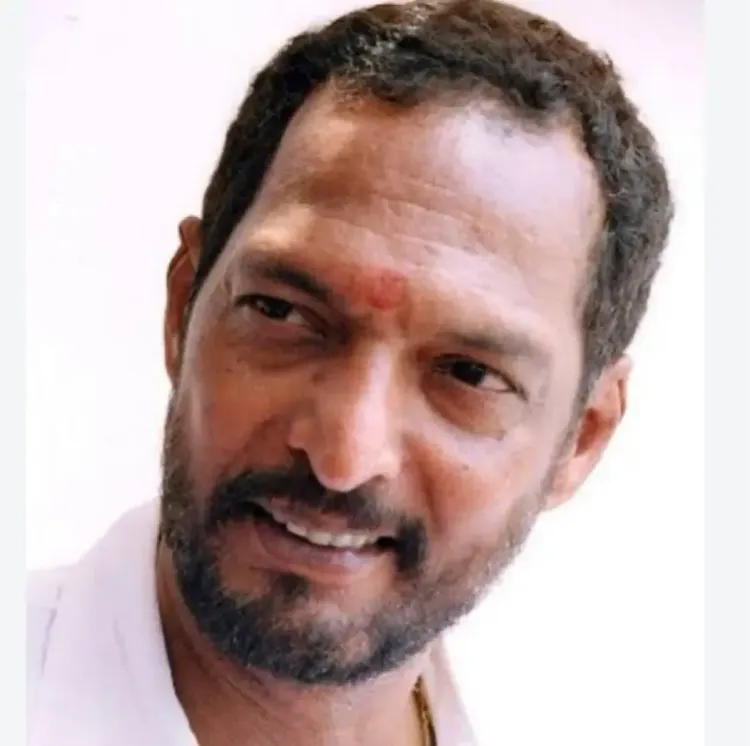
Nana Patekar — the actor who made Anna in Parinda terrifying, Sadhu Agashe in Ab Tak Chhappan unforgettable, and Ganpat Belwalkar in Natsamrat heartbreaking — is gone at 75. Across nearly five decades, he proved that Hindi and Marathi cinema could hold a performer who refused to be a star in the conventional sense, and was all the greater for it.
Key Takeaways
Nana Patekar passed away on 8 October 2026 at age 75 after a cardiac arrest at his residence in Dona Paula, Goa .
Born Vishwanath Patekar on 1 January 1951 in Murud-Janjira, Maharashtra ; trained at Sir J.J.
School of Art, Mumbai .
Won the National Film Award for Best Supporting Actor for Parinda (1989), directed by Vidhu Vinod Chopra .
Career spanned nearly five decades , with landmark roles in Ankush , Ab Tak Chhappan , Welcome , and Natsamrat .
Honoured with the Padma Shri in 2013 for his contribution to Indian arts and cinema.
Remembered equally for his Marathi theatre roots and his humanitarian work supporting drought-affected farmers in Maharashtra .
Veteran actor Nana Patekar, one of Indian cinema's most commanding and layered performers, passed away on Thursday, 8 October 2026, at the age of 75. According to reports, he suffered a severe cardiac arrest at his residence in Dona Paula, Goa, in the early hours of Thursday. He was rushed to Manipal Hospital, where doctors attempted to revive him through continuous CPR, but their efforts were unsuccessful and he was declared dead.
A Career Forged in Theatre and the Streets
Born Vishwanath Patekar on 1 January 1951 in Murud-Janjira, Maharashtra, Nana Patekar traced his creative roots to the stage long before the film industry took notice. He trained at the Sir J.J. School of Art, Mumbai, and remained deeply involved in Marathi theatre throughout his life. He made his Hindi film debut with Gaman in 1978 and his Marathi debut with Sinhasan in 1979.
His early Marathi work — including Bhalu, Raghu Maina, and Savitri — established him as a performer willing to inhabit characters far removed from the conventional romantic hero. His career gained significant momentum with N. Chandra's Ankush in 1986, a film grounded in the frustrations of ordinary urban life, and he followed it with roles in Pratighaat, Mohre, Andhaa Yudh, and Salaam Bombay!
National Award, Parinda, and the Defining 1990s
The defining moment of Nana Patekar's early career arrived with Vidhu Vinod Chopra's Parinda in 1989. His chilling portrayal of crime boss Anna earned him the National Film Award for Best Supporting Actor and announced him as a force of a different magnitude in Hindi cinema.
Through the 1990s, he sustained that intensity across a demanding slate of films — Agni Sakshi, Khamoshi: The Musical, Raju Ban Gaya Gentleman, Angaar, Tirangaa, Ghulam-E-Mustafa, Yeshwant, and Kohram. He was also the director behind Prahaar: The Final Attack in 1991, a film set in the world of the Indian Army that showcased his ambitions behind the camera.
Ab Tak Chhappan, Welcome, and Mainstream Reinvention
In 2004, Shimit Amin's Ab Tak Chhappan gave Patekar one of his most celebrated roles — encounter specialist Sadhu Agashe of the Mumbai Police — a performance that married restraint with his trademark coiled intensity. Prakash Jha's Apaharan in 2005 earned him further critical praise.
Few expected the same actor to deliver one of mainstream Hindi comedy's most beloved characters, but Welcome in 2007 did exactly that. His turn as gangster Uday Shetty, opposite Anil Kapoor, demonstrated comic timing that audiences had rarely seen from him, and the character became a cultural touchstone. He later appeared in Taxi No. 9211, Raajneeti, The Attacks of 26/11, and Kaala.
Natsamrat and the Marathi Legacy
Despite his stature in Hindi cinema, Nana Patekar never severed his ties with Marathi theatre and film. His Marathi filmography — spanning Sinhasan, Pak Pak Pakaak, Deool, Aapla Manus, and Dr. Prakash Baba Amte: The Real Hero — reflected a consistent return to his roots.
His most acclaimed Marathi work in later years was Natsamrat in 2016, adapted from V. V. Shirwadkar's celebrated Marathi play. As retired stage actor Ganpat Belwalkar — navigating ageing, estrangement, and irrelevance — Patekar channelled his entire theatrical background into what critics widely regard as one of the finest Indian performances of that decade.
In 2013, the Government of India honoured him with the Padma Shri, India's fourth-highest civilian award, for his contribution to the arts.
Personal Life and Social Commitment
Nana Patekar married actress Neelakanti Patekar in 1978. The couple had two sons. Their elder son, Durvasa, reportedly passed away at around two-and-a-half years of age due to illness. Their younger son, Malhar Patekar, works behind the camera in the film industry. Patekar was known for keeping his personal life largely away from public scrutiny.
Beyond cinema, he was closely associated with social work supporting farmers and drought-affected families in Maharashtra. His death has sent shockwaves through the Indian film industry, with tributes pouring in from across Hindi and Marathi cinema. He leaves behind a body of work that will be studied, revisited, and celebrated for generations.
Point of View
And that refusal is precisely why his best work has aged better than most blockbusters of his era. The real question his passing raises is whether the conditions that shaped him — Marathi theatre, parallel cinema, the willingness of producers like Vidhu Vinod Chopra and Prakash Jha to cast against type — still exist. The industry's grief today should extend to an honest audit of whether it still makes room for the next Nana Patekar.
NationPress
8 Oct 2026
Frequently Asked Questions
How did Nana Patekar die?
Nana Patekar reportedly suffered a severe cardiac arrest at his residence in Dona Paula, Goa, in the early hours of Thursday, 8 October 2026. He was rushed to Manipal Hospital, where doctors attempted CPR but were unable to revive him, and he was declared dead.
How old was Nana Patekar when he died?
Nana Patekar was 75 years old at the time of his death. He was born Vishwanath Patekar on 1 January 1951 in Murud-Janjira, Maharashtra.
What was Nana Patekar's most celebrated role?
Nana Patekar is widely regarded for his portrayal of crime boss Anna in Vidhu Vinod Chopra's Parinda (1989), which earned him the National Film Award for Best Supporting Actor. His roles in Ab Tak Chhappan (2004) and Natsamrat (2016) are equally celebrated as career-defining performances.
What awards did Nana Patekar receive?
Nana Patekar won the National Film Award for Best Supporting Actor for Parinda in 1989. He was awarded the Padma Shri — India's fourth-highest civilian honour — in 2013 for his contribution to Indian arts and cinema. He also received numerous awards for Apaharan (2005) and Dr. Prakash Baba Amte: The Real Hero.
What was Nana Patekar's contribution to Marathi cinema?
Nana Patekar maintained a lifelong connection with Marathi theatre and cinema despite his stature in Hindi films. His Marathi filmography includes Sinhasan, Natsamrat, Deool, Aapla Manus, and Dr. Prakash Baba Amte: The Real Hero. His performance in Natsamrat (2016), based on V. V. Shirwadkar's celebrated play, is considered one of the finest in Marathi cinema's history.