Fauzi film row: Netaji's grandnephew demands apology for 'distorting' Hitler meeting
Synopsis
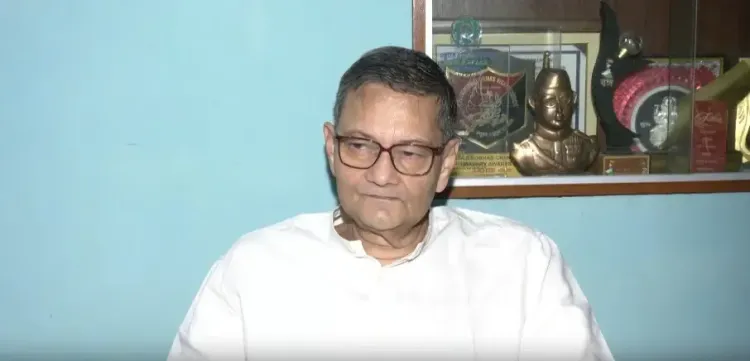
Netaji Subhas Chandra Bose's grandnephew Chandra Kumar Bose has demanded a public apology from the director of 'Fauzi', alleging the Prabhas-starrer distorts history by framing Netaji as a secondary figure in his own meeting with Hitler. The row reignites a long-running debate about creative liberty versus historical responsibility when depicting India's freedom fighters on screen.
Key Takeaways
Chandra Kumar Bose , grandnephew of Netaji Subhas Chandra Bose , has criticised the film 'Fauzi' for allegedly distorting facts about Netaji's meeting with Adolf Hitler .
He described fictionalising national icons as a 'crime' and demanded the director apologise to the people of India.
Bose stressed that Netaji engaged with Hitler as an equal , seeking support for India's independence — not as a subordinate.
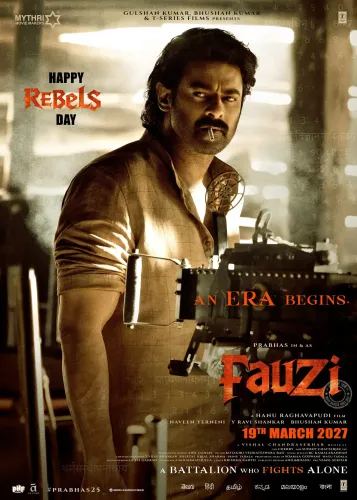
The film's trailer reportedly shows Netaji introducing the fictional protagonist played by Prabhas to Hitler, apparently elevating the fictional character over the historical figure. 'Fauzi' is directed and written by Hanu Raghavapudi and is described as an Indian period war-action film.
Chandra Kumar Bose, grandnephew of freedom fighter Netaji Subhas Chandra Bose, has publicly criticised the makers of the upcoming film 'Fauzi' for allegedly distorting historical facts about Netaji's meeting with Adolf Hitler, and demanded that the director apologise to the people of India. Bose made the remarks in Kolkata on 25 October 2026, following widespread criticism of the film's trailer.
What Chandra Kumar Bose Said
Bose acknowledged that filmmakers have the creative freedom to portray India's freedom struggle and its leaders, but argued that such liberty must not come at the expense of historical accuracy. 'Distorting facts and resorting to fiction while dealing with national icons is, I think, a crime,' he said, alleging that 'Fauzi' presented a warped account of Netaji's interaction with Hitler that diminished the freedom fighter's stature.
He stressed that Netaji had approached Hitler not as a subordinate but as an equal, seeking support for India's independence movement. 'Netaji recognised that Germany's Hitler and Japan's Hideki Tojo could provide assistance to India's freedom movement at that juncture,' Bose said. He added that Netaji 'vehemently opposed fascism and believed in democracy and people's democratic rights.'
The Historical Context
According to Chandra Bose, Hitler acknowledged Netaji's patriotism and agreed to back him — including by providing the submarine that carried him to Southeast Asia. Bose noted that while both leaders were initially driven by the goal of national liberation, Hitler subsequently descended into megalomania. He also pointed out that Hitler's views about India, as expressed in his autobiography 'Mein Kampf', reflected a fundamental misunderstanding of India's history, heritage, and culture.
Notably, this is not the first time that cinematic portrayals of Netaji have triggered public debate. The freedom fighter's legacy — particularly his wartime alliances — remains a sensitive and contested area of Indian historical memory.
The Controversy Around 'Fauzi'
The trailer of 'Fauzi', an Indian period war-action film directed and written by Hanu Raghavapudi, drew sharp criticism for reportedly showing Netaji Subhas Chandra Bose introducing the film's protagonist — played by actor Prabhas — to Adolf Hitler. Critics allege this framing appears to elevate the fictional character while reducing Bose to a secondary figure in his own historical moment, thereby diminishing his stature as one of India's foremost freedom fighters.
Chandra Bose alleged that the director had sensationalised the Netaji-Hitler meeting to generate controversy rather than present an accurate historical account. 'The director should apologise to the people of India and all those who value the country's freedom struggle,' he said.
What Happens Next
The film is yet to release, and it remains to be seen whether the makers will respond to Chandra Bose's demands or revise any elements of the presentation. The controversy has already drawn wider public attention to the film's historical claims, and calls for greater accountability in the depiction of national icons in mainstream cinema are likely to intensify ahead of its release.
Point of View
And a mass-market action film built around a fictional hero who outshines Bose in his own historical moment risks flattening one of India's most complex and contested legacies. Chandra Kumar Bose's demand for an apology is unlikely to be met, but the row will probably do more to drive curiosity towards 'Fauzi' than away from it. The real question mainstream coverage is missing: at what point does the absence of a formal regulatory framework for historical accuracy in Indian cinema become untenable?
NationPress
25 Oct 2026
Frequently Asked Questions
Why is the film 'Fauzi' facing criticism from Netaji's family?
The film's trailer reportedly shows Netaji Subhas Chandra Bose introducing the fictional protagonist, played by Prabhas, to Adolf Hitler — a framing that critics say elevates the fictional character while diminishing Bose's historical stature. Chandra Kumar Bose, Netaji's grandnephew, has alleged this distorts the true nature of Netaji's meeting with Hitler and demanded an apology from the director.
What was the real historical context of Netaji's meeting with Hitler?
According to Chandra Kumar Bose, Netaji approached Hitler as an equal — not a subordinate — to seek support for India's independence movement, recognising that both Germany and Japan could assist the cause at that juncture. He said Hitler acknowledged Netaji's patriotism and agreed to provide support, including the submarine that transported him to Southeast Asia.
Who directed the film 'Fauzi' and who stars in it?
'Fauzi' is directed and written by Hanu Raghavapudi and is presented as an Indian period war-action film. Actor Prabhas plays the protagonist, a fictional character whose interactions with historical figures including Netaji and Hitler form part of the film's narrative.
What has Chandra Kumar Bose demanded from the makers of 'Fauzi'?
Chandra Kumar Bose has demanded that director Hanu Raghavapudi publicly apologise to the people of India and all those who value the country's freedom struggle. He alleged the film sensationalised Netaji's meeting with Hitler to create controversy rather than present a historically accurate account.
Has Netaji's cinematic portrayal been controversial before?
Yes. Depictions of Netaji Subhas Chandra Bose in Indian cinema and media have historically been sensitive given his wartime alliances with Nazi Germany and Imperial Japan. The debate over creative liberty versus historical accuracy in his portrayal is not new, though the 'Fauzi' row has amplified it given the film's mainstream scale and the involvement of a major star like Prabhas.