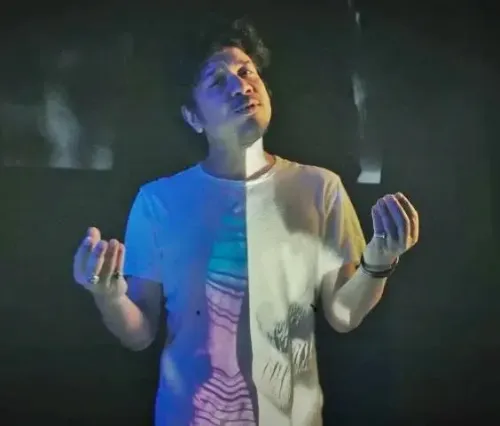
Papon's 'Apni Uljhan' captures healing as change in new ghazal release

Synopsis
Papon's new ghazal 'Apni Uljhan' isn't just another heartbreak song — it zeroes in on a feeling most people recognise but rarely name: that healing, from the outside, can look like becoming a different person. With minimal arrangement and traditional melody, it is a deliberate step away from the Bollywood maximalism that made him famous.
Key Takeaways
Papon released 'Apni Uljhan' on 2 September , a track from his album Sar e Shaam .
The song is a ghazal with a traditional melody and minimal arrangement, penned by lyricist Vaibhav Modi .
It explores how healing after a relationship can be perceived as a change in personality by people from one's past.
Papon called it one of his favourite tracks from the Sar e Shaam album.
Papon's music career spans over 25 years , beginning with the Assamese track 'Nasaba Sokule' in 1998 .
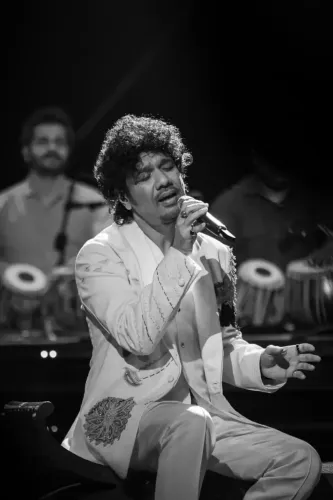
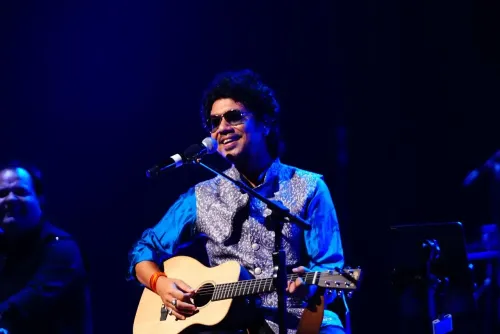
Singer-composer Papon released his latest track 'Apni Uljhan' on 2 September, a ghazal drawn from his album Sar e Shaam that navigates the emotional terrain of love, separation, and self-recovery after a relationship ends. The song, penned by lyricist Vaibhav Modi, arrives as one of Papon's most introspective offerings in recent years.
The Emotion Behind the Track
Papon described an immediate personal connection with the song's lyrical core. 'Apni Uljhan' speaks to a phase when one is emerging from inner confusion and learning to hold oneself together — a sentiment the artist called among his favourites from the Sar e Shaam album.
'I really connected with the emotion behind Apni Uljhan's lyrics because it speaks about that phase in life when you are trying to come out of your own confusion and learning to hold yourself together, and it's one of my favourite tracks from Sar e Shaam album,' Papon said in a statement.
What the Song Captures
At its heart, 'Apni Uljhan' addresses a nuanced and rarely articulated experience: the process of healing and moving forward being perceived by people from one's past as a shift in personality. The track occupies the delicate space between letting go and still carrying the emotional weight of a relationship.
Its poetry layers vulnerability with quiet resilience and self-discovery, making it a relatable ode to anyone who has struggled to move on while finding their way back to themselves. Papon noted that the ghazal's arrangement is deliberately minimal, leaning on a more traditional melodic approach to let the words breathe.
'This Ghazal has more traditional approach in melody and minimal arrangement. Sometimes healing can look like change to the people who knew you before, and I think the song captures that emotion very honestly,' he added.
Papon's Musical Journey
Papon's career in music stretches back to 1998, when he debuted with the Assamese track 'Nasaba Sokule' from the album Snigdha Junak. His first solo album, Junaki Raati, followed in 2004.
His entry into Bollywood came in 2006 with 'Om Mantra' from the film Strings — Bound by Faith. His mainstream breakthrough arrived in 2011 with 'Jiyein Kyun' from Dum Maro Dum. Subsequent years saw him voice celebrated tracks including 'Lakeerein' — a poem by Gulzar — for Kya Dilli Kya Lahore (2014), 'Moh Moh Ke Dhage' for Dum Laga Ke Haisha (2015), 'Humnava' for Hamari Adhuri Kahani (2015), and 'Bulleya' for the blockbuster Sultan in 2016.
Why 'Apni Uljhan' Stands Apart
Unlike the high-production Bollywood numbers that brought Papon widespread recognition, 'Apni Uljhan' is a conscious return to restraint — a ghazal format that privileges poetic precision over sonic spectacle. This positions the track as a counterpoint to the maximalist sound currently dominating Hindi music, and signals Papon's continued investment in the album format at a time when singles dominate streaming charts.
Point of View
Hook-heavy singles dominate — is itself a statement. 'Apni Uljhan' will not compete on viral metrics, but it does something more durable: it gives language to an emotional experience that mainstream Hindi pop rarely articulates with this level of precision. The real question is whether the album format, and the ghazal within it, can find an audience beyond Papon's existing fanbase in an era when listener attention is measured in seconds, not songs.
NationPress
2 Sept 2026
Frequently Asked Questions
What is Papon's new song 'Apni Uljhan' about?
'Apni Uljhan' is a ghazal that explores the emotional journey of emerging from inner confusion after a relationship ends, capturing how the process of healing can appear as a change in personality to people from one's past. It is part of Papon's album Sar e Shaam, with lyrics written by Vaibhav Modi.
Who wrote the lyrics of 'Apni Uljhan'?
The lyrics of 'Apni Uljhan' were penned by lyricist Vaibhav Modi. The song's poetry focuses on vulnerability, self-discovery, and quiet resilience.
Which album does 'Apni Uljhan' belong to?
'Apni Uljhan' is part of Papon's album Sar e Shaam. Papon has described it as one of his favourite tracks from the album.
What is the musical style of 'Apni Uljhan'?
Papon has described 'Apni Uljhan' as a ghazal with a traditional melodic approach and minimal arrangement, a deliberate contrast to the more produced sound of his Bollywood work.
What are some of Papon's most well-known songs?
Papon is known for 'Jiyein Kyun' from Dum Maro Dum (2011), 'Moh Moh Ke Dhage' from Dum Laga Ke Haisha (2015), 'Humnava' from Hamari Adhuri Kahani (2015), and 'Bulleya' from Sultan (2016). He began his music career in 1998 with the Assamese song 'Nasaba Sokule'.