World Bank chief Ajay Banga flags 5 sectors to unlock jobs in India

Synopsis
World Bank President Ajay Banga has laid out a five-sector jobs blueprint for India — infrastructure, agriculture, primary healthcare, tourism, and value-added manufacturing — with MSMEs as the primary engine. He also revealed a direct conversation with Finance Minister Nirmala Sitharaman on tourism opportunities, signalling active World Bank co-investment interest.
Key Takeaways
World Bank President Ajay Banga identified 5 sectors with large job-creation potential in India: infrastructure, agriculture, primary healthcare, tourism, and value-added manufacturing.
Banga stressed that MSMEs , not large corporations, are the primary vehicle for employment generation.
He cited a Uttar Pradesh cooperative model using Google and World Bank technology to support smallholder farmers.
A decentralised primary healthcare clinic model — staffed by nurses and technicians, digitally linked to hospitals — was proposed as a grassroots jobs driver.
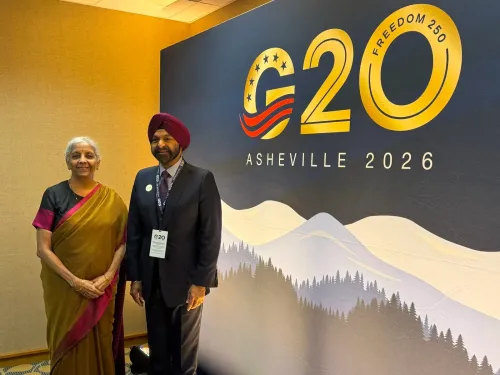
Banga confirmed he discussed tourism opportunities directly with Finance Minister Nirmala Sitharaman at the G20 ministerial.
The remarks signal active World Bank interest in co-investing with India across these five sectors.
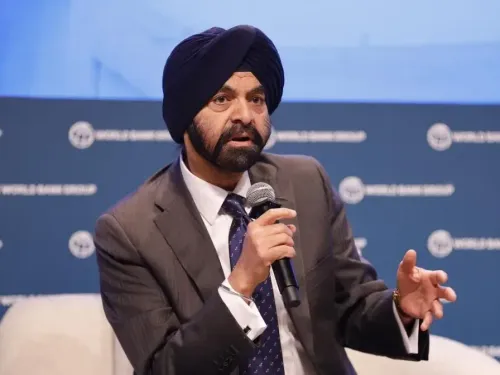
World Bank President Ajay Banga has identified infrastructure, agriculture, primary healthcare, tourism, and value-added manufacturing as five high-potential sectors for large-scale job creation in India, with micro, small and medium enterprises (MSMEs) at the centre of that push. Banga made the remarks in an interview on the sidelines of meetings in Asheville, underscoring his view that private investment — not government spending alone — must drive employment for India's vast young workforce.
Private Sector as the Engine
'Jobs are created in the private sector. Government enables and the private sector creates,' Banga said. 'And the jobs are created with micro and small and medium sized enterprises.' The framing is significant: it positions MSMEs, not large conglomerates, as the primary vehicle for absorbing India's working-age population, which adds millions of new entrants to the labour market each year.
The Five Sectors Banga Identified
Infrastructure topped Banga's list — not just for the direct employment generated through construction, but for the broader economic activity that improved physical connectivity unlocks. 'One of those is infrastructure, they're doing so, construction, but then what it enables,' he said.
Agriculture for small farmers was second. Banga cited a visit to Uttar Pradesh, where he observed cooperatives using technology from Google and the World Bank to help smallholder farmers access inputs at scale. The model, he suggested, could be replicated widely.
Primary healthcare ranked third. Banga described a decentralised clinic model — staffed by nurses, medical diagnostic technicians, and midwives — digitally linked to regional hospitals and doctors. Such a network, he argued, would generate substantial grassroots employment while extending healthcare access.
Tourism was fourth. Banga called it a 'huge opportunity' and noted he had discussed the sector directly with Finance Minister Nirmala Sitharaman during the G20 ministerial. 'In particular, I just spoke today to the finance minister about opportunities in tourism and what we can do together on that,' he said.
Value-added manufacturing rounded out the list. Banga pointed to India's existing strengths in minerals, metals, and fashion as areas ripe for further development to generate both employment and economic value.
Why This Matters for India
India's unemployment challenge is structural: a young demographic dividend that has yet to translate into commensurate formal job creation. This comes amid ongoing debate about whether India's GDP growth — among the fastest in the world — is sufficiently employment-intensive. Banga's sector-specific framing, backed by the World Bank's analytical and financing capacity, adds institutional weight to calls for a more targeted jobs strategy. Notably, four of the five sectors he named — agriculture, healthcare, tourism, and infrastructure — are areas where MSMEs already dominate but often lack capital, technology, and market access.
What Comes Next
Banga's remarks signal that the World Bank is actively exploring co-investment and technical assistance opportunities with India across these sectors, particularly in tourism. Whether those discussions translate into formal programmes will depend on follow-through from both sides. For India's policymakers, the World Bank chief's public endorsement of an MSME-led, sector-specific jobs model offers both a framework and a potential financing partner.
Point of View
Agriculture, and MSMEs have featured in every Indian jobs policy document for two decades — the gap has always been execution and capital access. What is new is the World Bank chief's explicit linkage of decentralised healthcare delivery to employment, and his public signalling of co-investment intent in tourism. If the World Bank follows through with financing and technical assistance, it could move the needle. If these remain talking points from a G20 sideline conversation, they join a long queue of well-intentioned frameworks that did not translate into formal jobs at scale. The real test is whether Banga's institution puts money and measurement behind the sectors it is endorsing.
NationPress
2 Sept 2026
Frequently Asked Questions
Which five sectors did World Bank President Ajay Banga identify for job creation in India?
Ajay Banga identified infrastructure, agriculture for small farmers, primary healthcare, tourism, and value-added manufacturing as the five sectors with the highest potential for large-scale job creation in India, particularly through MSMEs.
Why does Banga emphasise MSMEs for India's job creation?
Banga argued that jobs are ultimately created in the private sector, with micro, small and medium enterprises serving as the primary engine of employment. Large conglomerates, he suggested, do not absorb India's young workforce at the scale required.
What did Banga say about agriculture and technology in India?
During a visit to Uttar Pradesh, Banga observed cooperatives using technology from Google and the World Bank to help smallholder farmers access inputs at scale. He cited this as a replicable model for agricultural job creation.
What was discussed between Ajay Banga and Finance Minister Nirmala Sitharaman?
Banga confirmed he spoke directly with Finance Minister Nirmala Sitharaman at the G20 ministerial about opportunities in India's tourism sector and potential areas for World Bank collaboration.
How does Banga's primary healthcare model create jobs?
Banga proposed a network of decentralised clinics staffed by nurses, medical diagnostic technicians, and midwives, digitally connected to regional hospitals and doctors. This model would generate grassroots employment while expanding healthcare access in underserved areas.