Shubman Gill should lean on Rohit, Kohli but stay himself: Jonty Rhodes
Synopsis
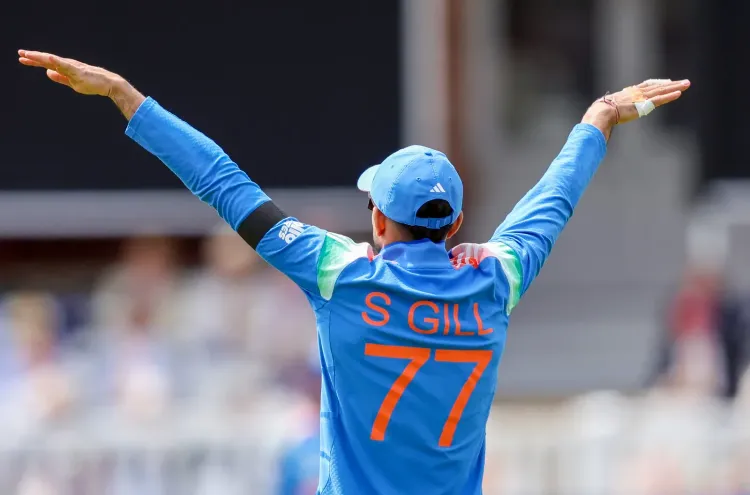
Jonty Rhodes isn't just offering a compliment — he's outlining a blueprint. His advice to Shubman Gill to lean on Rohit Sharma and Virat Kohli, while not mimicking either, cuts to the heart of what makes captaincy in a star-studded dressing room uniquely difficult. With a 50% win record and the 2027 World Cup looming, how Gill navigates that balance could define India's ODI era.
Key Takeaways
Jonty Rhodes advised Shubman Gill to seek input from seniors Rohit Sharma and Virat Kohli without losing his own captaincy identity.
Gill has won 6 and lost 6 ODIs since taking over the captaincy in October last year , recording a 50 per cent win rate.
Rhodes praised Gill's consistency in energy and conduct both as a player and captain.
Rhodes flagged altitude and varying pitch conditions across South Africa , Namibia , and Zimbabwe as key challenges for the 2027 World Cup .
Rhodes revealed his most cherished fielding memory was taking five catches — reportedly a world record — at the 1993 Hero Cup at Brabourne Stadium , Mumbai , to a crowd of 20,000 Indian fans.
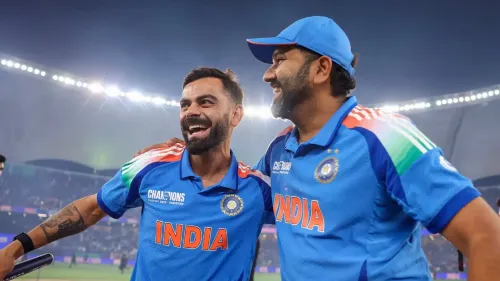
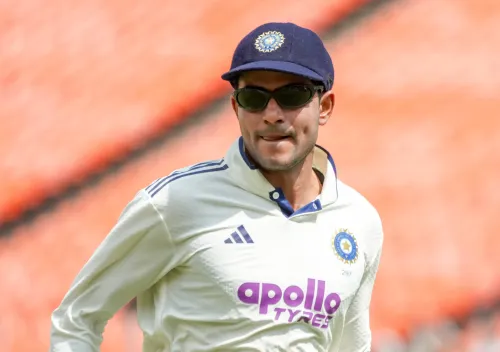
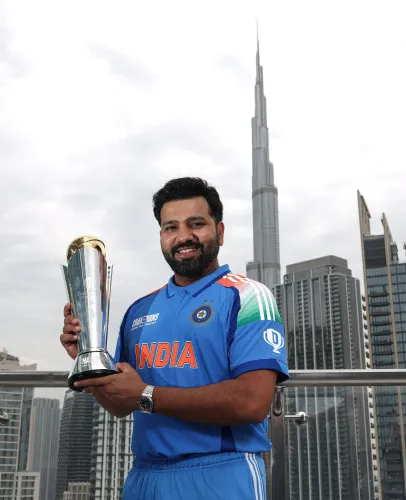
Former South Africa cricketer Jonty Rhodes has advised India's ODI captain Shubman Gill to actively draw on the experience of senior teammates Rohit Sharma and Virat Kohli, while remaining firmly anchored in his own leadership identity. Speaking to JioStar, Rhodes backed the young skipper to grow into the role despite the formidable pressures that accompany leading one of cricket's most scrutinised sides.
Rhodes on Gill's Captaincy Balance
Gill took over as India's ODI captain in October last year, replacing Rohit Sharma. Since then, he has won six matches and lost six, recording a 50 per cent win percentage — a record that reflects both the opportunity and the challenge ahead of him.
Rhodes was clear that seeking counsel from experienced players is a strength, not a weakness. 'The key with being a leader is understanding that you've got these senior players around you, and it's not a negative mark on your captaincy if you ask around for help, or for opinions and ideas,' he said.
'Obviously, as the leader and the captain, you have to make the final choice. That's often the hardest thing about captaining so many experienced players, they all give you great options, but you now have to make the call. So, having the likes of Rohit and Virat in your setup, and Shubman has been pretty consistent in his energy levels, the way that he conducts himself as a captain, and prior to that, as a player, it's all very consistent,' Rhodes added.
He further noted that authenticity under pressure is non-negotiable for any leader. 'As long as he's not trying to be anybody else, which is impossible, because when you're under pressure, you always revert back to who you really are. He's gotten to that stride very quickly,' Rhodes said.
Rhodes Eyes the 2027 World Cup in Southern Africa
Rhodes, who is currently co-owner of the Rotterdam Dockers in the inaugural European T20 Premier League (ETPL), also turned his attention to the 2027 ICC Cricket World Cup, set to be co-hosted by South Africa, Namibia, and Zimbabwe. He cautioned that visiting teams will need to adapt swiftly to the varied conditions across host venues.
'It's interesting because what is impacted in the field is often the altitude. If you play at the coast, it's different to playing in Johannesburg or Pretoria, where altitude affects it,' he explained. Rhodes expressed confidence in India's ability to cope, highlighting the team's mastery of modern batting techniques. 'The Indian players ramp the ball so well. They get inside and scoop the ball so well, so they've adapted really quickly to the modern world of cricket,' he said.
A Career-Defining Moment — and a Memory More Cherished
Widely regarded as one of the greatest fielders in cricket history, Rhodes is globally remembered for his iconic diving run-out of Inzamam-ul-Haq at the 1992 World Cup. Yet, in a candid revelation, he disclosed that his most treasured personal memory came a year later on Indian soil.
'That run-out at the World Cup launched my career. People suddenly took notice of fielding. But I think the most amazing day for me in the field was when we were playing at Brabourne Stadium at CCI in 1993, the Hero Cup. South Africa were playing against the West Indies, and there were 20,000 people in the crowd,' he recalled.
Rhodes revealed he took five catches that day — a performance he was later told set a world record for fielding. 'I didn't even know there were records for fielding, it was just something that I loved doing. You kind of expect adoration and support in your own country, but when you're touring, and it was a neutral venue, we weren't playing against India. So, having 20,000 Indian fans chanting, 'Jonty, Jonty,' was something I will never, ever forget,' he said.
What This Means for India's ODI Future
Rhodes's endorsement carries weight at a pivotal juncture for Indian cricket. With the 2027 World Cup on the horizon and a transition underway from the Rohit Sharma-led era, Gill's ability to harness the wisdom of his senior colleagues while forging his own captaincy identity could prove decisive. The coming months of ODI cricket will offer the clearest test of whether that balance is achievable.
Point of View
And the real question is whether India's transition has a genuine plan or is coasting on the residual authority of Rohit and Kohli in the dressing room. Asking senior players for input is healthy; depending on their presence to paper over tactical gaps is a different matter. The 2027 World Cup on South African soil will arrive quickly, and Gill's captaincy credentials will be measured not by who he consulted but by the calls he made when it counted. Rhodes's own career arc — from a fielding revelation in 1992 to a mentor and co-owner in European cricket — lends his perspective unusual credibility, but the burden of proof remains squarely on Gill.
NationPress
18 Oct 2026
Frequently Asked Questions
What did Jonty Rhodes say about Shubman Gill's captaincy?
Rhodes said Gill should embrace support from senior players like Rohit Sharma and Virat Kohli while remaining true to his own leadership style. He praised Gill's consistency in energy and conduct, noting that authenticity under pressure is what separates effective captains.
What is Shubman Gill's win-loss record as India's ODI captain?
Since taking over as India's ODI captain in October last year, Shubman Gill has won six matches and lost six, giving him a 50 per cent win percentage.
What did Rhodes say about the 2027 Cricket World Cup conditions?
Rhodes highlighted altitude as a key variable, noting that conditions at coastal venues differ significantly from high-altitude cities like Johannesburg and Pretoria. He expressed confidence in India's adaptability, citing the team's proficiency with ramp shots and modern batting techniques.
What is Jonty Rhodes's most cherished fielding memory?
Rhodes said his most cherished memory was taking five catches — reportedly a world record for fielding — during the 1993 Hero Cup match between South Africa and the West Indies at Brabourne Stadium in Mumbai, in front of 20,000 Indian fans who chanted his name.
What is Jonty Rhodes currently involved in beyond cricket commentary?
Rhodes is currently co-owner of the Rotterdam Dockers in the inaugural European T20 Premier League (ETPL), a new franchise cricket competition bringing the sport to European audiences.