Ravee Gupta on Rohit Roy's 'dustbin medium' remark: 'I don't agree'

Synopsis
Rohit Roy called Indian television a 'dustbin medium' — forgettable, repetitive, creatively barren. Actress Ravee Gupta won't use those words, but she won't dismiss his frustration either. Her measured response captures the quiet unease many TV professionals feel but rarely say aloud.
Key Takeaways
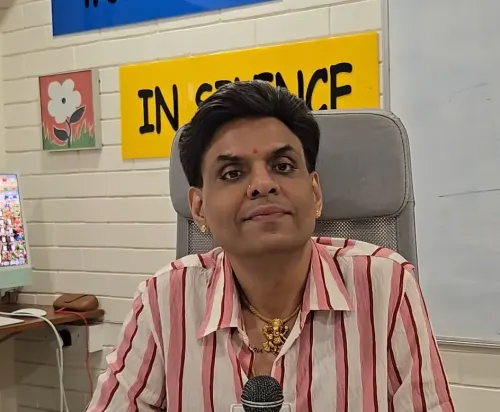
Actress Ravee Gupta said she personally disagrees with Rohit Roy's description of television as a 'dustbin medium' .
Gupta acknowledged that Roy 'must have had his reasons' and was not speaking for sensationalism.
Roy made the controversial remark on the Kindle Cast YouTube channel, calling Indian TV content repetitive and easily forgotten.
Roy said: 'In India, unfortunately, with the amount of content being created and the same kind of content being created, there's hardly any creativity.' Multiple television industry figures criticised Roy's remarks after they became public.
Actress Ravee Gupta has pushed back against veteran actor Rohit Roy's controversial description of television as a 'dustbin medium', saying she personally disagrees with the characterisation even as she acknowledges that every profession has its share of disappointments. Gupta shared her views in a recent conversation, days after Roy's remarks triggered a wave of criticism from within the television industry.
What Ravee Gupta Said
Gupta was unequivocal about her own relationship with the medium. She said she could never use such a word because she genuinely respects her work in television.
At the same time, she stopped short of condemning Roy outright. 'There must be a point of view. I haven't read his interview, but I have definitely heard about it. I don't think he said anything just for sensationalism. He must have had his reasons. He had a perspective, and that is why he said what he said,' she said.
Gupta added: 'In every profession, there are definitely some negative or disappointing things. Maybe that was the reason behind his comment. But personally, I don't agree with it.'
What Rohit Roy Actually Said
The controversy originated during Rohit Roy's appearance on the Kindle Cast YouTube channel, where he was asked whether the TV industry had grown more professional but lost devotion to its craft.
Roy's response was blunt. 'This question has been asked of me several times, and I sometimes feel that I shouldn't come across as ungrateful. But, television is a dustbin medium. You watch it today, it's like yesterday's newspaper. Tomorrow, you forget about it. So, in India, unfortunately, with the amount of content being created and the same kind of content being created, there's hardly any creativity,' he said.
Industry Reaction
Roy's remarks drew sharp criticism from several television personalities. The pushback reflects a long-simmering tension in the industry over the perceived repetitiveness of prime-time storylines, which critics argue keeps the medium commercially viable but creatively stunted. Notably, this is not the first time a prominent actor has publicly questioned the quality of Indian television content — but Roy's phrasing has made the debate more pointed than usual.
The Broader Debate
The exchange has reignited a wider conversation about whether Indian television, despite its massive reach and revenue, invests sufficiently in original storytelling. Gupta's measured response reflects a middle ground held by many working professionals in the industry — acknowledging systemic problems while resisting language they feel demeans the medium and those who work in it. How the debate evolves may depend on whether streaming platforms, which have raised the creative bar, continue to pull audiences and talent away from traditional television.
Point of View
And the creative gap between OTT originals and broadcast fiction has only widened. Gupta's diplomatic response is understandable, but the industry would be better served by confronting the structural incentives — advertiser-driven episode counts, TRP metrics, and cost-cutting on writing rooms — that Roy's remark, however clumsily, points toward.
NationPress
3 Oct 2026
Frequently Asked Questions
What did Rohit Roy say about television?
Rohit Roy called television a 'dustbin medium' during an appearance on the Kindle Cast YouTube channel, saying Indian TV content is repetitive, easily forgotten, and lacks creativity. His remarks drew significant criticism from within the television industry.
How did Ravee Gupta respond to Rohit Roy's remark?
Ravee Gupta said she personally disagrees with Roy's characterisation, adding that she respects her work too much to use such language. However, she acknowledged that Roy likely had genuine reasons rooted in the industry's limitations and was not speaking for sensationalism.
Where did Rohit Roy make the 'dustbin medium' comment?
Rohit Roy made the remark on the Kindle Cast YouTube channel, where he was asked whether the TV industry had become more professional but less devoted to its craft.
Has the television industry reacted to Rohit Roy's comments?
Yes, several television industry members criticised Roy's statement. The backlash reflects a broader sensitivity around public commentary that is seen as demeaning the medium or those who work in it.
Why does the debate about Indian TV content quality keep recurring?
Critics and insiders frequently point to structural pressures — including advertiser-driven episode volumes, TRP metrics, and limited writing budgets — as reasons why Indian prime-time television relies heavily on repetitive storylines. The rise of OTT platforms with higher creative standards has made the contrast more visible.