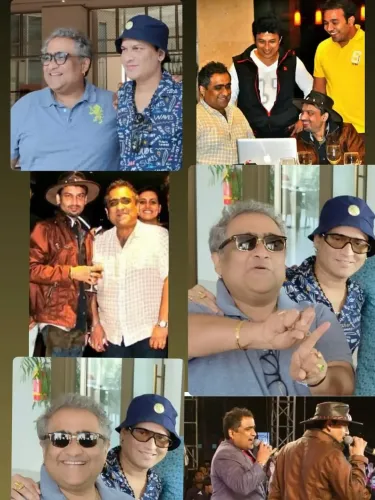
Sonu Nigam on Pankaj Udhas: 'He gave me my first understanding of Ghazals'

Synopsis
Sonu Nigam's tribute to Pankaj Udhas goes beyond remembrance — it is a candid admission that one of Bollywood's biggest voices learned the grammar of ghazals from Udhas' stage performances. Twenty-five years after Khazana was founded, Nigam's presence signals that the festival's mission to preserve the ghazal tradition is far from over.
Key Takeaways
Sonu Nigam paid tribute to late ghazal legend Pankaj Udhas at a Mumbai event on 23 July .
Nigam credited Pankaj Udhas and Anup Jalota as key influences who taught him the nuances of ghazals and bhajans in the 1980s .
Pankaj Udhas passed away on 26 February 2024 at age 72 after a prolonged illness.
It has been 25 years since Udhas founded the Khazana ghazal festival; Nigam expressed his commitment to carrying forward that legacy.
Nigam described the music landscape as a pyramid, with rap and commercial music at the base and traditional forms like ghazals requiring deeper appreciation.
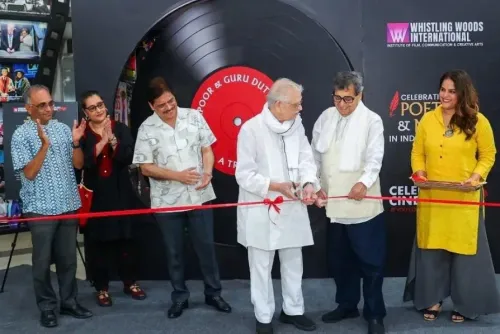
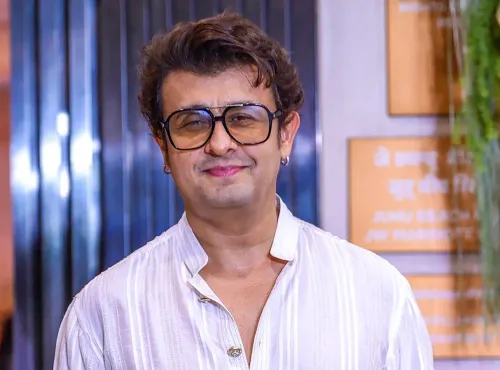
Singer Sonu Nigam paid a moving tribute to the late Pankaj Udhas, the legendary ghazal maestro, recalling how the veteran artist's melodies served as his gateway into the world of ghazals. Speaking at an event in Mumbai on 23 July, Nigam credited Udhas among the foundational influences that shaped his musical sensibility.
How Pankaj Udhas Shaped Sonu Nigam's Musical Journey
Nigam revealed that when he first developed an interest in ghazals, Pankaj Udhas was one of the first names that came to mind. He said he had performed many of Udhas' popular ghazals on stage, which deepened his connection with the genre's beauty and emotional depth.
In his own words, Nigam said: 'I never want to forget my roots in life. And I know that when I first got interested in ghazals, Pankaj ji was one of the first names that came to mind. I have sung his ghazals on stage many times because they were extremely popular. That's how I got my first understanding of Ghazals.'
A Bond Built on Mutual Respect
Nigam also recalled learning the nuances of both ghazals and bhajans from Pankaj Udhas and Anup Jalota, two prominent voices of the 1980s. He spoke warmly of his personal bond with Udhas, describing it as one of deep mutual affection.
'Initially, when Pankaj ji and Anup ji came into prominence in the 1980s, I learned a little bit about Bhajans and Ghazals from them. I loved Pankaj ji a lot, and he loved me a lot too. We had a lot of mutual respect. He left us too early, leaving all of us in grief,' Nigam said.
Carrying Forward the Khazana Legacy
Pankaj Udhas passed away on 26 February 2024 at the age of 72, following a prolonged illness. His daughter Nayaab announced his passing on social media, stating: 'With a heavy heart, we are saddened to inform you of the sad demise of Padmashri Pankaj Udhas on 26th February 2024 due to a prolonged illness.'
Nigam noted that it has been 25 years since Udhas launched Khazana, the celebrated ghazal festival, and expressed his commitment to keeping that legacy alive. 'It is my duty to play a small part in carrying forward his legacy. That's why I am here,' he added.
On Changing Music Tastes Among the Youth
Addressing the perception that younger listeners are gravitating toward rap, international music, and social media-driven trends, Nigam offered a measured perspective. He argued that every genre has its own audience, and that popularity is largely a function of accessibility and ease of understanding.
Using the analogy of a pyramid, Nigam explained that commercial music and rap occupy the broader base because they appeal to a wider cross-section of listeners, while more complex and traditional forms such as ghazals require deeper appreciation. He maintained that the audience for classical and semi-classical forms, though smaller, remains devoted and enduring.
Point of View
Complex art forms lose institutional support before they lose audiences. The real question is whether the next generation of performers will carry the ghazal forward with the same deliberate intent — or let it recede into nostalgia.
NationPress
21 Oct 2026
Frequently Asked Questions
How did Pankaj Udhas influence Sonu Nigam's music?
Sonu Nigam has said that Pankaj Udhas was one of the first artists he associated with ghazals when he developed an interest in the genre. He performed Udhas' popular ghazals on stage, which gave him his foundational understanding of the form.
When did Pankaj Udhas pass away?
Pankaj Udhas passed away on 26 February 2024 at the age of 72 due to a prolonged illness. His daughter Nayaab confirmed the news on social media.
What is Khazana and why is it significant?
Khazana is a ghazal festival founded by Pankaj Udhas that completed 25 years in 2025. It is one of India's most prominent platforms dedicated to preserving and promoting the ghazal tradition, and Sonu Nigam participated to honour Udhas' legacy.
What did Sonu Nigam say about younger listeners preferring rap over classical music?
Nigam said every genre has its own audience and that popularity depends on accessibility. He compared music to a pyramid, with rap and commercial music at the broader base and traditional forms like ghazals requiring deeper understanding and appreciation.
Who else did Sonu Nigam credit for his early learning in ghazals and bhajans?
Besides Pankaj Udhas, Sonu Nigam credited Anup Jalota as a key influence during the 1980s, saying both artists helped him learn the nuances of bhajans and ghazals early in his musical journey.